


Spindle Apparatus Explained: Your Guide to Mitotic Structures
What is Part of the Spindle Apparatus in Industrial Manufacturing?
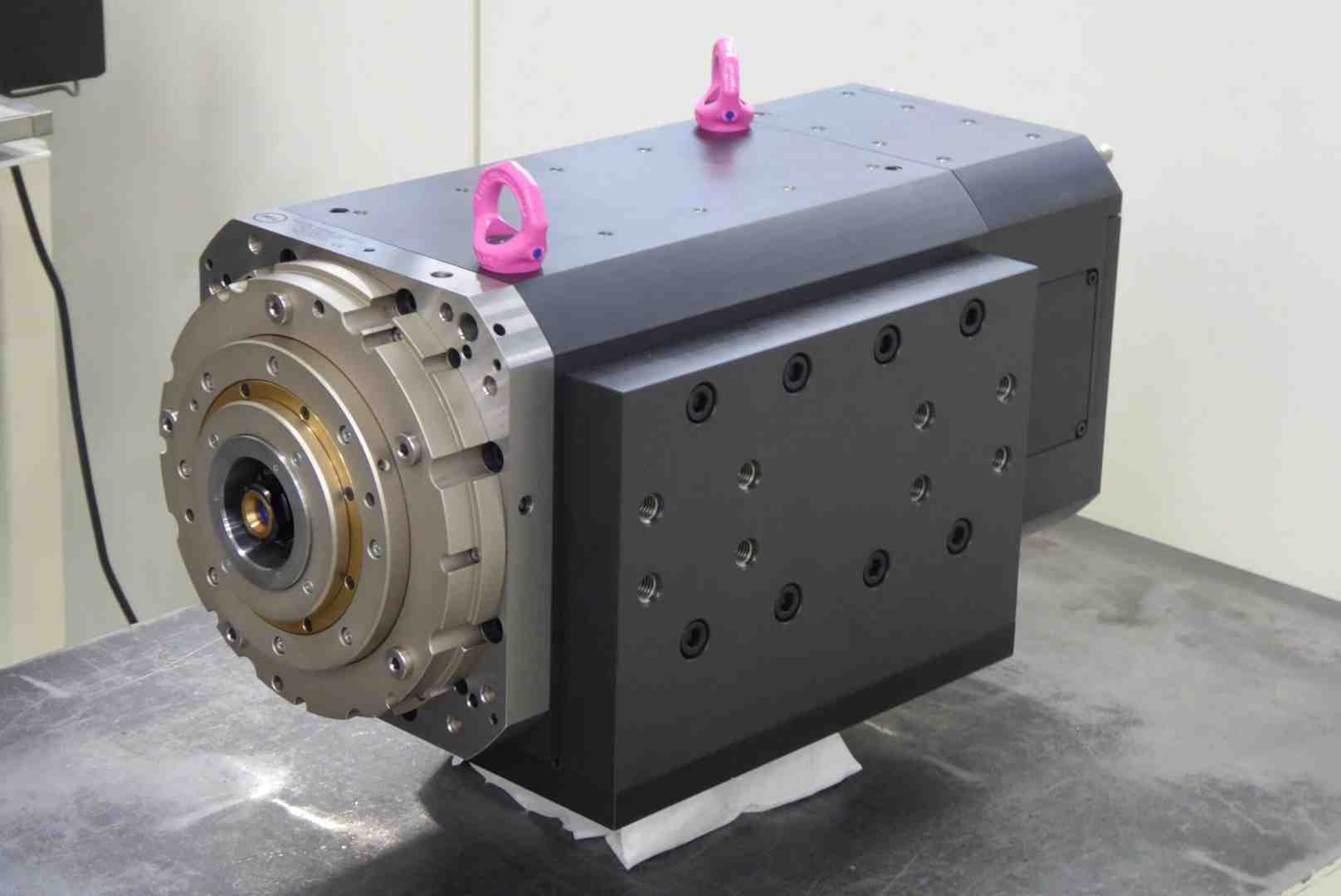
What is part of the spindle apparatus is a question at the heart of understanding how high-precision machining works. In industrial manufacturing, the spindle apparatus is the complete rotating system that drives cutting tools to remove material with extreme accuracy.
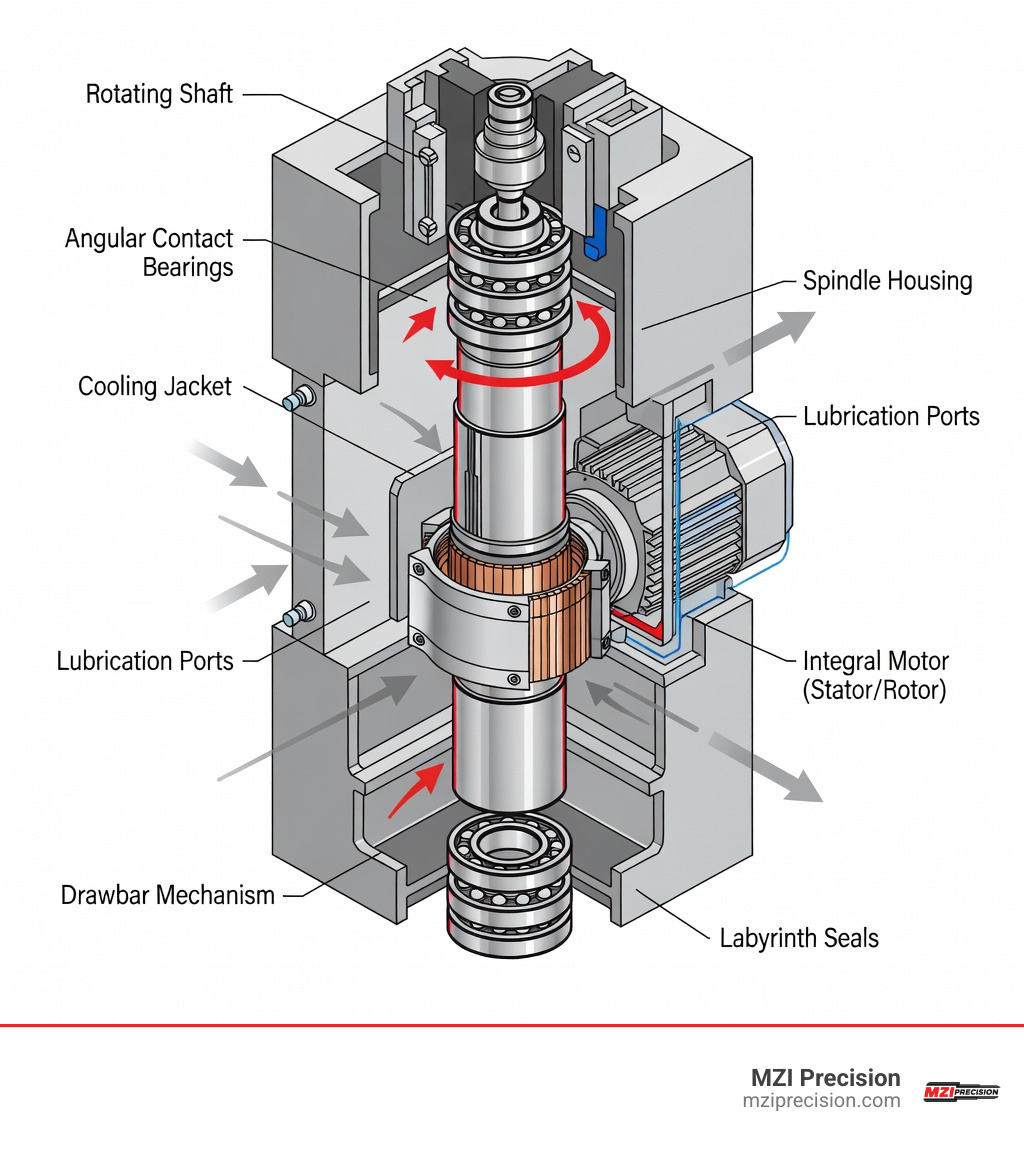
Here are the core components that make up the spindle apparatus:
- Spindle shaft – the central rotating element that transmits torque to the cutting tool
- Bearing system – precision bearings (angular contact ball or roller) that support the shaft and control runout
- Spindle housing – the structural enclosure that holds all components, including lubrication channels and cooling jackets
- Drive system – belt-driven, gear-driven, or integral motor that delivers speed and power
- Drawbar assembly – the clamping mechanism that retains the cutting tool in the spindle taper
- Seals – contact or non-contact designs that protect internal components from contamination
Together, these parts form a precision system where every component must work in harmony. A failure in any single element can affect the entire machine’s accuracy and output.
This guide breaks down each part, explains how they interact, and shows why maintaining tight tolerances is non-negotiable for aerospace and high-precision manufacturing operations.
What is part of the spindle apparatus terms simplified:
- Spindle Parts
- how does a multi spindle screw machine do large parts
- how to identify spindle part number
Defining the Industrial System: What is Part of the Spindle Apparatus?
In high-stakes industrial manufacturing, the term “spindle apparatus” refers to the collective group of mechanical parts that allow a machine tool to perform its primary function: high-speed material removal. Whether we are talking about a vertical machining center in Los Angeles or a specialized aerospace grinder in Huntington Beach, the goal remains the same—converting electrical or mechanical energy into rotational motion with zero room for error.
The primary function of this system is to provide the torque and speed necessary to drive a cutting tool through hard metals or composites. To achieve this, the system relies on a complex mechanism of spindle assembly that ensures structural integrity under immense centrifugal forces.
When we look at what is part of the spindle apparatus, we aren’t just looking at a spinning rod. We are looking at a system designed for rotational accuracy. This accuracy is maintained by the system housing, which acts as the “skeleton” of the machine. The housing does more than just hold things together; it contains the utility passages for cooling and lubrication that prevent the internal components from melting under the heat of friction.
Understanding What is Part of the Spindle Apparatus: The Rotating Assembly
At the center of it all is the rotating assembly. If the housing is the skeleton, the shaft is the spine. The shaft design must be robust enough to handle the torque transmitted from the drive system while remaining perfectly balanced. Even a microscopic imbalance can lead to vibrations that ruin a part or, worse, destroy the bearings.
Speaking of bearings, they are perhaps the most critical answer to the question of what is part of the spindle apparatus. High-precision bearings, often arranged in “stacks” or “sets,” support the shaft. These aren’t your average hardware store bearings. We use precision-grade angular contact ball bearings or roller bearings that are designed to handle both radial and axial loads. The interplay between spindle architecture and function dictates that the drive system—be it a belt, gears, or an integral motor—must deliver power without introducing unwanted heat or vibration into this rotating assembly.
Critical Tolerances and What is Part of the Spindle Apparatus Alignment
In our line of work, we don’t talk in inches; we talk in microns. Micron-level precision is the standard for any spindle apparatus used in modern manufacturing. When we rebuild a spindle, we are fighting against two major enemies: thermal expansion and vibration.
As a spindle runs at 20,000 RPM, it gets hot. Metals expand when they get hot. If the alignment isn’t perfect, that expansion can cause the bearings to seize or the shaft to “run out,” meaning it no longer spins in a true circle. We use advanced vibration analysis to detect these issues before they become catastrophic. Proper balancing requirements ensure that the center of mass is perfectly aligned with the axis of rotation, allowing for the smooth, “whisper-quiet” operation that characterizes a healthy industrial machine.
Structural Components of High-Speed Spindles
To truly master what is part of the spindle apparatus, we have to look at the individual “organs” of the machine. Each piece serves a specific, vital role:
- Spindle Shaft: This is the workhorse. It features a precision-ground taper where the tool holder sits. It must be incredibly stiff to resist deflection during heavy cuts.
- Bearing Stacks: Usually found at the “nose” and the “rear” of the spindle. The front bearings handle the brunt of the cutting forces, while the rear bearings often allow for slight axial movement to compensate for heat.
- Drawbar Assembly: Located inside the hollow shaft, this is a spring-loaded rod that pulls the tool holder into the taper with thousands of pounds of force.
- Tool Retention: This includes the “fingers” or “petals” at the end of the drawbar that physically grab the tool.
- Lubrication Ports: These are the veins of the system. Whether it’s an oil-air mist or permanent grease, the lubrication must reach the bearing races constantly.
- Cooling Jackets: These are channels in the housing where chilled liquid circulates to whisk away motor and bearing heat.
The scientific insights into component interplay show that if you change one variable—like the type of lubricant—it has a ripple effect on the maximum speed and load capacity of the entire apparatus.
Assembly Stages and Precision Requirements
Rebuilding a spindle is a lot like surgery. It requires a clean environment and a very steady hand. The process of putting together what is part of the spindle apparatus follows a strict sequence:
- Component Cleaning: Every part is cleaned in an ultrasonic bath. Even a single speck of dust can cause a bearing to fail prematurely.
- Bearing Press: Bearings are installed using precision presses and, often, temperature-controlled environments to ensure they “seat” perfectly without being damaged.
- Shaft Balancing: We use dynamic balancing machines to ensure the shaft doesn’t wobble. This is done at multiple speeds to simulate real-world conditions.
- Final Run-out Testing: Once assembled, we measure the “run-out” at the spindle nose. We look for measurements under 0.0001 inches (that’s about 1/30th the thickness of a human hair!).
A study on assembly dynamics highlights that the minimal structural requirements for a spindle aren’t just about having all the parts; it’s about the preload on the bearings. Preload is the “squeeze” we put on the bearings during assembly to remove any internal play. Without it, the tool would chatter, and the finish on your manufactured parts would look like a plowed field.
Failure Analysis and Performance Consequences
What happens when things go wrong? Because the spindle is the heart of the machine, its failure is usually “heart-stopping” for production.
Bearing wear is the most common issue. It usually starts with a faint hum and ends with a scream. When bearings lose their precision, the “run-out” increases, and the machine can no longer hold tolerance. Shaft fatigue is another concern, especially in spindles that perform heavy, interrupted cuts. Over time, the metal can develop microscopic cracks.
Then there is lubrication failure. Without oil, the friction at high speeds causes the bearings to weld themselves to the shaft almost instantly. This leads to what we call “biological-grade” precision loss—a fancy way of saying the spindle is now a very expensive paperweight.
Research on spindle failure phenotypes suggests that most failures are preventable. The consequences of ignoring a noisy spindle include:
- Production Downtime: The machine is making zero dollars while it sits idle.
- Scrap Rates: Inaccurate spindles produce parts that don’t fit, leading to wasted material.
- Secondary Damage: A seized spindle can burn out the drive motor or damage the machine’s ways.
Frequently Asked Questions about Industrial Spindles
What are the main structural components of a spindle?
The main components are the housing (the outer shell), the shaft (the rotating part), the bearing system (the support), the drive system (the power source), and the tool retention system (the drawbar and clamping group).
How does a spindle function without a fixed housing?
In the industrial world, a spindle cannot function properly without a fixed housing. The housing provides the necessary rigidity and alignment for the bearings. Without it, the rotational forces would cause the shaft to fly off-center immediately.
What happens if the spindle assembly fails during operation?
If a spindle fails while cutting, it can result in a “crash.” This often breaks the cutting tool, ruins the workpiece, and can cause significant damage to the internal bearings and shaft. In extreme cases, it can lead to motor burnout.
Conclusion
Understanding what is part of the spindle apparatus is the first step in ensuring your manufacturing floor remains productive and profitable. From the precision-ground shaft to the micron-accurate bearing stacks, every piece of the puzzle must be perfect. At MZI Precision, we specialize in exactly that—perfection.
We are a U.S.-based company with deep expertise in OEM rebuilt spindles. Whether you are in aerospace, automotive, or defense, we understand that “close enough” isn’t good enough. We provide the exceptional service and support needed to keep your high-speed systems optimized and your production lines moving.
If your spindle is showing signs of wear, or if you just want to ensure it’s performing at its peak, we are here to help. You can find more info about our spindle rebuilding services and see how we can restore your equipment to better-than-new condition. Don’t wait for a catastrophic failure—let’s keep those spindles turning!