


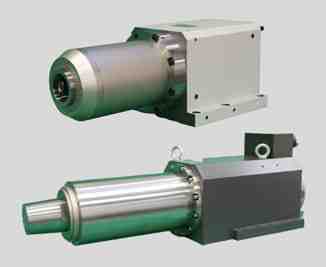
4 Spindle CNC Router: Quadruple Output!
Introduction: The Power of Four – Understanding Multi-Spindle Machining
A 4 spindle cnc router is a computer-controlled machining system with four independent spindles that operate simultaneously or sequentially. This design dramatically increases production throughput and reduces cycle times compared to traditional single-spindle machines.
Key Features of a 4-Spindle CNC Router:
- Four Independent Spindles: Work on identical patterns at once or different operations in sequence.
- Increased Efficiency: Process up to four parts simultaneously, effectively quadrupling output.
- Flexible Operation: Spindles can operate together for mass production or independently for varied tasks.
- Typical Power Range: 2.2kW to 9.0kW per spindle (air-cooled or water-cooled).
- Common Bed Sizes: 4’x4′ (1200x1200mm) to 5’x10′ (1500x3000mm).
- Price Range: $4,000 to $25,000+ depending on configuration.
For any manufacturing operation where throughput is critical, multi-spindle systems are a game-changer. While a single-spindle machine processes parts one at a time, a 4-spindle configuration can machine four identical industrial components simultaneously or use different spindles for drilling, engraving, and cutting on the same workpiece.
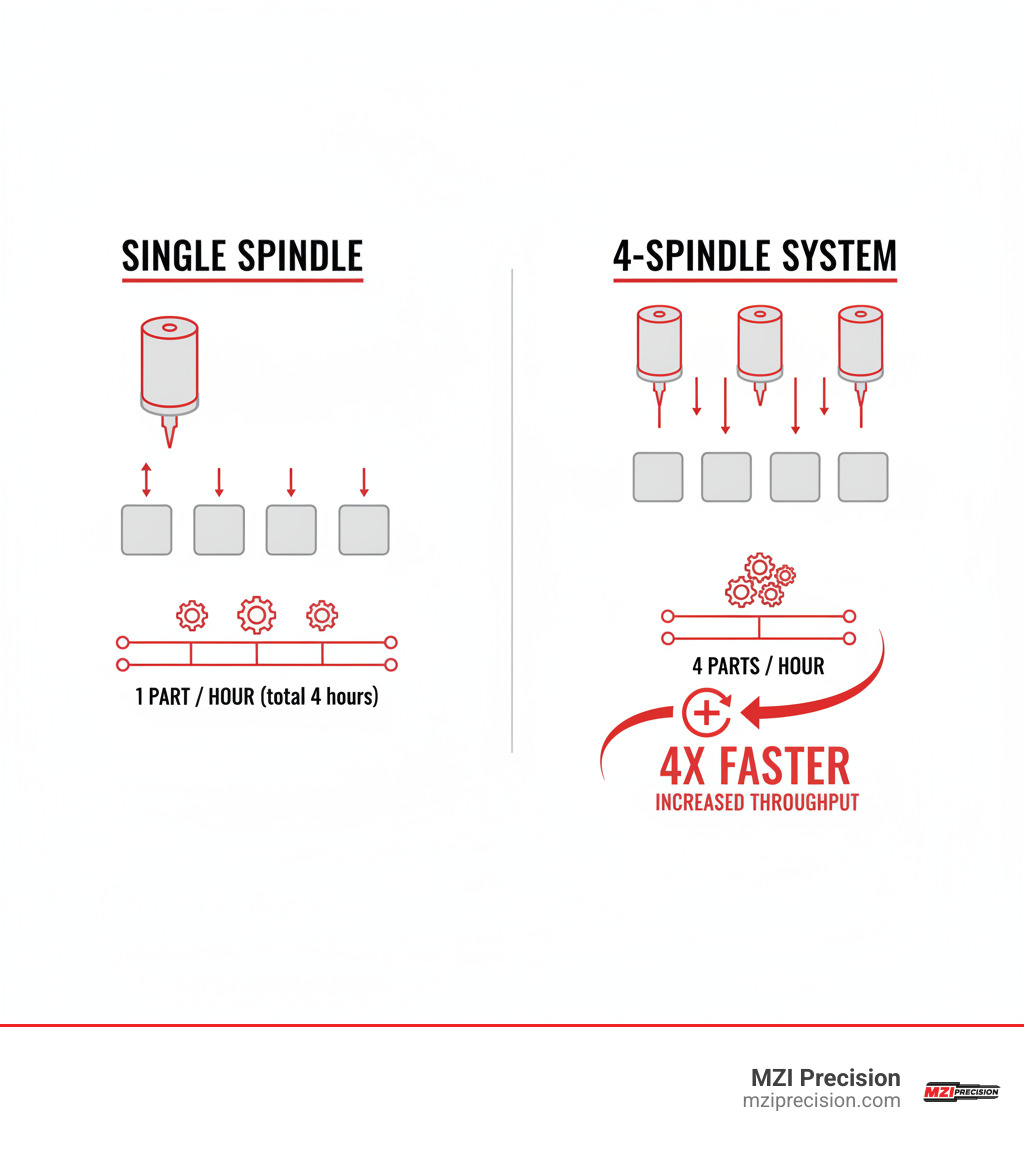
The math is powerful: a job that takes a single-spindle router four hours can be done in one hour. For industries like aerospace component manufacturing, mold making, and industrial signage, this efficiency means lower labor costs and faster project turnaround.
However, the spindles are the heart of the system. A machine is only as reliable as its weakest spindle, and downtime on one impacts the entire workflow. Understanding spindle specifications, maintenance, and when to seek professional industrial manufacturing spindle repair is critical for sustained production.
The Core Advantage: How a 4 Spindle CNC Router Revolutionizes Production
In industrial manufacturing, time is money and consistency is everything. A 4 spindle cnc router delivers on both, fundamentally changing how production floors operate. Instead of processing parts one by one, a multi-spindle machine can tackle four simultaneously or intelligently sequence different operations.
The efficiency gains are immediate. For identical aluminum brackets or composite panels, simultaneous processing dramatically drops cycle times. A job that would take four hours on a single spindle cnc machine is done in about one hour. This redefines the throughput possible from a single machine footprint.
What makes a cnc multi-spindle machine truly valuable is consistency. When all four spindles follow the same programmed path on identical materials, you get four parts that match with remarkable precision. For aerospace or mold making where tolerances are critical, this uniformity is invaluable.
Cost savings extend beyond speed. One operator manages the output of what would otherwise require multiple machines or runs, reducing labor cost per part. Nesting four parts on a single sheet optimizes material usage. Even energy consumption per part drops compared to running four separate machines.
Multi-Head vs. Multi-Process Configuration
Understanding the two primary configurations helps in planning your production strategy.
Simultaneous Processing (Multi-Head): All four spindles work in unison, carving identical patterns into separate workpieces. This is ideal for batch processing and mass production, such as creating multiple identical panels for industrial signage. These setups often use lower-power spindles (1.5-3.0kW) optimized for engraving and relief work.
Sequential Processing (Multi-Process): Each spindle is fitted with a different tool (e.g., roughing, finishing, drilling). The machine automatically switches between them, acting as a cost-effective tool changer. This is perfect for complex parts requiring varied operations and typically uses more powerful spindles (4.5-6.0kW) that can handle serious cutting.
Modern control systems allow you to switch between these modes based on your production schedule, offering maximum flexibility.
Achieving Higher Throughput and ROI
Quadrupling output without quadrupling labor costs creates a compelling return on investment. One operator can manage a 4-spindle system producing four parts in the time it would take to make one on a single-spindle machine.
- Faster Turnaround: Take on more orders and meet tighter deadlines, enhancing your reputation for reliability.
- Material Efficiency: Processing four parts from a single sheet optimizes material usage and reduces waste, lowering costs per part.
- Energy Efficiency: A single 4-spindle machine is typically more energy-efficient than operating four separate machines for the same output, thanks to centralized controls and optimized motion.
These factors—reduced labor, faster turnaround, optimized materials, and better energy efficiency—all contribute to a strong ROI. Combined with the long-term reliability of well-maintained spindles from companies like MZI Precision, you can expect years of productive service.
Key Specifications: What to Look for When Choosing Your Machine
Selecting the right 4 spindle cnc router is a critical decision. The machine must align with your production needs, handle your materials, and offer long-term reliability. A 4-spindle router is only as good as its components working in harmony to deliver consistent accuracy and flexibility. Let’s break down the key specifications.
When comparing drive systems, the choice between stepper and servo motors is crucial:
- Stepper Motors: More affordable and suitable for general applications in plastics and light metals. They operate in an open-loop system, which can lead to lost steps under high load or speed.
- Servo Motors: Offer superior precision and reliability due to a closed-loop design with position feedback. They maintain torque across all speeds, making them essential for high-tolerance industrial applications like aerospace manufacturing.
Spindle Power and Type: The Heart of the Machine
The spindle specifications define your machine’s capabilities. Understanding what is a precision spindle helps clarify why these details matter.
- Spindle Power (kW): Determines cutting force. A 3.0kW water-cooled spindle is great for general applications, while a 4.5kW HQD air-cooled spindle handles more demanding materials. For the toughest jobs, a 9.0kW HSD spindle kit is the industrial standard.
- Cooling Method: Water-cooled spindles run quieter and maintain stable temperatures for long runs, crucial for heat-sensitive materials. Air-cooled spindles offer simpler maintenance.
- Spindle Speed (RPM): Higher RPMs are for fine detail and smooth finishes, while lower RPMs with higher torque power through harder materials.
- Collet Size: The collet (e.g., ER25, ER32) determines the tool shank diameters you can use, affecting operational flexibility. For more guidance, see our resource on selecting a spindle for cnc router.
Working Area and Machine Structure
The machine’s physical build determines what you can make and how accurately you can make it.
- Working Area: Ranges from compact 4′ x 4′ (1200mm x 1200mm) setups to large 5′ x 10′ (1500mm x 3000mm) beds for large-scale production.
- Structural Integrity: A heavy-duty, welded seamless steel frame provides the rigidity needed for accuracy. A robust gantry design absorbs cutting forces and suppresses vibration far better than lighter alternatives.
- Z-Axis Travel: A height of 200mm to 400mm determines material thickness capacity.
- Workholding: A vacuum table is ideal for securing large panels, while a T-slot table offers flexibility for clamping irregularly shaped parts.
Control Systems and Drive Motors for Your 4 Spindle CNC Router
The control system and drive motors are the machine’s brain and muscles. Getting them right is essential for performance.
- CNC Controller: DSP controllers are popular for their ease of use and standalone operation. Industrial panel controllers like SYNTEC offer more advanced features for complex production.
- Motor Type: Stepper motors (e.g., Yako) are robust and cost-effective. For the highest precision, servo motors (e.g., Yaskawa) are the professional choice, as their closed-loop feedback eliminates cumulative errors. Our article on why servo motor used in cnc machine explains this in detail.
- Drive System Components: Quality components like HIWIN linear guides and TBI ball screws are critical for smooth, precise, and repeatable motion. These are not areas to cut corners.
For a deeper dive, explore our resource on cnc servo motors and drives.
Applications and Materials in Modern Manufacturing
A 4 spindle cnc router earns its keep in industrial environments where precision meets volume. These machines are built for manufacturers who need to deliver consistent, high-quality parts at scale, often working with demanding materials. Their versatility allows them to adapt to varied production needs, which translates directly to a competitive advantage.
Industries Benefiting from the 4 Spindle CNC Router
- Aerospace: Produces intricate composite and plastic components with tight tolerances and high repeatability, essential for aircraft parts.
- Automotive Components: Creates interior and exterior plastic and composite parts, such as dashboard elements and trim pieces, in high volumes.
- Mold Making: Efficiently produces multiple mold sections from high-density foam, specialized plastics, or soft metals, reducing lead times.
- Plate Processing: Transforms throughput by processing four sheets at once, valuable for cutting insulation panels, plastic components, or in industrial sign manufacturing.
- Non-ferrous Metal Fabrication: Efficiently machines soft metals like aluminum and brass for industrial fittings, enclosures, and other components.
Processing Advanced Industrial Materials
The materials a 4 spindle cnc router can handle demonstrate its industrial pedigree. These machines are engineered for demanding materials that require both power and precision.
- Aluminum and Brass: A properly configured system with adequate spindle power (4.5kW or higher) can handle precision cutting and milling.
- Composite Materials: The ability to maintain identical cutting conditions across all spindles ensures uniform quality when machining these advanced, often abrasive materials.
- High-Density Plastics (PEEK, Delrin): A router with servo motors and quality guides delivers the accuracy needed for these strong, dimensionally stable engineering plastics.
- ABS and PVC: These common industrial plastics are ideal for high-volume production of prototypes and enclosures on multi-spindle systems.
- Technical Foams: Used for mold making, insulation, and custom packaging, these materials require appropriate spindle speeds and sharp tooling for clean cuts.
Matching spindle specifications to your material is critical. The right balance of power and speed ensures quality results and prevents premature spindle wear.
Long-Term Performance: Maintenance and Repair Essentials
Investing in a 4 spindle cnc router is a commitment to your manufacturing future. This production powerhouse requires consistent care to deliver on its promise. Your operation’s success depends on the health of those four spindles working in harmony. Proactive maintenance is the key to avoiding unexpected downtime and costly emergency repairs.
Think of your machine as a finely tuned system: when one spindle falters, the entire production rhythm suffers. Fortunately, most spindle problems are preventable with the right attention.
Routine Checks for Multi-Spindle Systems
Spindle longevity is built on a foundation of regular, deliberate maintenance. For a multi-spindle system, focus on these critical areas:
- Lubrication Schedules: Consistent lubrication of linear guides and ball screws is your first defense against wear. Use automatic lubrication units or follow a strict manual schedule.
- Bearing Noise Detection: A healthy spindle sounds smooth and consistent. Whining, grinding, or rumbling noises are early warnings of bearing failure. Our spindle bearing noise complete guide helps you diagnose these sounds.
- Cleaning Procedures: Daily cleanup of dust, chips, and debris prevents contamination and cooling issues. Dust hoods are invaluable for protecting rails and ball screws.
- Electrical Connection Inspection: Vibration can loosen connections over time. A quarterly check of all electrical points for wear or looseness helps ensure reliability.
Following a complete cnc spindle maintenance schedule is essential for consistent, high-volume production.
When to Call for Professional Spindle Repair
Even with meticulous care, industrial spindles operate under extreme conditions and will eventually wear. Recognizing the signs of failure early can prevent a minor issue from becoming a catastrophic one.
- Increased Vibration: Unusual vibration often indicates bearing wear or imbalance. Professional cnc spindle vibration analysis can pinpoint the cause.
- Excessive Heat: A spindle running noticeably hotter than usual is a red flag for failing bearings or inadequate lubrication.
- Poor Surface Finish: If a spindle starts producing rough surfaces, chatter marks, or inconsistent cuts, its precision is degrading.
- Runout Issues: If a tool wobbles or deviates from its path, the spindle shaft is no longer rotating true, leading to inaccurate parts and rapid tool wear.
When you see these symptoms, it’s time for professional cnc spindle repair. Attempting DIY repairs on these precision instruments often makes things worse. A proper spindle failure analysis not only fixes the problem but also identifies the root cause to prevent recurrence. Professional rebuilding restores spindles to OEM specifications, protecting your investment.
Frequently Asked Questions about 4-Spindle CNC Routers
When exploring 4 spindle cnc routers, manufacturers often have similar questions. Here are straightforward answers to the most common inquiries we hear from production managers and engineers.
What are the typical power requirements for an industrial 4-spindle machine?
Most industrial-grade machines require AC 380V, 3-phase power at 50/60Hz, which is standard in manufacturing facilities. Total power consumption depends on the configuration. Each spindle typically has its own independent frequency converter (e.g., a 5.5kW inverter for a 3.0kW spindle) to ensure stable performance. It’s crucial to confirm your facility’s electrical infrastructure can handle the load before installation.
Can each of the four spindles operate independently?
Yes, and this flexibility is a key strategic advantage. A 4 spindle cnc router can operate in two primary modes:
- Simultaneous Mode: All four spindles execute the same program at once, perfect for high-volume production of identical parts.
- Sequential/Independent Mode: Each spindle can be equipped with a different tool to perform a sequence of operations (e.g., roughing, drilling, finishing) on a single workpiece. This functions as a cost-effective alternative to an Automatic Tool Changer (ATC) system.
Modern control systems make it easy to switch between these modes to adapt to different production demands.
What is the price range for an industrial 4-spindle CNC router?
Pricing for a 4 spindle cnc router varies widely based on its configuration. The cost is driven by factors like spindle power and brand, motor type (servo vs. stepper), working area size, control system sophistication, and overall construction quality.
- Entry-Level Industrial: Systems with 3.0kW spindles and a standard vacuum bed typically start around $7,500 to $9,800.
- Mid-Range to High-End: Machines with 4.5kW spindles, larger work areas, and better components generally fall in the $4,000 to $22,500 range.
- Top-Tier Industrial: Models with powerful 9.0KW HSD spindles, advanced controls, and 4-axis capabilities can cost $18,500 to $20,000 and up.
The right choice depends on finding the configuration that delivers the best ROI for your specific applications. Spindles are precision components that will eventually need professional service. Partnering with experts in cnc spindle repair ensures your investment continues to deliver value.
Conclusion: Quadruple Your Output with the Right Spindle Strategy
A 4 spindle cnc router is more than an upgrade; it’s a strategic shift in manufacturing. It delivers measurable efficiency gains: quadrupled output, lower labor costs per part, and the flexibility to handle both mass production and complex, multi-operation jobs.
But the truth often overlooked is that your machine is only as good as its weakest spindle. We’ve seen it countless times: a manufacturer invests in a powerful system, only to have a single failing spindle bring the entire operation to a halt. The precision and ROI you invested in disappear the moment vibration, heat, or poor surface finish signals a problem.
This is why your spindle strategy is as important as your machine selection. Understanding spindle requirements and implementing a disciplined maintenance schedule are the foundation of long-term profitability.
At MZI Precision, we’ve built our reputation on keeping industrial manufacturing spindles running at peak performance. When you face the red flags of spindle failure, our expertise in industrial manufacturing spindle repair and rebuilding restores your components to OEM specifications. We understand that downtime is costly, and we are committed to getting you back online quickly.
Your 4 spindle cnc router is a powerful tool. With the right spindle strategy and the right partners, it will deliver exceptional results for years to come. Find the right spindle for your CNC router and ensure its longevity with our expert services.