

CNC Mill Spindle: Essential 2026 Guide for Peak Perf.
Why the CNC Mill Spindle Is the Most Critical Component of Your Machining Operation
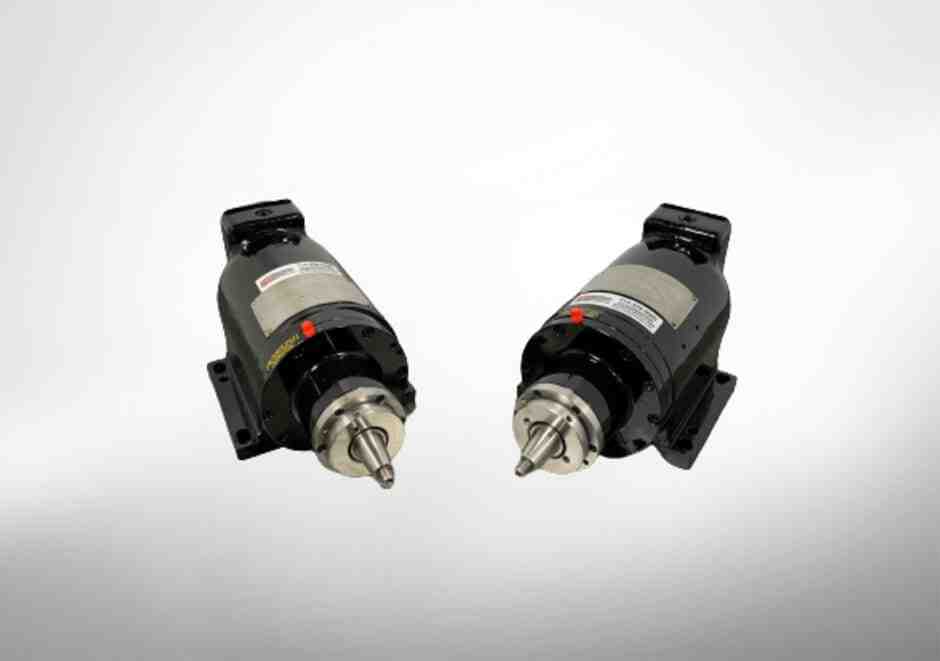
A CNC mill spindle is the rotating assembly at the heart of any CNC milling machine that holds and drives cutting tools with precise speed and torque. For industrial manufacturers in aerospace, defense, and precision engineering, choosing the right spindle directly impacts part quality, production efficiency, and machine uptime.
Quick Answer: What You Need to Know About Industrial CNC Mill Spindles
| Aspect | Key Points |
|---|---|
| Primary Function | Provides rotational power and precision for material removal |
| Main Types | Belt-driven, direct-drive, gear-driven, integrated motorized |
| Critical Components | Angular contact bearings, drawbar system, tool taper interface |
| Common Tapers | BT30, BT40, HSK (affects rigidity and tool compatibility) |
| Cooling Systems | Air-cooled (up to 3-4kW) or liquid-cooled (higher power) |
| Performance Factors | RPM range, torque curve, runout tolerance, thermal management |
| Maintenance Focus | Bearing health, vibration analysis, runout checks |
For manufacturers running continuous production shifts or machining demanding materials like titanium, spindle selection is a strategic investment. Spindle failure means unplanned downtime, costing thousands per hour in high-precision industries. Modern industrial spindles feature sophisticated bearing systems and advanced cooling designed for precision work. With proper selection and maintenance, quality spindles can deliver 15+ years of reliable service.
This guide walks you through the critical factors for selecting and maintaining industrial CNC mill spindles, from drive system configurations to performance metrics. Whether you’re specifying spindles for new equipment or evaluating repair versus replacement, you’ll find the practical information you need.

Basic CNC mill spindle vocab:
Understanding the CNC Mill Spindle: Types and Configurations
The CNC mill spindle is the rotating axis of a machine tool, applying the necessary torque and accuracy for machining. We broadly classify industrial CNC mill spindles into several types based on their drive mechanisms:
- Belt-Driven Spindles: The motor and spindle are connected by a belt and pulley. This design offers flexibility in speed adjustments and is cost-effective. Maximum speeds typically range from 12,000 to 15,000 RPM.
- Direct-Drive and Inline Drive Spindles: These eliminate belts, directly connecting the motor to the spindle shaft. This minimizes vibration and provides higher precision, ideal for fine detail and high efficiency.
- Gear-Driven Spindles: These use a gearbox to transmit power, excelling at delivering high torque at lower speeds for heavy-duty material removal.
- Integrated Motorized Spindles: These combine the motor and spindle into a single unit. Designed for high-speed applications, they can reach 20,000 to 60,000+ RPM.
- Air Turbine Spindles: Driven by compressed air, these are used for micro-machining requiring extremely high RPMs and fine finishes.
For a deeper dive, see our guide on CNC Spindles Unplugged: A Comprehensive Guide.
| Spindle Drive Type | Typical Speed (RPM) | Torque | Advantages | Primary Applications |
|---|---|---|---|---|
| Belt-Driven | 3,000 – 15,000 | High | Cost-effective | General milling |
| Direct-Drive | 5,000 – 30,000 | Consistent | High precision | Precision finishing |
| Gear-Driven | 500 – 8,000 | Very High | Heavy removal | Heavy-duty machining |
| Integrated Motorized | 20,000 – 60,000+ | High Speed | Compact | High-speed machining |
Integrated Motorized CNC Mill Spindle Performance
Integrated motorized spindles are the workhorses of high-speed machining (HSM). Their performance relies heavily on thermal management. As scientific research on high-speed CNC spindles highlights, even small temperature variations can cause dimensional changes that push parts out of tolerance. Modern units feature magnetic bearings, IoT monitoring for real-time data, and high-speed turbine add-ons. Explore More info about electric spindle motors for more details.
Advantages of Direct-Drive CNC Mill Spindle Systems
Direct-drive systems offer superior concentricity and minimal runout. By eliminating belts and gears, they achieve reduced vibration, which improves machining quality and extends tool life. These systems offer excellent dynamic response for rapid acceleration, making them a preferred choice for aerospace and medical device manufacturing. For an in-depth look, refer to our guide on More info about direct drive CNC.
Key Components and Taper Standards
An industrial spindle assembly is a marvel of precision engineering composed of several critical components:
- Angular Contact Bearings: These handle both radial and axial loads. Proper selection and installation are paramount for rotational accuracy. Learn more in More info about spindle bearings.
- Drawbar Systems: This mechanism clamps the tool holder securely. Most industrial spindles use pneumatic or spring-loaded systems to prevent tool pullout or chatter.
- Tool Holders: The interface between the tool and spindle, dictated by the taper standard.
- Spindle Housing: Protects internal components and often incorporates cooling channels.
- Seals: Essential for protecting bearings from contaminants like coolant and chips. Non-contact labyrinth seals are common in high-performance units.
For a full breakdown, check out A Comprehensive Guide to Spindle Parts.
Significance of the CNC Mill Spindle Taper
The spindle taper determines how rigidly the cutting tool is held. Common industrial standards include:
- BT Tapers (e.g., BT30, BT40): Symmetrical and common in Asian-made machines, providing excellent rigidity for heavy cuts.
- HSK Tapers: Feature dual contact (face and taper), providing superior rigidity and repeatability for high-speed machining. The hollow design allows for better balance at high RPMs.
Choosing the right taper impacts rigidity, tool change compatibility, and high-speed stability. For more on precision engineering, explore More info about precision spindles.
Performance Metrics: Speed, Torque, and Cooling
Spindle performance is defined by speed, torque, and thermal management:
- Spindle Speed (RPM): Determines how fast the tool rotates. Industrial spindles range from a few thousand to 60,000+ RPM.
- Torque: The rotational force needed to cut tough materials. For steel or titanium, lower speeds with higher torque are essential.
- Material Removal Rate (MRR): A key indicator of efficiency. High MRR requires a balance of speed and torque.
For more on these forces, read High Torque Stability: Key For Exotic Materials At The Spindle.
Recommended Power Ranges:
- Aluminum: 5-15 kW at 15,000-30,000 RPM.
- Steel: 15-30 kW at 8,000-15,000 RPM.
- Titanium/Super Alloys: 20+ kW at 6,000-12,000 RPM.
Air-Cooled vs. Liquid-Cooled Systems
Effective cooling is vital for longevity. Heat causes thermal expansion, leading to reduced accuracy.
- Air-Cooled Spindles: Use fans or compressed air. They are simpler and lower cost but less efficient for high-power applications (typically up to 3-4kW).
- Liquid-Cooled Spindles: Circulate coolant through internal channels. They offer superior thermal stability (within ±2°C) and can deliver 30-40% more power in the same physical size. These are essential for high-precision, continuous heavy-duty operations.
Learn more about proactive measures in our guide to More info about spindle health.
Maintenance and Precision Standards for Industrial Spindles
Meticulous maintenance can extend a spindle’s lifespan to 15+ years. Key standards include:
- Runout Tolerance: Deviation from perfect concentricity must be under 5 microns (0.0002″) for industrial precision. Regular checks are fundamental; see How to Check Spindle Runout.
- Vibration Analysis: Monitoring patterns every 1,000-2,000 hours helps identify bearing wear before failure.
- Dynamic Balancing: Critical for speeds above 8,000 RPM. We offer Precision Balancing Services to meet G2.5 standards.
- Lubrication: Grease-packed bearings require fresh lubricant every 2,000-4,000 hours, while oil-air systems need continuous monitoring.
- Daily Checks: Visual inspections for leaks, listening for unusual noises, and cleaning the tool taper can add years to service life.
When your spindle shows wear, trust our expertise in More info about spindle repair services. We specialize in OEM rebuilt spindles to ensure peak performance.
Frequently Asked Questions about CNC Mill Spindles
How does a VFD control spindle speed and torque?
A Variable Frequency Drive (VFD) controls an AC motor by varying frequency and voltage. Frequency control adjusts the RPM, while voltage control maintains magnetic flux to prevent overheating. Advanced VFDs use vector control to independently manage torque-producing current, allowing for consistent torque even at low speeds. They also manage acceleration ramps (typically 2-5 seconds) to prevent mechanical shock.
What are the signs of industrial spindle bearing failure?
- Unusual Noise: Grinding, squealing, or chattering.
- Excessive Heat: A housing that feels abnormally hot to the touch.
- Increased Runout: Visible wobble or detected deviation in the tool holder.
- Surface Finish Degradation: Sudden appearance of chatter marks or inconsistent dimensions.
Ignoring these signs can lead to motor burnout or a spindle crash.
What is the difference between BT and HSK tapers?
- BT Tapers: Contact the spindle only on the conical taper surface. They are robust, symmetrical, and cost-effective for general-purpose milling.
- HSK Tapers: Provide dual contact on both the taper and the face. This design offers exceptional rigidity and repeatability, making them superior for high-speed machining (HSM) where precision at high RPM is critical. They are less prone to “tool growth” caused by centrifugal force.
Conclusion
The CNC mill spindle is the heart of your machine, dictating precision and productivity. For industrial manufacturers in California, selecting and maintaining the right spindle is a strategic investment in quality. From robust belt-driven units to ultra-precise integrated systems, understanding these components is essential for long-term success.
At MZI Precision, we specialize in the meticulous repair and rebuilding of industrial manufacturing spindles, including OEM rebuilt units. We serve aerospace, defense, and precision engineering sectors across California, including Huntington Beach and Los Angeles.