


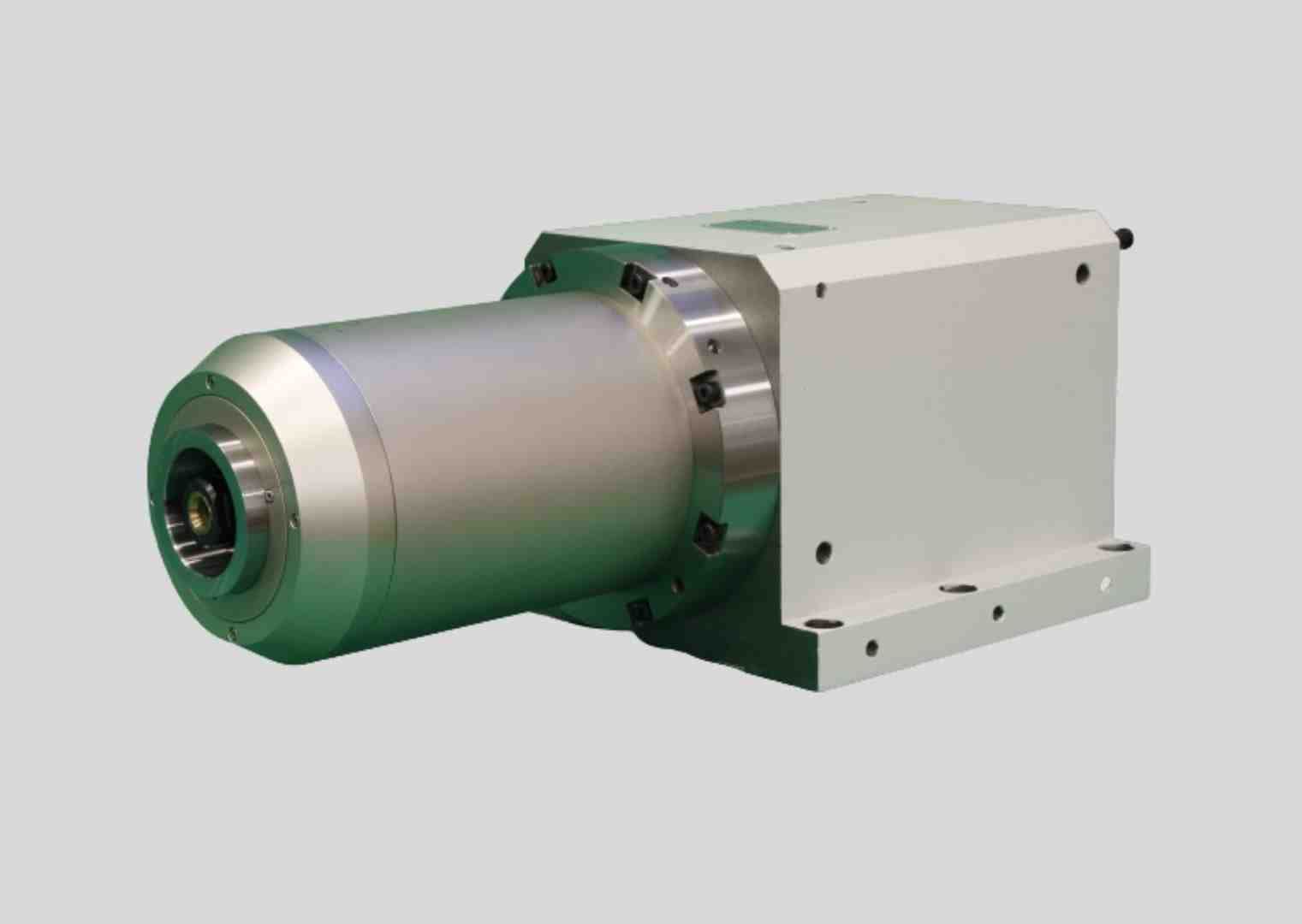
The Essential Guide to Dynamic Spindle Balancing and Vibration Control
Why Dynamic Spindle Balancing Is Critical for Industrial Manufacturing
METADATA: TITLE: THE ESSENTIAL GUIDE TO DYNAMIC SPINDLE BALANCING AND VIBRATION CONTROL META DESCRIPTION: DISCOVER HOW DYNAMIC SPINDLE BALANCING REDUCES VIBRATION, EXTENDS BEARING LIFE, AND OPTIMIZES CNC MACHINE PERFORMANCE IN INDUSTRIAL MANUFACTURING.

Dynamic spindle balancing is the process of measuring and correcting mass imbalance in a rotating spindle while it spins at operating speed — so that centrifugal forces are minimized and vibration is kept within safe limits.
Quick answer for manufacturing engineers:
| Question | Answer |
|---|---|
| What does it do? | Corrects uneven mass distribution in rotating spindle assemblies |
| When is it needed? | After spindle repair, bearing replacement, or when vibration/noise increases |
| Key standard | ISO G 0.4 (the tightest grade for high-speed precision spindles) |
| Main benefit | Up to 90% reduction in spindle vibration, longer bearing life, better surface finish |
| How often? | Every 6–12 months, or after any major spindle service |
If your CNC machines run above 4,000 RPM — and in aerospace manufacturing, most do — spindle imbalance is not a minor nuisance. It is a direct threat to part quality, tool life, and expensive spindle hardware.
Even a tiny mass imbalance becomes a large problem at high speed. The centrifugal force generated by an off-center mass grows with the square of rotational speed. That means doubling your spindle speed makes the imbalance force four times worse.
The result? Accelerated bearing wear, chatter on finished surfaces, scrapped parts, and — eventually — unplanned downtime that costs far more than a routine balancing service.
Research consistently backs this up: unbalanced spindles operating above 4,000 RPM are a leading cause of premature bearing failure, with vibration-related issues accounting for more than 50% of spindle repairs.
This guide covers everything industrial manufacturing teams need to know — from the physics behind imbalance, to step-by-step professional balancing procedures, to the advanced active balancing technologies now used on the highest-speed spindles in production.

The Fundamentals of Dynamic Spindle Balancing
To understand why dynamic spindle balancing is so vital, we first have to look at the difference between static and dynamic forces.
Imagine a heavy industrial manufacturing spindle at rest. If we place it on frictionless parallel rails, gravity will pull the heaviest side to the bottom. Correcting this single heavy spot is called static balancing. It is a simple, single-plane correction. If you have ever balanced a grinding wheel on a static stand, you have seen this in action. For a detailed breakdown of these foundational concepts, check out our Precision Balancing Services Complete Guide.
However, static balancing only ensures the spindle does not roll when at rest. Once that spindle starts spinning at 10,000 or 15,000 RPM, static balancing is no longer enough.
In a long, rotating spindle shaft, mass imbalances can exist at different points along its length and on opposite sides of the rotational axis. When spinning, these offset masses create opposing centrifugal forces that want to tilt the spindle shaft. This is known as a dynamic couple imbalance. It causes the spindle to wobble and vibrate violently at operating speeds, even if it is perfectly balanced statically.
Furthermore, in modern motorized spindles, the balancing equation is even more complex. A motorized spindle does not just experience mechanical inertia forces from mass unbalance; it also experiences electromagnetic forces.
According to advanced research in A Corrected Adaptive Balancing Approach of Motorized Spindle Considering Air Gap Unbalance, dynamic eccentricity in the air gap between the motor’s rotor and stator generates unbalanced magnetic pull (UMP). This electromagnetic force acts alongside the traditional mechanical imbalance, meaning professional dynamic balancing must account for both forces to achieve true, high-speed stability.
Why Vibration Control Matters for CNC Machine Performance
In high-precision industrial manufacturing, vibration is public enemy number one. When a spindle vibrates, it acts as a generator of unwanted energy that propagates through the entire machine tool structure.
Excessive vibration directly compromises:
- Spindle Rigidity: Vibration creates dynamic load variations that temporarily reduce the effective stiffness of your spindle assembly, allowing the tool to deflect under cutting loads.
- Structural Resonance: If the vibration frequency matches the natural frequency of the machine column, gantry, or fixture, it triggers resonance. This amplifies the vibration amplitude exponentially, leading to severe machining errors.
- Dimensional Accuracy: When the spindle is shaking, holding tight tolerances (such as those required in defense and aerospace manufacturing) becomes practically impossible.
Preventing Premature Bearing Failure with Dynamic Spindle Balancing
Spindle bearings are precision-engineered components designed to support pure rotational movement with minimal friction. They are incredibly sensitive to radial and axial overload.
When a spindle is unbalanced, the resulting centrifugal force subjects the bearings to a continuous, rotating fatigue load. This load accelerates bearing wear dramatically. In fact, bearing fatigue life ($L_{10}$ life) is inversely proportional to the cube of the applied load. A small increase in vibration-induced load can cut your bearing life in half!
By performing detailed Spindle Vibration Analysis, we can isolate these destructive forces. Proper dynamic balancing can reduce spindle vibration by up to 90%, which directly translates to a 30% to 50% extension in overall spindle bearing longevity.
Maximizing Tool Life and Surface Finish Quality
Have you ever looked at a finished part and seen ugly, wavy patterns across the surface? That is chatter, and it is often caused by a vibrating spindle.
When the spindle shakes, the cutting tool does not engage the workpiece smoothly. Instead, it bounces and chips away at the material unevenly. This constant impact loading leads to:
- Accelerated Tool Wear: Micro-chipping on the carbide or diamond cutting edges, forcing frequent tool changes.
- Poor Surface Finish: High surface roughness ($Ra$) values that fail quality control inspections, resulting in expensive scrap.
- Chatter Mitigation Issues: Operators are forced to slow down feed rates and spindle speeds to avoid chatter, which hurts your cycle times and overall shop productivity.
Maintaining a perfectly balanced spindle is the ultimate foundation for high-speed machining. To learn more about how balancing keeps your cutting tools sharp and your surface finishes flawless, read our guide on The Balancing Game: Achieving Precision with High-Speed Spindles.
Step-by-Step Procedures for Professional Dynamic Spindle Balancing
Achieving extreme balance accuracy requires a highly controlled, scientific approach. You cannot simply guess where to add weight; you must measure the exact physical behavior of the rotating assembly.
Here is how we perform professional dynamic balancing during our industrial spindle rebuilds:
1. Visual and Mechanical Inspection
Before spinning the spindle, we conduct a thorough inspection. We check the spindle taper for runout, inspect the clamping mechanism, and ensure there is no physical damage or debris built up on the rotating components. A dirty taper or a worn collet will throw off your measurements before you even begin.
2. Vibration and Runout Diagnostics
We mount highly sensitive accelerometers to the spindle housing to measure vibration in multiple axes (radial and axial). We also set up a phase reference sensor (such as an optical tachometer or eddy current sensor) to track the exact rotational position of the shaft.
3. Baseline Run
We spin the spindle up through its speed range to record the baseline vibration levels. This helps us identify critical speeds (resonance points) and establish a starting point for correction.
4. Trial Weight Application
Using the influence coefficient method, we place a small, known trial weight at a specific angular position on one of the spindle’s designated correction planes. We spin the spindle again and measure how this trial weight alters the vibration amplitude and phase angle.
5. Calculation and Correction
Our vibration analyzers process the difference between the baseline run and the trial run to calculate the exact mass and angle of the correction weight needed. We then apply the correction — either by adding precise balancing weights (such as grub screws in balancing rings) or by carefully removing material via precision drilling.
6. Verification and Reporting
We run the spindle up to its maximum operating speed to verify that the residual vibration meets the strict target tolerances. Finally, we generate a comprehensive balancing report detailing the pre- and post-balancing vibration levels.
Advanced Diagnostics and Spindle Vibration Analysis
To truly solve complex vibration issues, simple overall vibration measurements are not enough. We must use Fast Fourier Transform (FFT) analysis.
FFT analysis takes a complex vibration signal and breaks it down into its individual frequency components. This is incredibly powerful because different mechanical issues vibrate at different frequencies:
- 1x Running Speed (1x RPM): This is the classic signature of mass imbalance.
- 2x Running Speed (2x RPM): Often indicates misalignment or structural looseness.
- High Frequency Peaks: Typically point to bearing defects, such as pitting on the inner or outer races.
By analyzing the FFT spectrum, we can confidently determine whether a spindle simply needs to be balanced, or if it requires a complete rebuild with new bearings. For a deeper dive into these diagnostic techniques, explore our High-Speed Spindle Balancing Guide.
Executing Precision Correction to ISO G 0.4 Standards using Dynamic Spindle Balancing
In the industrial manufacturing world, balancing quality is governed by international standards, specifically ISO 1940-1. This standard defines various “G” grades of balance quality.
For standard machinery, a grade of G 2.5 or G 1.0 might be acceptable. But for high-speed CNC machine tool spindles, we target the incredibly strict ISO G 0.4 standard.
Achieving ISO G 0.4 means that the residual specific imbalance is so small that the displacement of the spindle’s center of gravity is measured in fractions of a micrometer. This level of precision is impossible to achieve without specialized calibration equipment and expert technicians. To understand what it takes to meet these extreme standards, read about our High-Speed Spindle Balancing capabilities.
Advanced Technologies in High-Speed Spindle Balancing
As CNC spindles push past 20,000 RPM into the realm of ultra-high-speed machining, traditional offline balancing faces limitations. At these extreme speeds, even minor thermal growth, centrifugal expansion, or slight variations in how a tool is clamped can change the spindle’s balance dynamically during operation.
To combat this, advanced research has led to the development of online active balancing systems.
One such breakthrough is discussed in Online Dynamic Balance Technology for High Speed Spindle Based on Gain Parameter Adaption and Scheduling Control. This technology uses a pneumatic-driven online dynamic balance device that can adjust balance disks in real-time while the spindle is running. By applying adaptive gain scheduling control, the system can automatically adjust its parameters as the spindle changes speed, reducing vibration near 10,000 RPM by up to 95%.
Similarly, active electromagnetic balancing rings are gaining traction in high-end motorized spindles. As detailed in the study Development of the active balancing device for high-speed spindle system using influence coefficients, these systems use electromagnetic actuators to shift internal balancing masses in response to real-time sensor feedback. This ensures that the spindle remains perfectly balanced across its entire operating range, including when passing through critical resonant speeds.
Frequently Asked Questions about Spindle Balancing
How often should industrial CNC spindles be balanced?
For high-utilization production environments, we recommend having your spindles inspected and balanced every 6 to 12 months as part of a robust preventative maintenance schedule.
However, you should perform an immediate balance check if you experience any of the following warning signs:
- A noticeable increase in operating noise or a high-pitched whine.
- Poor surface finish quality or sudden, unexplained tool chipping.
- Any collision or “crash” of the spindle, which can instantly shift internal components or damage bearings.
To schedule a professional assessment, visit our dedicated Spindle Balancing Services page.
Can dynamic balancing be performed in-situ on the machine?
Yes, basic dynamic balancing can be performed “in-situ” (directly on the machine tool) using portable vibration analysis kits. This is highly effective for “trim balancing” the overall assembly — such as correcting minor imbalances introduced by a specific toolholder, face mill, or grinding wheel.
However, in-situ trim balancing is not a substitute for a professional workshop balance. If the spindle’s internal bearings are worn, or if the shaft itself has suffered structural runout, trying to balance it on the machine is just putting a temporary band-aid on a deeper mechanical failure. True, long-term precision requires removing the spindle and sending it to a dedicated rebuilding facility. You can learn more about these specialized on-site diagnostic options via our High-Speed Balancing Service.
What are the limitations of DIY balancing compared to professional services?
With the rise of low-cost accelerometers and microcontroller projects, some shops attempt to build DIY dynamic balancers. While these projects are fun and can work well for low-speed, low-risk applications, they have severe limitations when it comes to high-speed industrial manufacturing spindles:
- Lack of Calibration: Professional balancing equipment is calibrated to traceably precise standards. DIY sensors often suffer from signal noise and latency, leading to inaccurate phase angle calculations.
- Safety Risks: A spindle spinning at 15,000 RPM holds an immense amount of kinetic energy. If a correction weight is calculated incorrectly or flies off during testing, it can destroy the spindle taper or cause catastrophic physical injury.
- No Bearing Diagnostics: A DIY setup might tell you that the spindle is vibrating, but it cannot perform the advanced FFT analysis needed to tell the difference between a simple imbalance and a failing ceramic bearing.
- No ISO Certification: Aerospace and defense contractors require documented proof that machine spindles meet ISO G 0.4 standards. Only professional balancing services can provide certified calibration reports.
Conclusion
At the end of the day, a high-performance CNC machine is only as good as its spindle. Investing in dynamic spindle balancing is the single most effective way to protect your machinery, extend the life of your expensive cutting tools, and guarantee the flawless surface finishes your customers expect.
At MZI Precision, we specialize in restoring industrial manufacturing spindles to peak operating condition. Serving critical industries across the United States — including aerospace, defense, and automotive manufacturing — we are experts in rebuilding and balancing OEM spindles to meet or exceed original factory specifications.
If you are located in California, near Huntington Beach or Los Angeles, and want to eliminate destructive vibrations from your production floor, we are here to help. Contact MZI Precision for Spindle Repair Services today, and let our team of precision engineers bring your high-speed spindles back into perfect balance.