


Spindle Rebuild Companies: Critical 2025 Guide
Understanding the Critical Role of Spindle Rebuilding
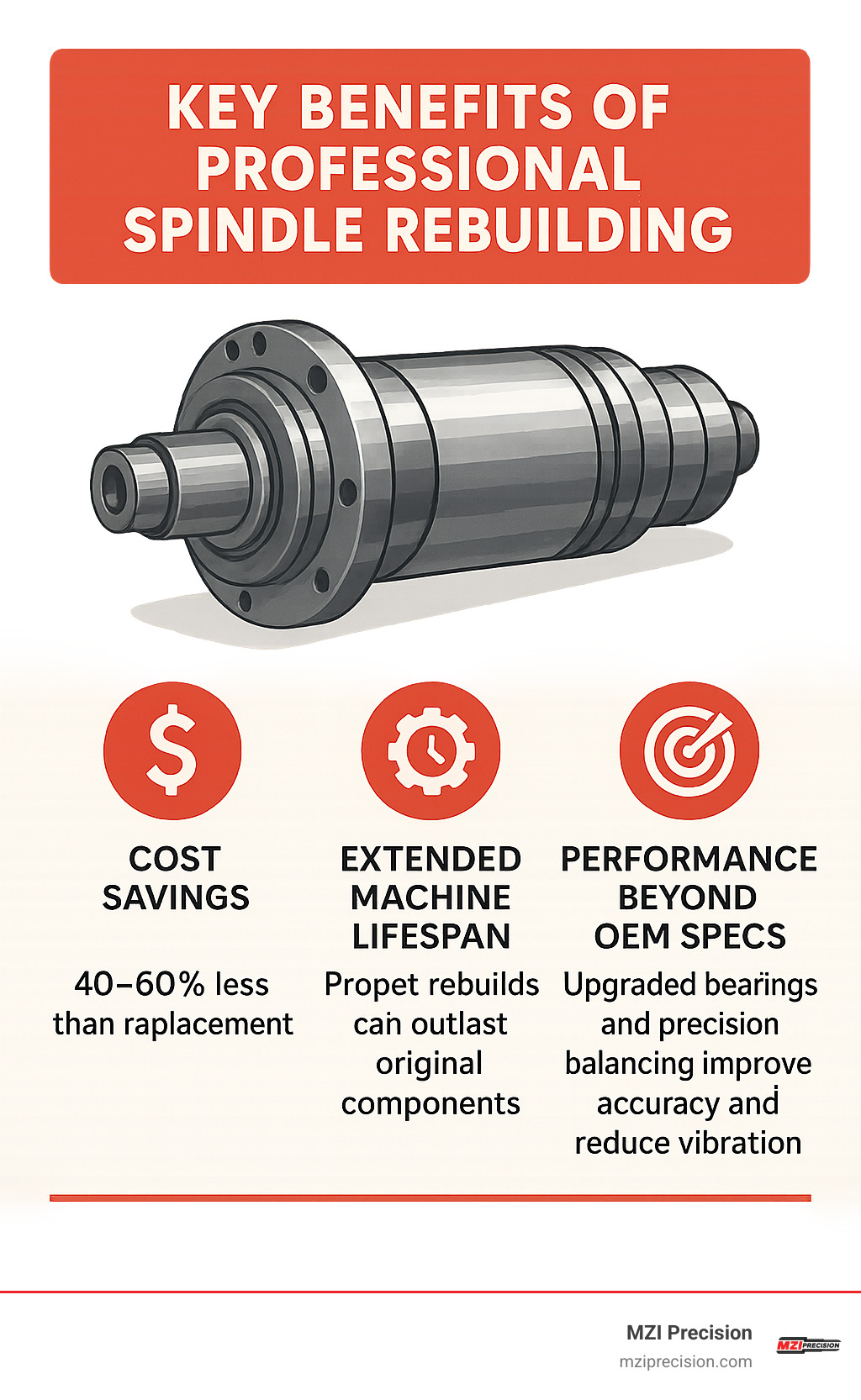
When your CNC machine’s spindle fails, spindle rebuild companies offer a cost-effective alternative to expensive replacements that can restore performance while saving 40-60% of replacement costs.
Industrial manufacturing spindles are the heart of precision machining operations. When these critical components fail, production stops and costs mount rapidly. A single day of downtime can cost manufacturers thousands of dollars in lost productivity.
The rebuild versus replacement decision impacts both your budget and timeline. While new spindles can take weeks to order and cost $15,000-$50,000+, professional rebuilding services deliver restored performance in days at a fraction of the cost.
Modern spindle rebuilding goes beyond simple repair. Expert rebuild companies use ISO-certified processes, cleanroom environments, and precision testing to restore spindles to like-new condition – often exceeding original specifications through upgraded components and improved balancing techniques.
The Anatomy of a Spindle Rebuild: From Failure to Factory-Fresh
When your industrial manufacturing spindle starts making unusual noises or your precision tolerances drift out of spec, it’s telling you a story. Spindle rebuild companies know how to read that story and write a happy ending.
Think of it this way: your spindle has been working hard, spinning thousands of times per minute, day after day. Eventually, even the toughest components need some TLC. The journey from a worn-out spindle to a factory-fresh one isn’t just about fixing what’s broken – it’s about understanding why it broke in the first place.
Professional spindle rebuilding starts with detective work. We don’t just slap on new parts and hope for the best. Instead, we dig deep into the failure analysis, identifying root causes so your rebuilt spindle doesn’t fail again for the same reason. Every step includes rigorous quality assurance because getting it right the first time saves you money and downtime.
Common Causes of Spindle Failure
Understanding what makes spindles fail helps prevent future headaches. Most failures don’t happen overnight – they’re the result of one or more factors working together over time.
Contamination is like having sand in your morning coffee – it ruins everything. Microscopic particles, coolant, or debris sneak into the spindle bearings and cause premature wear. Even the tiniest contaminants can wreak havoc on precision components.
Lubrication breakdown is another common culprit. Your spindle needs proper lubrication like your car needs oil. When lubrication degrades, becomes contaminated, or runs low, bearings overheat and can seize completely. Surprisingly, some newer spindles actually leave the factory without adequate lubrication, setting them up for early failure.
Bearing wear happens naturally over time, but it accelerates under tough conditions. These hardworking components absorb enormous radial and axial loads. Excessive vibration or poor lubrication makes them wear out faster. Sometimes fretting corrosion develops on bearing supports due to looseness, generating heat that speeds up the damage.
Machine crash impact can happen to even the most careful operators. When a tool crashes into a workpiece, those extreme shock loads travel straight through the spindle, potentially bending shafts, damaging bearings, or compromising the housing integrity.
Excessive vibration is the silent killer of spindles. Unbalanced tools, worn components, or misaligned parts create vibration that accelerates bearing wear and affects your surface finish. What’s tricky is that some spindles have critical speeds below 24,000 RPM, meaning vibration levels change dramatically at different operating speeds.
Drawbar malfunction might seem minor, but it’s crucial for tool retention. Worn guide bushings, rusted components from lack of lubrication, or damaged gripper threads can cause erratic tool changes and increased vibration. When drawbars stick and pop, they wear down the spring seat, creating more problems.
Coolant intrusion presents an interesting paradox. While coolant is essential for machining, if seals fail and it seeps into internal components, it causes corrosion and damage to sensitive electrical parts and bearings.
The Step-by-Step Rebuild Process
A professional spindle rebuild follows a precise sequence that transforms your worn component into something that performs like new – or even better.
Initial inspection and failure analysis kicks off the process. When your spindle arrives, we photograph everything and document its current condition. This comprehensive evaluation helps us understand what went wrong and forms the basis of a detailed report with photographic evidence. Most repair quotations and failure analyses are completed within 1-3 business days.
Spindle disassembly and component deep cleaning comes next. Every component gets carefully disassembled and thoroughly cleaned. This step often reveals hidden damage or wear that wouldn’t be visible otherwise. It’s amazing what you can find once everything is properly cleaned.
Sourcing OEM-grade parts ensures your rebuilt spindle meets or exceeds original specifications. Worn bearings, seals, O-rings, and drawbar components get replaced with high-quality parts. If an original part isn’t available, components can be refurbished in-house or reverse-engineered to match OEM specifications exactly.
Cleanroom reassembly is where precision really matters. The rebuild happens in a temperature-controlled, sterile environment that prevents microscopic dust or debris from contaminating critical internal components. This step is absolutely vital for long-term performance and reliability, especially for the sensitive bearings.
Precision balancing minimizes vibration and extends spindle life. All rotating elements get dynamically balanced to strict industry standards like ISO1940. The best rebuilders achieve tolerances of 0.1-mil or less, which dramatically improves performance.
Run-in and testing puts the rebuilt spindle through its paces before it ships. This includes rigorous performance testing with hours of test-stand operation and vibration benchmarking. Vibration analysis, dynamic run-out testing, electrical testing, and full-speed range performance inspection ensure everything works perfectly. For motorized spindles, a complete bearing break-in is performed.
Final documentation wraps up the process. Every step from initial inspection to final test results gets carefully documented in database files, with a printed summary report included with your shipment. This transparency gives you a complete history of the repair and quality assurance measures taken.
The entire process transforms your failed spindle into a precision component that’s ready to deliver years of reliable service.
Why Choose Professional Spindle Rebuild Services?
When your industrial manufacturing spindle fails, you’re facing a critical decision that can impact both your bottom line and production schedule. While the quick fix might seem appealing, partnering with professional spindle rebuild companies offers compelling advantages that go far beyond simple repair work.
Think of it this way: would you trust a complex heart surgery to your family doctor, or seek out a cardiac specialist? Your spindle deserves that same level of specialized expertise. Professional rebuilders bring decades of accumulated knowledge to every project. This deep understanding translates into faster, more accurate diagnoses and repairs that address root causes rather than just symptoms.
The real magic happens in minimizing your downtime. Every hour your machine sits idle costs you money in lost production, missed deadlines, and frustrated customers. Professional spindle rebuild companies understand this urgency and have built their entire operations around getting you back to making parts as quickly as possible.
But here’s where it gets exciting: a quality rebuild often delivers performance that exceeds original specifications. Through upgraded components, precision balancing, and modern techniques, your rebuilt spindle can actually run better than when it was new. It’s like getting a performance upgrade while saving money.
More info about our spindle services
Cost-Effectiveness vs. Full Replacement
Let’s talk numbers, because the financial case for rebuilding is compelling. When you’re staring at a failed spindle, the math becomes crystal clear once you dig beneath the surface costs.
| Factor | Spindle Rebuild | New Spindle Purchase |
|---|---|---|
| Initial Cost | Typically 40-60% of a new spindle cost | Full price, often $15,000 – $50,000+ |
| Turnaround Time | Often 3-10 business days; emergency options 1-3 days | Weeks to months for delivery |
| Warranty | 6 months to 1 year (often extended with certified installation) | Standard OEM warranty |
| Performance Potential | Restored to OEM specs, often “better than new” with upgrades | Original OEM specs |
Reduced capital expenditure is just the beginning. When you rebuild instead of replace, you’re maximizing the value of your existing assets and extending their useful life significantly. This strategic approach frees up budget for other critical investments in your operation.
Consider the opportunity cost too. While you’re waiting weeks or months for a new spindle to arrive, your rebuilt unit could be back in production, generating revenue and keeping your customers happy. Budget allocation becomes much more flexible when you’re not tying up massive capital in replacement parts.
The Value of Expertise and Minimizing Downtime
The true differentiator lies in the specialized knowledge and advanced testing capabilities that professional rebuilders bring to your project. These aren’t general repair shops – they’re precision specialists with dedicated cleanroom facilities and equipment designed specifically for spindle work.
Experienced technicians can spot issues that might escape notice during a casual inspection. They understand the subtle signs of bearing distress, recognize contamination patterns, and know exactly which components need attention. This faster diagnosis capability alone can save days compared to trial-and-error troubleshooting.
Specialized tooling makes all the difference in achieving proper tolerances and balancing. Professional shops invest in equipment that most manufacturers could never justify purchasing for occasional use. From dynamic balancing machines to precision measurement tools, they have what it takes to restore your spindle to factory specifications.
The proactive failure prevention aspect is equally valuable. During the rebuild process, technicians identify potential weak points and address them before they become problems. This attention to detail extends spindle life and reduces the likelihood of unexpected failures down the road.
Quick turnaround times aren’t just a nice feature – they’re essential for maintaining production schedules. Professional rebuilders structure their workflows to maximize CNC machine efficiency by getting your equipment back online fast. Emergency services can often complete critical rebuilds in just days, turning what could be a production disaster into a minor hiccup.
The Ultimate Checklist for Selecting a Spindle Rebuild Service Provider
Finding the right partner for your industrial manufacturing spindle repair isn’t just about getting the lowest quote. It’s about finding a team you can trust with one of your most critical machine components. The wrong choice can lead to repeated failures, extended downtime, and frustrated operators. The right choice? That’s your ticket to reliable production and peace of mind.
Think of it like choosing a surgeon for a delicate operation. You want someone with steady hands, the right tools, and a track record of success. Spindle rebuild companies are the surgeons of the manufacturing world, and choosing wisely can make all the difference.
Key Evaluation Criteria for a Top-Tier Spindle Rebuild Service
When you’re evaluating potential partners, look beyond the glossy brochures and focus on what really matters. Years of experience tell a story that marketing materials can’t. A company that’s been rebuilding industrial manufacturing spindles for decades has seen every type of failure imaginable. They’ve learned from mistakes, refined their processes, and developed the instincts that only come with time.
ISO 9001:2015 certification might sound like bureaucratic paperwork, but it’s actually your assurance that quality isn’t left to chance. This certification means the company follows documented procedures, maintains consistent standards, and continuously improves their processes. It’s like having a quality control referee watching every play.
Dedicated cleanroom facilities separate the professionals from the amateurs. Industrial manufacturing spindle rebuilding requires an environment cleaner than most hospital operating rooms. Even microscopic particles can spell disaster for precision bearings. Companies that invest in proper cleanroom facilities are serious about delivering results that last.
Advanced testing capabilities reveal the true quality of a rebuild. Anyone can put parts back together, but can they prove it works properly? Look for companies that conduct extensive vibration analysis, dynamic run-out testing, and full-speed performance verification. The best rebuilders will run your spindle through hours of testing before declaring it ready.
Adherence to OEM specifications ensures your rebuilt spindle will play nicely with your machine. Some rebuilders cut corners or use \”close enough\” parts. Top-tier companies either source genuine OEM components or manufacture replacements that meet or exceed original specifications.
Documented quality control provides the transparency you deserve. The best spindle rebuild companies photograph every step, document their findings, and provide detailed reports. This documentation isn’t just paperwork – it’s proof of their thoroughness and your insurance against future questions.
Understanding Warranties, Turnaround Times, and Emergency Services
A warranty isn’t just a piece of paper – it’s a company’s confidence in their work written in black and white. Warranty duration typically ranges from six months to one year, but the details matter more than the timeframe. What’s covered? What voids the warranty? Are there different terms for different types of spindles?
Certified installation benefits often extend warranty coverage or provide additional protections. When factory-trained technicians install your rebuilt spindle, they’re more likely to spot potential issues and ensure everything is properly aligned and calibrated.
Expedited repair options can save your production schedule when disaster strikes. Standard turnaround times of 5-10 business days work fine for planned maintenance, but what happens when a spindle fails unexpectedly? The best companies offer emergency services that can complete rebuilds in 1-3 days, though you’ll pay a premium for the privilege.
Spindle exchange programs offer the ultimate in downtime reduction. Instead of waiting for your specific spindle to be rebuilt, you receive a pre-rebuilt unit immediately. Your failed spindle becomes part of their inventory for the next customer who needs a quick exchange.
Understanding the difference between standard and emergency turnaround helps you plan and budget appropriately. Standard service costs less but requires patience. Emergency service costs more but can save your production schedule when every hour of downtime hurts your bottom line.
The Role of Technology in Modern Spindle Rebuilding
Modern industrial manufacturing spindle rebuilding isn’t your grandfather’s repair shop. Today’s leading companies use sophisticated technology that would have seemed like science fiction just a few decades ago.
Vibration analysis acts like a stethoscope for spindles, revealing problems that aren’t visible to the naked eye. By analyzing vibration patterns at different speeds, technicians can identify bearing issues, imbalance problems, and alignment concerns before they cause catastrophic failures.
Thermal imaging spots trouble before it becomes critical. Hot spots often indicate excessive friction, failing bearings, or electrical problems. Catching these issues early can mean the difference between a simple repair and a complete rebuild.
Reverse engineering capabilities keep older machines running when original parts are no longer available. Advanced spindle rebuild companies can measure, analyze, and manufacture replacement components that match original specifications exactly.
Dynamic balancing to ISO standards ensures smooth operation at high speeds. Precision balancing machines can achieve tolerances measured in thousandths of an inch, eliminating vibrations that would otherwise reduce bearing life and affect part quality.
Predictive maintenance insights represent the cutting edge of spindle service. Some companies now use advanced diagnostic software and data collection tools to predict when failures might occur. This technology transforms spindle maintenance from reactive repairs to proactive prevention.
Advanced diagnostic tools continue to evolve, giving skilled technicians unprecedented insight into spindle condition and performance. The companies that invest in these technologies can deliver better results and help you avoid unexpected failures.
Frequently Asked Questions about Spindle Rebuilding
When your industrial manufacturing spindle fails, you’re probably wondering about costs, timing, and what to expect. We’ve helped countless manufacturers steer these decisions, and here are the questions we hear most often.
How much does a spindle rebuild cost?
The good news? A spindle rebuild typically costs 40-60% of a brand-new replacement, delivering significant savings while restoring or even enhancing your spindle’s performance. Think of it as getting a like-new spindle at nearly half the price.
The final cost depends on several factors. High-speed spindles often require more specialized components than standard units. Motorized spindles with complex electrical systems may need additional repairs compared to simpler mechanical ones. The extent of damage plays a big role too – a spindle with bearing wear will cost less to rebuild than one that suffered a major crash.
Spindle rebuild companies provide detailed quotes after their initial inspection, so you’ll know exactly what you’re paying for before any work begins. This transparency helps you make informed decisions about your equipment investments.
How long does a spindle rebuild take?
Standard turnaround times typically range from 5-10 business days from the moment your spindle arrives at the rebuild facility. This includes the complete process – from initial inspection and failure analysis through cleanroom reassembly and final testing.
But we understand that production can’t always wait. Many professional rebuild services offer emergency or expedited options that can complete your rebuild in just 1-3 days when downtime is critical. These rush services often involve overtime work and weekend shifts to get your spindle back fast.
The timeline also depends on parts availability. Common bearing sizes and seals are usually in stock, but specialized components for unique spindle models might add a day or two to the process.
What kind of warranty can I expect on a rebuilt spindle?
Most reputable spindle rebuild companies offer warranties ranging from six months to one year on both parts and labor. This coverage demonstrates their confidence in the quality of their work and gives you peace of mind.
Here’s something interesting – many companies extend their warranty coverage when their certified technicians handle the installation. This makes sense because proper installation is crucial for spindle longevity. Even the best rebuild can fail prematurely if it’s not installed correctly.
The warranty typically covers defects in workmanship and premature failure of replaced components. It’s your protection against the unexpected and shows that professional spindle rebuild companies stand behind their craftsmanship.
Always ask about warranty terms upfront – they’re a good indicator of the rebuilder’s confidence in their work and commitment to customer satisfaction.
Conclusion: Revitalize Your Operations with a Trusted Spindle Rebuild Partner
When your industrial manufacturing spindle fails, it’s more than just a broken part – it’s a direct threat to your productivity and bottom line. The good news? You don’t have to face this challenge alone or break the bank with expensive replacements.
Throughout this guide, we’ve seen how spindle rebuild companies offer a smart alternative that saves you 40-60% compared to buying new while often delivering performance that exceeds original specifications. The rebuild process transforms a failed component into a precision instrument through careful failure analysis, cleanroom assembly, and rigorous testing.
The benefits are clear: faster turnaround times than new purchases, comprehensive warranties, and the expertise that comes from years of specialized experience. Whether it’s contamination damage, bearing wear, or the aftermath of a machine crash, professional rebuilders have seen it all and know exactly how to restore your spindle to peak condition.
Choosing the right partner matters. Look for companies with ISO certification, dedicated cleanroom facilities, and advanced testing capabilities. The best rebuilders don’t just fix problems – they prevent future ones through predictive maintenance insights and upgraded components.
At MZI Precision, we understand that your industrial manufacturing spindle is critical to your operation. That’s why we bring expertise in OEM rebuilt spindles and unwavering commitment to exceptional service across aerospace, agriculture, automotive, defense, solar energy, and other demanding industries. We’re located right here in the United States, ready to restore precision and productivity to your shop floor.
Your spindle failure doesn’t have to mean extended downtime or massive capital expenditure. With the right rebuild partner, you can get back to making parts and making money – often with better performance than before.