


Bearings for Spindle Assemblies: Ultimate 2026 Guide
WHY BEARINGS ARE MISSION-CRITICAL FOR SPINDLE ASSEMBLIES

Bearings for spindle assemblies are precision components that enable machine tool spindles to rotate at high speeds while maintaining accuracy and handling substantial loads. These specialized bearings—typically angular contact ball bearings, cylindrical roller bearings, or hybrid ceramic bearings—determine the performance, precision, and longevity of the entire spindle system.
Quick Overview: Essential Facts About Spindle Assembly Bearings
- Primary Function: Support the rotating spindle shaft while maintaining micron-level accuracy
- Common Types: Angular contact ball bearings (high speed), cylindrical roller bearings (heavy loads), hybrid ceramic bearings (extreme performance)
- Key Performance Factors: Precision grade (ABEC/ISO rating), preload, contact angle, lubrication method
- Typical Failure Causes: Contamination, improper lubrication, incorrect mounting, thermal stress
- Critical Statistic: Up to 30% failure rate on spindle assemblies when bearings seize to components
Machine tool spindles rotate the tool for drilling, milling, grinding, or turning a workpiece and transmit torque to the cutting area. Bearings are what make both functions possible.
Without the right bearings, even the most advanced CNC machine becomes unreliable. The bearing sets directly influence the spindle’s lifetime, impacting productivity, part quality, and maintenance costs.
This guide covers selecting, maintaining, and optimizing bearings for industrial manufacturing spindle assemblies. Understanding these critical components is essential, whether you’re specifying bearings for a new machine tool or troubleshooting performance issues.
THE CORE OF PRECISION: UNDERSTANDING SPINDLE ASSEMBLIES AND BEARINGS
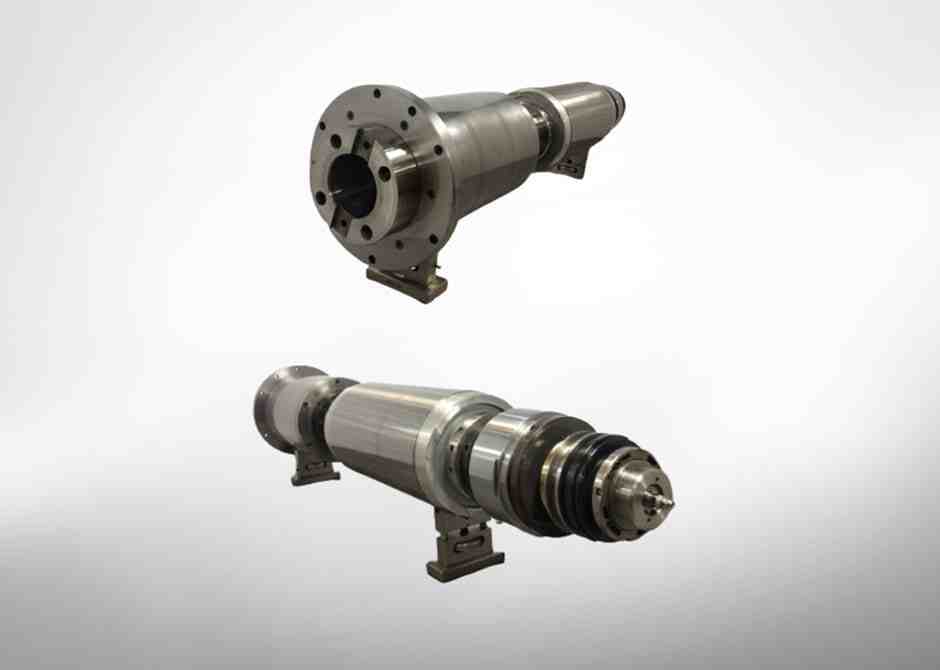
At the heart of every industrial manufacturing machine tool lies the spindle assembly. A spindle is the machine’s rotating axis. While technically the shaft, the term often refers to the entire rotary unit, including the shaft, its bearings for spindle assemblies, and other components supporting its rotation.
A typical industrial spindle assembly includes the spindle shaft (which holds the tool), the housing, and the tool interface. The bearings are the unsung heroes, strategically placed within the housing to support the shaft and ensure smooth, precise rotation.
The bearings’ primary function is to support machining loads (radial, axial, and combined) and maintain the spindle’s rotational accuracy. Without properly functioning bearings for spindle assemblies, the cutting tool would wobble and vibrate, failing to produce precise results. This directly impacts productivity, which is crucial for high-stakes industries like aerospace and defense. To get a better visual understanding, check out this Spindle Assembly Source.
Why Bearings are the Heart of the Assembly
Bearings for spindle assemblies are often called the heart of the machine tool. They are crucial for the performance of any industrial manufacturing spindle, directing its movement to achieve optimal speed and accuracy.
Modern machinery demands greater precision, durability, and speed, placing immense pressure on bearings. They directly impact workpiece quality, machining efficiency, and spindle lifespan. Without high-quality bearings, a spindle cannot achieve the micron-level precision required for tasks like 3C wearing parts machining or aerospace propeller cutting.
At MZI Precision, we understand this intimately. Our work in industrial manufacturing spindle repair and rebuilding constantly reinforces that the machine’s performance hinges on these small yet mighty components. They are the foundation upon which precision is built. For more general information on how bearings contribute to machinery, you can explore our guide on Bearing For Machine.
A GUIDE TO THE TYPES OF BEARINGS FOR SPINDLE ASSEMBLIES
Selecting the right bearings for spindle assemblies is a meticulous process requiring careful consideration of application requirements like speed, load, and rigidity. You wouldn’t use a general-purpose bearing in a high-precision spindle.
The world of spindle bearings offers a diverse range of options, each designed to excel under particular conditions. Understanding these types is the first step toward maximizing your spindle’s performance and longevity. We’ve put together a comprehensive resource on Spindle Bearing Types and a broader overview of Bearing Types to help you steer this intricate landscape.
Angular Contact Ball Bearings
Angular contact ball bearings are the most common type of bearings for spindle assemblies in machine tools. Their contact angle allows them to support both radial and axial loads simultaneously, making them ideal for applications requiring both speed and precision.
They come with various contact angles, typically 15°, 25°, 30°, or 40°. The choice depends on the balance between radial/axial load capacity and speed requirements. A smaller contact angle favors higher speeds, while a larger angle provides greater axial load capacity.
To improve rigidity and load distribution, angular contact ball bearings are often used in duplex arrangements (mounted in pairs). Common arrangements include:
- Back-to-back (DB): Offers high rigidity and can handle moment loads.
- Face-to-face (DF): Provides good rigidity and less sensitivity to misalignment than DB.
- Tandem (DT): Used for extremely high axial loads in one direction.
These arrangements allow for precise control over preload, which is critical for spindle accuracy. If you’re wondering if these bearings are right for your high-speed precision spindles, dive deeper into our article: Are Angular Contact Bearings Good for High-Speed Precision Spindles?
Cylindrical Roller Bearings
When radial load capacity and rigidity are paramount, cylindrical roller bearings are the solution. Unlike the point contact of ball bearings, their line contact distributes the load over a larger area, enabling them to handle significantly higher radial loads.
These bearings are well-suited for heavy-duty industrial manufacturing spindles where substantial radial forces are encountered. Their robust design contributes to the spindle’s overall rigidity, which is vital for tool stability during aggressive machining.
A notable advantage of many cylindrical roller bearings is their separable components, allowing the inner ring, outer ring, and roller assembly to be mounted independently. This simplifies mounting and dismounting. Brands like NSK offer NN and NNU series cylindrical roller bearings specifically designed for higher loads and improved rigidity in spindle applications. For a broader understanding of heavy-duty bearings, explore our page on Machine Bearings.
Hybrid Ceramic and Specialized Bearings
Hybrid ceramic and specialized bearings represent the cutting edge in bearings for spindle assemblies. Hybrid bearings combine steel rings with ceramic (silicon nitride) rolling elements, offering a host of benefits:
- Higher Speed Limits: Ceramic balls are lighter than steel, reducing centrifugal forces at high speeds.
- Lower Friction: Less friction means less heat, allowing for cooler operation and extended lubricant life.
- Electrical Insulation: Ceramic is non-conductive, preventing damage from stray electrical currents that can cause “washboard” patterns on raceways.
- Longer Service Life: The superior hardness and wear resistance of ceramic balls contribute to a dramatically longer lifespan. A hybrid bearing’s service life may be over 10 times that of a standard steel bearing. While the initial cost is higher, maintenance savings often recover the difference.
Beyond hybrid designs, specialized bearings can be engineered for unique demands. Modifications like direct lubrication (DLR) features, custom preloads, or EDM holes can transform standard bearings into specialty components. These are often implemented to address root causes of premature failure by fine-tuning the bearing to the spindle’s exact operating conditions. For more on these advanced types, check out our guide on Types of Super Precision and Spindle Bearings.
MAXIMIZING PERFORMANCE: KEY FACTORS AND PRECISION GRADES
Achieving optimal performance from bearings for spindle assemblies is a balancing act. It involves understanding how operational variables interact with bearing specifications to select the right bearing for your industrial manufacturing needs. Our Precision Spindle Bearings Complete Guide offers an in-depth look at these considerations.
The Impact of Speed, Load, and Temperature
These three factors are intrinsically linked and greatly influence a spindle bearing’s performance and lifespan:
- Speed: High rotational speeds generate centrifugal forces, increasing stress and heat. This can lead to lubricant breakdown and wear. The dmn factor (bearing mean diameter in mm x rotational speed in rpm) is a critical parameter for classifying high-speed applications.
- Load: Spindle bearings must withstand radial, axial, and moment loads. Excessive loads can lead to material fatigue, brinelling (indentations), and reduced lifespan. The dynamic load rating (C) is a key parameter, representing the load at which 90% of bearings can operate without fatigue failure after one million revolutions.
- Temperature: Heat is the enemy of bearings, arising from friction, lubricant degradation, or the machining process. High temperatures cause thermal expansion that alters internal clearances and preload. They also degrade lubricants. During run-in, we monitor bearing temperature, shutting down if it exceeds 70°C for the bearing or 50°C for the housing. Bearings operating above 120°C often require special dimensional stability heat treatment.
Understanding Precision Grades and Preload
For industrial manufacturing spindles, precision is a fundamental requirement. This is where precision grades and preload are critical.
- Precision Grades: These define the bearing’s manufacturing tolerances. The most common standards are ABEC (US) and ISO (international). Ratings like ABEC 7 (ISO P4) or ABEC 9 (ISO P2) are common for high-precision spindles. Higher classification numbers mean tighter tolerances, resulting in higher precision. This ensures exceptional running accuracy and minimal runout, critical for high-quality workpieces.
- Preload: Preload is a controlled compression applied during assembly to eliminate internal clearance, which increases rigidity and reduces runout. It ensures the rolling elements always contact the raceways, maintaining accuracy. However, preload is a delicate balance: too little reduces rigidity, while too much generates excessive heat and shortens bearing life. It’s a critical factor requiring careful calculation. We’ve dedicated a guide to this topic: CNC Spindle Bearing Preload.
Characteristics of High-Performance Bearings for Spindle Assemblies
High-performance bearings for spindle assemblies are set apart by innovative design, advanced materials, and meticulous manufacturing.
- Optimized Raceway Geometry and Improved Surface Finishes: These improvements minimize friction, reduce heat, and improve stress distribution, leading to smoother operation and a longer lifespan.
- Advanced Materials: High-purity, vacuum-degassed steels are used to reduce microscopic inclusions that could initiate fatigue failures. Some manufacturers, like Schaeffler, offer “X-life” quality bearings with improved geometry and surfaces, providing a significant increase in the fatigue limit load.
- Increased Fatigue Limit and Longer Service Life: These improvements result in a bearing that withstands greater stress for longer. X-life bearings, for instance, can achieve up to 50% higher values in service life calculations. This can allow for smaller bearing arrangements with the same or better performance, boosting machine tool productivity.
To dig deeper into the specifics of these improved performance bearings, we recommend exploring resources like Learn more about enhanced performance bearings. For more insights into what makes a bearing truly high-performing, visit our page on High Precision Spindle Bearings.
ENSURING LONGEVITY: FAILURE PREVENTION AND MAINTENANCE
Even robust bearings for spindle assemblies have a finite lifespan, but proper care can significantly extend it. Proactive maintenance and understanding common failure modes are critical for maximizing spindle uptime and preventing costly breakdowns. At MZI Precision, root cause analysis of bearing failures is a core part of our expertise in industrial manufacturing spindle repair and rebuilding.
Common Failure Modes and Their Causes
Understanding how bearings for spindle assemblies fail is the first step in preventing it. Here are some of the most common culprits:
- Contamination: This is the number one enemy of bearings. Microscopic particles like dust or grit can enter the bearing, causing dents on raceways that lead to stress concentrations and premature failure.
- Improper Lubrication: Too little, the wrong type, or degraded lubricant leads to increased friction, heat, and wear. Metal-to-metal contact occurs when the lubricant film breaks down, rapidly accelerating damage.
- Incorrect Mounting: Using excessive force, improper tools, or misaligning components can cause brinelling, cracking, or deformation of bearing components.
- Overload: Exceeding the bearing’s load rating can quickly lead to fatigue failure, often due to aggressive machining parameters or impacts.
- Misalignment: If the spindle shaft or housing bores are not perfectly aligned, the bearing will experience uneven loading and premature wear.
- Electrical Arcing: Stray electrical currents passing through the bearing can cause pitting on raceways and rolling elements. This is mitigated with insulated or hybrid ceramic bearings.
- Seized Bearing Races: In some applications, the bearing race seizes to the spindle shaft, making separation difficult and often damaging the shaft. This can be a significant issue, potentially leading to a 30% failure rate on spindle assemblies if not addressed correctly.
If you’re noticing unusual noises, vibrations, or heat, check if your bearings are bad. Our article Are My Spindle Bearings Bad? can help you diagnose potential issues.
The Critical Role of Lubrication and Cleanliness
For the longevity and reliability of bearings for spindle assemblies, lubrication and cleanliness are paramount and foundational to bearing health.
-
Lubrication: Proper lubrication reduces friction, dissipates heat, prevents corrosion, and helps exclude contaminants. The choice between grease and oil depends on speed, temperature, and load. Grease packing is common, while high-speed spindles often use advanced oil-mist or oil-air lubrication systems for precise delivery. We provide an ultimate guide on Greasing Spindle Bearings Ultimate Guide.
-
Cleanliness: Precision bearings are made to micron-level tolerances, so even minute contaminants cause significant damage. A scrupulously clean environment during storage, handling, and assembly is non-negotiable. This means working in a clean area, using lint-free gloves, and using filtered washing solutions. Any contaminant, from a dust particle to a fingerprint, is a potential destroyer of bearing surfaces.
Best practices for selecting and mounting bearings for spindle assemblies
Optimal spindle performance starts with meticulous selection and precise mounting of the bearings for spindle assemblies.
- Component Inspection: Before mounting, rigorously inspect the spindle shaft and housing bores for flaws or dimensional inaccuracies. Target runouts should typically be between 3 to 5 microns.
- Shaft and Housing Tolerances: Ensure shaft and housing dimensions and their geometric tolerances meet the required specifications for the bearing fits.
- Proper Tool Usage: Never use hammers or brute force. Use proper bearing heaters for shrink fits and hydraulic presses or mounting tools that apply force evenly to the correct bearing ring.
- Correct Mounting Force: Apply force evenly and only to the ring being fitted. Applying force to the wrong ring can transmit stress through the rolling elements, causing damage.
- Preload Setting: For angular contact ball bearings, accurately setting the preload is critical, often involving measuring axial displacement or using specific locknut torques.
- Run-in Procedures: After mounting, new bearings for spindle assemblies require a controlled “run-in” period. This involves operating the spindle at gradually increasing speeds to seat the bearings, channel excess lubricant, and allow components to thermally stabilize. Monitor bearing temperature closely during this process.
Following these best practices drastically reduces the risk of premature bearing failure. For a step-by-step guide on the replacement process, refer to our Spindle Bearing Replacement Procedure.
THE FUTURE OF SPINDLE BEARING TECHNOLOGY
The industrial manufacturing landscape is constantly evolving, driven by demands for higher productivity, greater precision, and improved durability. This relentless pursuit of improvement directly translates into advancements in bearings for spindle assemblies. The goal is always to maximize output and minimize downtime.
Modern machine tools, including electric spindles, require rapid and flexible capabilities during processing for applications ranging from 3C wearing parts machining to aerospace propeller cutting. The continuous progress in bearing technology is essential to meet these rigorous demands. We are moving towards a future where spindles are not just faster, but also smarter and more resilient. You can explore more about these advancements in applications by reading What is an Electric Spindle and its applications?.
Innovations in Bearing Design and Materials
The future of bearings for spindle assemblies lies in a blend of cutting-edge materials science, smart technology, and innovative design:
- Smart Bearings and Integrated Sensors: Imagine bearings that can tell you their condition in real-time. This is becoming a reality with integrated sensors that monitor temperature, vibration, and even lubricant health. This data feeds into condition monitoring systems, enabling predictive maintenance and preventing unexpected failures. For example, SKF’s technology allows for integrating CNC system data into condition monitoring for predictive spindle health analysis.
- Advanced Material Science: Beyond hybrid ceramics, research continues into new alloys, surface treatments, and coatings (like PVD or DLC) that offer superior hardness, wear resistance, and corrosion protection. These materials are designed to withstand extreme operating conditions, including higher temperatures and more aggressive environments.
- Self-Lubricating Materials: Efforts are underway to develop bearings with integrated self-lubricating properties, reducing reliance on external lubrication systems and extending maintenance intervals.
- Magnetic Bearings: For the ultimate in speed and precision, magnetic bearings offer a contactless solution. They support the spindle shaft using magnetic fields, allowing rotation with virtually no friction, wear, or noise. While complex and expensive, they represent the pinnacle of frictionless rotation for specialized, ultra-high-speed applications.
These innovations are not just theoretical; they are actively being developed and implemented, shaping the next generation of high-performance industrial manufacturing spindles.
FREQUENTLY ASKED QUESTIONS ABOUT SPINDLE ASSEMBLY BEARINGS
We often get asked common questions about bearings for spindle assemblies. Here are some of the most frequent ones we encounter, along with our expert answers.
How do I know if my spindle bearings are failing?
Detecting failing bearings for spindle assemblies early can save you from catastrophic spindle damage and costly downtime. Here are the tell-tale signs:
- Increased Noise: A change in the spindle’s operating sound, such as grinding, squealing, growling, or humming, is a primary indicator.
- Vibration: Excessive or unusual vibration felt in the machine tool or observed in the workpiece quality.
- Excessive Heat: The bearing housing or spindle nose feeling unusually hot to the touch, indicating increased friction.
- Poor Surface Finish on Parts: If your machined components suddenly exhibit chatter marks, poor surface finish, or dimensional inaccuracies, failing bearings could be the culprit.
- Loss of Accuracy: Inconsistent part dimensions or a noticeable decrease in the machine’s ability to hold tight tolerances.
If you observe any of these symptoms, it’s crucial to act quickly. Our guide on Spindle Bearing Noise Complete Guide can help you identify specific sounds.
What is the difference between a standard bearing and a spindle bearing?
While all spindle bearings are technically “bearings,” not all bearings are suitable for spindles. The key difference lies in their precision, tolerances, and design focus:
- Spindle Bearings are a Type of High-Precision or Super-Precision Bearing: They are manufactured to significantly tighter tolerances (e.g., ABEC 7 or 9, ISO P4 or P2) compared to standard industrial bearings. This ensures minimal runout and maximum rotational accuracy.
- Higher Speed Ratings: Spindle bearings are specifically designed to operate reliably at very high RPMs, often utilizing specialized cages, advanced lubrication methods, and internal geometries to manage heat and centrifugal forces.
- Specific Materials and Designs for Machine Tool Accuracy: They often incorporate advanced materials like high-purity steel or ceramic rolling elements. Their contact angles and internal clearances are carefully chosen and often preloaded to achieve maximum rigidity, which is paramount for maintaining tool stability and workpiece quality in industrial machining.
A standard bearing is designed for general load support and rotation, while a spindle bearing is engineered for extreme precision, high speed, and rigidity in demanding machine tool environments.
Can spindle bearings be repaired or only replaced?
The unfortunate truth is that once bearings for spindle assemblies show signs of significant wear or damage, they cannot be repaired in the traditional sense. Bearings are precision wear items, and their internal components (raceways, rolling elements, cages) are manufactured to such fine tolerances that any damage compromises their integrity and performance. Attempting to repair them would be futile and would not restore the micron-level precision required for industrial manufacturing spindles.
Therefore, when a spindle bearing fails, it must be replaced. During a comprehensive spindle rebuild, such as those performed by MZI Precision, all worn or damaged bearings are removed and replaced with new, high-quality, precision-matched bearings. The focus is on rebuilding the entire spindle assembly to like-new condition, which inherently includes installing fresh, top-tier bearings to ensure the spindle meets or exceeds its original performance specifications. We specialize in this kind of meticulous work, restoring your spindle’s heart to full health. Learn more about our process in How to Repair Spindle Assembly Bearing.
CONCLUSION
We’ve journeyed through the intricate world of bearings for industrial manufacturing spindle assemblies, uncovering their critical role, diverse types, and the myriad factors influencing their performance and longevity. From the foundational importance of angular contact and cylindrical roller bearings to the cutting-edge advancements in hybrid ceramic and smart bearing technologies, it’s clear that these components are far more than just simple rotational supports.
The meticulous selection of bearings based on speed, load, and temperature, coupled with a deep understanding of precision grades and preload, is paramount for achieving optimal spindle performance. Furthermore, proactive maintenance, rigorous cleanliness, proper lubrication, and adherence to best practices during mounting are not just good habits—they are essential for preventing common failure modes and significantly extending the lifespan of your valuable industrial manufacturing spindles.
At MZI Precision, we understand that the precision and efficiency of your operations depend entirely on the health of your spindles. Our expertise in industrial manufacturing spindle repair and rebuilding, particularly with OEMs rebuilt spindles, means we live and breathe these critical components. We are committed to providing exceptional service and support, ensuring your spindles—and their vital bearings—perform at their peak.
Don’t let failing bearings for spindle assemblies compromise your productivity or workpiece quality. If you’re experiencing issues or simply want to optimize your spindle performance, we’re here to help. Contact us for your spindle bearing assembly needs and let our team of experts in California guide you toward achieving unparalleled precision and durability.