

Spindle Motor: Ultimate Guide 2026
Understanding Industrial Spindle Motors: The Core of Precision Manufacturing
Spindle Motor technology is the backbone of modern CNC machining and automated manufacturing. Understanding these critical components is essential for maintaining productivity and part quality, especially when machining high-precision industrial or aerospace parts.
What is a Spindle Motor?
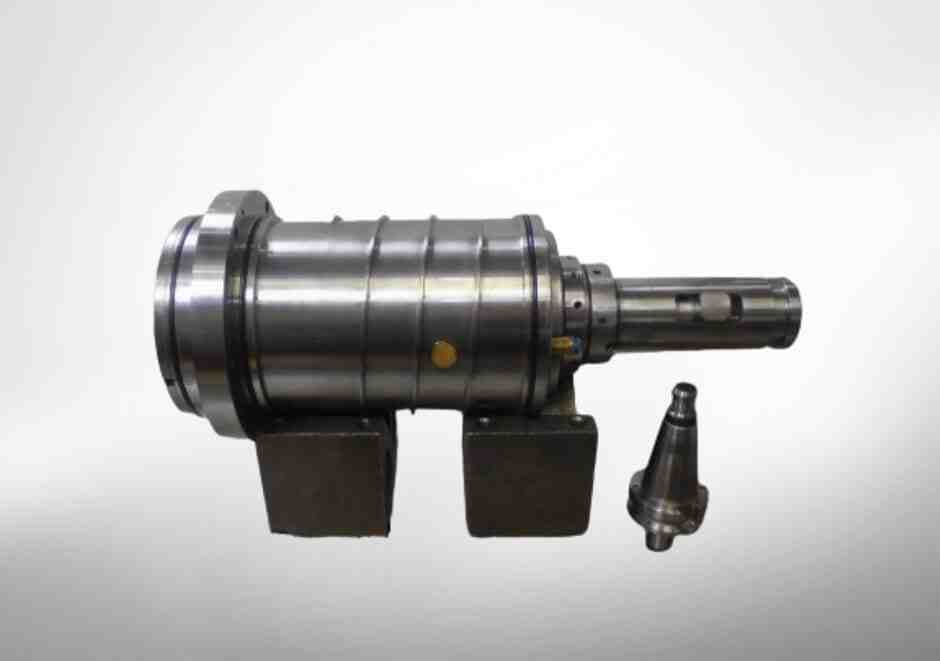
A spindle motor is the rotating heart of a machine tool. It:
- Rotates cutting tools (drilling, milling) or workpieces (turning) with high precision.
- Transmits torque and speed for material removal.
- Determines machining accuracy, surface finish, and metal removal rates.
- Comes in two primary forms: motorized (integral motor) or belt-driven.
Primary Applications:
- Machine Tool Spindles: Use induction or synchronous motors for machining.
- CNC Machining Centers: Enable high-speed and heavy-duty cutting.
- Grinding Operations: Require exceptional balance and rotational accuracy.
The evolution to direct-drive motorized spindles has revolutionized manufacturing. Modern spindle motors integrate advanced bearings, cooling, and monitoring to meet the demands of industries like aerospace and defense.
At MZI Precision, we know that proper spindle motor selection, maintenance, and expert rebuilding directly impact manufacturing. A failing spindle compromises part quality and can lead to catastrophic equipment failure.
This guide covers everything you need to know about industrial spindle motors, from core components and bearings, to selection criteria and predictive maintenance.
Spindle Motor vocab explained:
Core Components of an Industrial Spindle System
An industrial spindle is a precision-engineered assembly designed for consistent performance under extreme conditions. Understanding the spindle motor requires appreciating the entire system it powers, where several components work in harmony.
The primary components include:
- Drive System: The power source (integrated motor, belts, or gears) that converts electrical energy into rotational motion.
- Spindle Housing: The protective external casing that provides structural integrity, dampens vibration, and houses channels for cooling and lubrication.
- Bearing System: The most critical component for precision and longevity, supporting the shaft for smooth, rigid rotation.
- Shaft: The central rotating element transmitting torque to the tool or workpiece, often hollow to accommodate drawbars and coolant.
- Drawbar Mechanism: An internal system that securely clamps and releases cutting tools using spring force and hydraulic or pneumatic actuation.
- Seals: Essential barriers preventing contaminants like coolant and dust from entering the sensitive bearing system.
- Cooling System: Manages heat from the motor and bearings to prevent thermal expansion and maintain precision.
The Bearing System: The Heart of Precision
The bearing system dictates a spindle’s accuracy, stiffness, and lifespan. The quality and configuration of the bearings determine its ultimate performance.
- Angular Contact Ball Bearings: The most common choice for high-speed spindles, designed to support both radial and axial loads and maintain tight tolerances.
- Roller Bearings: Used for applications requiring greater stiffness and high load capacity, such as heavy-duty machining.
Proper bearing configuration (e.g., duplex sets) optimizes stiffness, while preload (an initial load) is vital for accuracy and reducing vibration. Precise lubrication (grease or oil-air) is also crucial to reduce friction and dissipate heat. The bearing system has the greatest influence on spindle life, which is why at MZI Precision, we focus on meticulous bearing selection and installation during rebuilds.
Cooling and Sealing: Ensuring Longevity
In high-precision machining, heat is the enemy of accuracy. A spindle motor and its bearings generate significant heat that can cause thermal expansion, leading to a loss of precision and premature failure.
- Cooling Systems: Maintain a stable operating temperature to prevent thermal errors. Liquid-cooled systems are common in high-performance spindles, circulating fluid to absorb heat efficiently. Air-cooled systems use fans or fins for lighter-duty tasks.
- Sealing Systems: Protect sensitive bearings from contaminants. Contact seals provide a direct barrier but create friction and wear. Non-contact (labyrinth) seals are preferred for high-speed spindles, creating a difficult path for contaminants, often augmented with positive air pressure to actively push debris away.
Properly functioning cooling and sealing systems are essential for protecting your investment in precision manufacturing.
Types of Spindle Motors and Drive Systems
The choice of spindle motor and its drive system profoundly impacts a machine’s capabilities, from speed and torque to precision and maintenance.
Here’s a comparison of the main drive systems:
| Feature | Motorized (Integral Motor) Spindles | Belt-Driven Spindles |
|---|---|---|
| Speed | Higher speeds, often up to 30,000 RPM+ | Up to 15,000 RPM (as per research), typically lower |
| Vibration | Significantly reduced due to direct drive | Can introduce vibration from belts/pulleys |
| Noise | Quieter operation | Potentially noisier due to belts and bearings |
| Maintenance | Fewer wearing parts (no belts), focus on bearings | Regular belt tensioning and replacement |
| Complexity | More complex motor/bearing integration | Simpler mechanical setup |
| Footprint | More compact design | Larger footprint due as motor is external |
| Cost | Generally higher initial cost | Lower initial cost |
| Ideal Applications | High-speed, high-precision machining, milling, drilling, tapping | Heavy cutting, high torque at lower speeds, general machining |
Modern spindles are integrated with Variable Frequency Drives (VFDs), which regulate power to precisely control speed, torque, and acceleration. VFDs are crucial for optimizing machining, enhancing efficiency, and protecting the motor. They enable a wide speed range, consistent torque, and faster cycle times.
Motorized (Integral) vs. Belt-Driven Spindles
The key difference is how power is transmitted.
Motorized (Integral Motor) Spindles have the motor’s stator and rotor built directly into the spindle housing. This “direct drive” design eliminates belts and pulleys, offering significant advantages:
- Reduced Vibration and Noise: Leads to smoother operation and better surface finishes.
- Higher Speed Capabilities: Essential for High-Speed Cutting (HSC), often exceeding 20,000 RPM.
- Compact Design: Allows for smaller machine footprints.
- Improved Dynamic Response: Faster acceleration/deceleration improves cycle efficiency, especially for tapping.
Belt-Driven Spindles use an external motor to transmit power via a belt and pulley.
- Higher Torque at Lower Speeds: Gear ratios can be optimized for heavy cutting.
- Easier Motor Replacement: An external motor can be replaced more easily.
- Maintenance: Requires regular inspection and replacement of belts.
For high-precision, high-speed applications, motorized spindles are the preferred choice.
Asynchronous (Induction) vs. Synchronous Spindle Motors
Two primary electrical designs dominate:
Asynchronous (Induction) Spindle Motors:
These are the most common type, known for their rugged construction and cost-effectiveness. They operate by inducing a current in the rotor.
- Characteristics: Robust, reliable, and provide stable starting torque.
- Applications: Ideal for general machining, heavy cutting for short periods, or light-duty cutting at high speeds.
Synchronous Spindle Motors:
The rotor in these motors spins in perfect sync with the stator’s magnetic field, often using permanent magnets (PMSM).
- Characteristics: Higher efficiency, excellent dynamic response (fast acceleration/deceleration), and precise control.
- Applications: Excel at high-speed machining and tasks requiring frequent acceleration, like tapping. Manufacturers like FANUC and Mitsubishi Electric offer synchronous motors for these demanding applications.
The choice between induction and synchronous motors depends on the specific machining process, balancing cost, efficiency, and dynamic performance.
Key Characteristics for Selecting a Spindle Motor
Choosing the right spindle motor is critical for CNC machine performance. It requires matching the motor’s characteristics to your specific application, not just focusing on raw power.
Here are the main characteristics to consider when selecting a spindle motor:
- Power Rating (kW): Indicates the motor’s continuous output, ranging from a few hundred watts to over 100kW for heavy-duty machining. Higher power is needed for tougher materials and high material removal rates.
- Speed Range (RPM): The operational speed is crucial. Fine engraving may require 30,000+ RPM, while heavy milling of titanium demands lower speeds with high torque.
- Torque Characteristics: Torque is the rotational force. Constant torque is important at lower speeds for heavy cutting, while at higher speeds, motors enter a constant power region where torque decreases. Understanding this relationship is vital.
- Accuracy and Runout: For precision work, minimal runout (deviation from the center of rotation) is paramount. High-quality spindles have exceptional rotational accuracy, which directly impacts surface finish and dimensional precision.
- Tooling Interface (HSK, SK): The interface (e.g., HSK, SK) connects the spindle to the tool holder. It must be compatible with your shop’s tooling and affects rigidity and high-speed performance.
- Application Demands: The motor must align with its intended use. Heavy-duty machining requires high power and torque, High-Speed Cutting (HSC) needs high RPM, and tapping demands rapid acceleration/deceleration.
When we evaluate a spindle motor for rebuilding or replacement, we consider these factors to ensure optimal performance for its intended application in industries from aerospace to defense.
The Role of the Spindle Motor in Manufacturing Excellence
The spindle motor is the driving force behind manufacturing excellence. Its performance directly dictates a CNC machine’s capabilities, impacting the quality, efficiency, and profitability of production.
A high-performance spindle motor is pivotal for:
- Enhancing Machining Accuracy: Minimizing runout and vibration translates to tighter tolerances, which is critical for industries like aerospace.
- Improving Surface Finish: Smooth, vibration-free rotation produces superior surface finishes, reducing the need for secondary operations.
- Increasing Metal Removal Rates: Powerful motors with high torque and speed enable aggressive cutting, boosting productivity.
- Reducing Operational Noise: Quieter operation indicates less mechanical stress and a more stable cutting process.
- Enabling High-Speed Cutting (HSC): Spindles capable of 20,000+ RPM are indispensable for modern HSC applications.
- Extending Tool Life: A stable spindle reduces tool chatter and uneven wear, saving costs.
- Boosting Productivity: Faster cycle times and higher material removal rates increase overall manufacturing output.
At MZI Precision, we know a high-performance spindle motor is a necessity. Our expertise in rebuilding these components helps clients in California and across the US maintain their competitive edge.
More info about our spindle services
Latest Advancements in Spindle Motor Technology
Spindle motor technology is advancing to meet demands for greater precision, speed, and reliability, leading to more intelligent manufacturing.
- Integrated Sensors and Condition Monitoring: Built-in sensors monitor temperature, vibration, and speed in real-time, allowing for early detection of anomalies and preventing costly failures.
- Predictive Maintenance: Using sensor data, maintenance is performed only when needed, optimizing schedules and reducing downtime.
- Intelligent Sensing of Thermal Error: New technologies, like Intelligent Sensing of Thermal Error in Spindles, actively compensate for thermal expansion to maintain accuracy.
- Digital Twin Technology: A virtual replica of the spindle allows for simulation and analysis, helping to predict behavior and optimize performance.
- Higher Torque at High Speeds: Advancements in motor design are enabling higher torque at speeds up to 15,000 RPM, expanding the operational sweet spot.
- Active Balancing Systems: These systems dynamically counteract imbalances in real-time, reducing vibration in ultra-high-speed spindles.
- Energy Efficiency and Downsizing: IPM (Internal Permanent Magnet) motors offer higher efficiency and energy savings in a more compact design.
These advancements show a trend toward smarter, more efficient spindle motors. At MZI Precision, we stay current with these technologies to provide the best repair and rebuilding services.
Frequently Asked Questions about Industrial Spindles
Here, we address common questions about industrial spindles.
What is the difference between a motorized spindle and a belt-driven spindle?
A motorized spindle integrates the motor directly into the housing for higher speeds, less vibration, and a compact design ideal for precision work. A belt-driven spindle uses an external motor connected by belts, which can offer higher torque at lower speeds but requires more maintenance and may produce more vibration.
How do I know if my spindle motor needs repair?
Early detection of a failing spindle motor can prevent major damage and downtime. Key indicators include:
- Increased Vibration: A noticeable rise in machine vibration.
- Unusual Noises: Grinding, whining, or rumbling sounds from the spindle.
- Overheating: The spindle housing is excessively hot, or thermal alarms trigger.
- Decreased Cutting Accuracy: Poor surface finish, dimensional errors, or increased tool wear.
- Visible Runout: The tool appears to wobble during rotation.
- Frequent VFD Alarms: Errors from the drive related to the spindle motor.
Any of these signs warrant an expert inspection to prevent catastrophic failure.
What are the most common causes of spindle motor failure?
From our experience at MZI Precision, the most frequent causes of spindle motor failure are:
- Bearing Contamination: The leading cause, where coolant, dust, or chips bypass seals and destroy precision bearings.
- Bearing Failure: Caused by normal wear, improper lubrication, excessive preload, or manufacturing defects.
- Overheating: Inadequate cooling leads to thermal expansion, damaging motor windings and bearings.
- Machine Crash: A collision can transmit shock loads that damage bearings, the shaft, or the housing.
- Electrical Issues: Problems with the motor’s windings or the VFD can cause failure.
Understanding these causes helps in prevention and knowing when to seek professional help.
Conclusion
The industrial spindle motor stands as a testament to precision engineering, serving as the critical component that breathes life into CNC machines and automated manufacturing systems. From the rigorous demands of aerospace component manufacturing to the intricate precision required in defense applications, the performance of the spindle motor directly translates into the quality, efficiency, and competitiveness of every part produced.
We’ve explored the intricate core components that make up a spindle system, digd into the crucial role of bearings, and understood how cooling and sealing mechanisms safeguard these vital assemblies. We’ve also differentiated between motorized and belt-driven systems, as well as asynchronous and synchronous motor types, each offering unique advantages custom to specific machining needs. The selection criteria—power, speed, torque, accuracy, and tooling interface—are paramount in ensuring your machine performs optimally. Furthermore, the latest advancements in integrated sensors, predictive maintenance, and digital twin technology promise an even more intelligent and reliable future for spindle motor systems.
At MZI Precision, we are passionate about the heart of your machine. We understand that proper spindle motor selection, diligent maintenance, and expert rebuilding are not just best practices—they are necessities for success in today’s demanding industrial landscape. Our expertise in OEMs rebuilt spindles and commitment to exceptional service ensures that your operations in California and beyond continue to run with the precision and productivity you expect. Trust us to keep your spindles spinning optimally, contributing to your manufacturing excellence.