


AC Motor Repair: Your 6-Step DIY Guide
Why Proper AC Motor Maintenance Keeps Your Industrial Spindles Running
AC motor repair is critical for the precision and reliability of industrial manufacturing spindles. When a spindle’s AC motor fails, production stops. Fortunately, many issues can be prevented with basic maintenance and early detection.
Quick AC Motor Repair Overview:
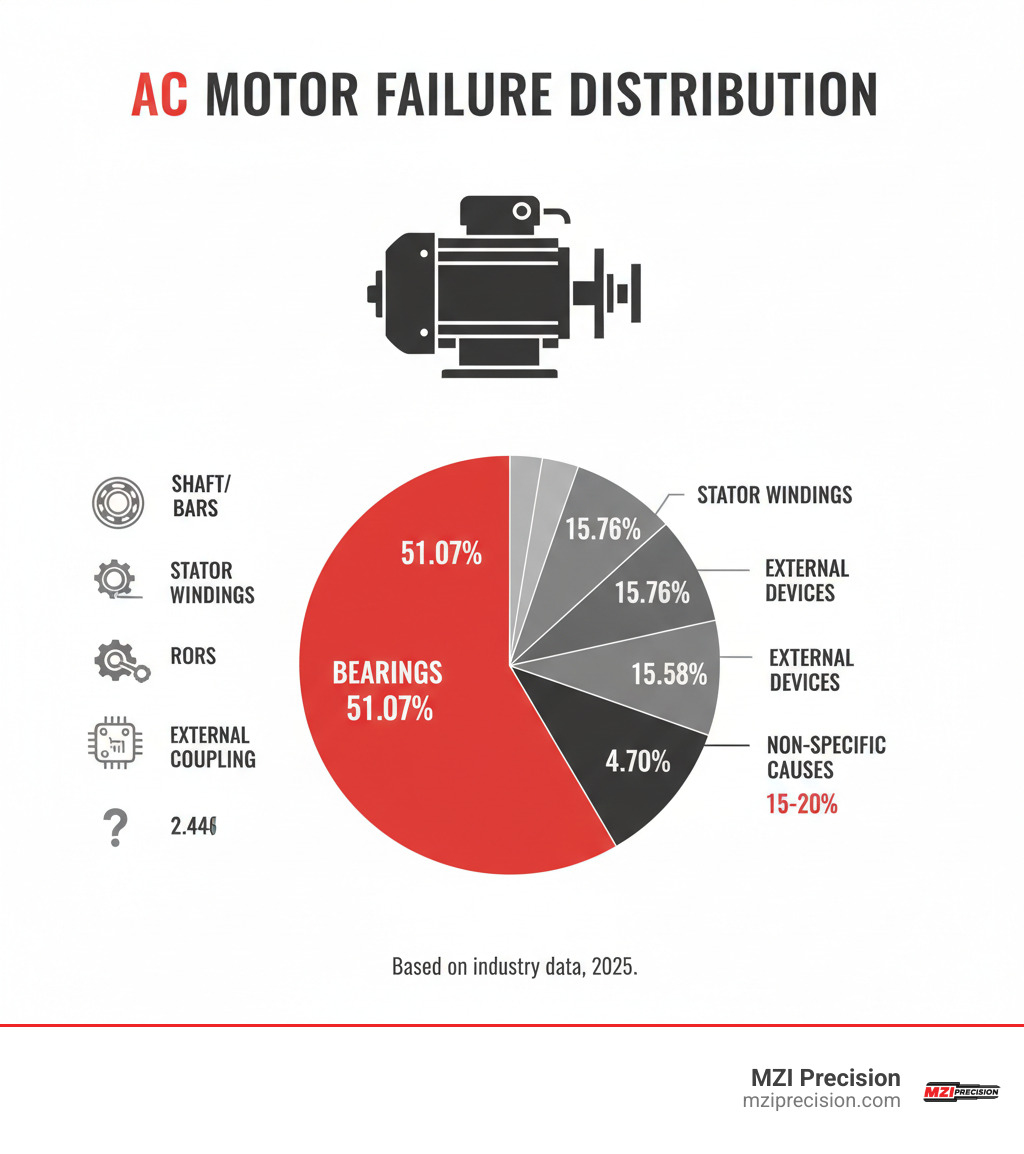
- Most common failure: Bearing problems (51% of all motor failures)
- Average repair time: 3-5 work days for 1-200 hp motors
- Key warning signs: Unusual noises, overheating, excessive vibration
- Basic maintenance: Visual inspection, cleaning, connection checks
- Professional repair needed: Rewinding, bearing replacement, dynamic balancing
Every 10°C increase in winding temperature can cut a motor’s insulation life in half. The average failure rate in industrial facilities is about 3.4% per unit annually, but proactive maintenance can dramatically reduce these failures.
As one industry guide puts it: “Motors never fail at a ‘good’ time. Production stops; workers stand idle; deliveries are missed.” Understanding what you can safely inspect and maintain—versus when to call professionals—is the key to avoiding major production disruptions. While complex repairs like stator rewinding require specialized expertise, basic maintenance tasks can catch problems early and significantly extend your spindle motor’s life.
Recognizing the Red Flags: Common Signs Your Spindle’s AC Motor Needs Attention
When an industrial spindle’s performance changes, it’s time to pay attention. Ignoring small warning signs can turn minor maintenance into a major production headache, making AC motor repair necessary. Here are the key red flags to watch for:
- Unusual Noises: A healthy motor has a steady hum. Listen for grinding sounds, which often indicate bearing problems, or rattling, which suggests loose internal components. A loud, persistent buzzing can point to electrical issues like loose connections or winding faults.
- Overheating: If the motor housing is unusually hot or thermal sensors are tripping, address it immediately. Every 10°C increase in winding temperature can halve the motor’s insulation life. Overheating is often caused by poor ventilation, overloading, or friction from worn bearings.
- Excessive Vibration: While all motors vibrate, a noticeable increase or a distinct wobble is a major warning sign. This often points to bearing failure, which accounts for over 51% of all motor failures and can compromise the precision of your entire spindle.
- Performance Issues: Watch for reduced power output, where the spindle struggles to maintain speed under load, or inconsistent performance, such as erratic speed fluctuations or stalling.
- Electrical Faults: Tripped circuit breakers that occur repeatedly during startup or operation often signal an internal motor fault.
- Visible Damage: Obvious signs like a cracked housing, frayed wiring, discolored insulation, or grease leakage around bearings confirm that professional attention is required.
Catching these signs early is crucial. A grinding noise today could become a complete bearing failure tomorrow, turning a manageable repair into an emergency shutdown.
Safety First: Essential Precautions for AC Motor Inspection
Working on industrial spindle motors involves serious electrical and mechanical hazards. Before performing any inspection or maintenance, safety must be the top priority. Following proper procedures requires discipline and attention to detail.
- Lockout/Tagout (LOTO): This is non-negotiable. Completely de-energize and lock the spindle’s power source according to your facility’s LOTO procedures. Simply flipping a switch is not enough; you must verify zero energy is present before starting any AC motor repair inspection.
- Disconnect Power and Verify: Open the main disconnect and confirm with a voltage tester that no power is present at the motor terminals. Electrical systems can have multiple sources or stored energy.
- Personal Protective Equipment (PPE): Always use appropriate PPE. This includes safety glasses or a face shield, insulated gloves, non-flammable protective clothing, and safety footwear to protect against electrical and mechanical hazards.
- Use Insulated Tools: Tools specifically designed and rated for electrical work are essential. Their insulated handles provide a critical layer of protection against accidental contact with live circuits.
- Discharge Capacitors: Many AC motors use capacitors that can store a dangerous electrical charge even after power is disconnected. Always discharge them safely using an appropriate discharge resistor or an insulated tool.
- Follow Manufacturer Instructions: Every motor and spindle system has specific safety warnings and procedures. Consulting these documents is critical for safe maintenance.
- Be Aware of Risks: Always assume an electrical shock risk is present; treat every wire as live until proven otherwise. Also, be mindful of mechanical injury risk from heavy rotating parts, sharp edges, and pinch points.
Taking these precautions seriously is the mark of a professional and ensures you can perform the job safely.
Basic Inspection and Preventative Maintenance
While complex AC motor repair requires professional expertise, trained facility personnel can perform routine checks that serve as the first line of defense against costly spindle failures. These simple, preventative steps can catch problems early and keep your industrial manufacturing spindles running reliably.
Essential Tools for Basic Inspection
Effective inspections don’t require extensive equipment. A few basic tools are all you need to assess your motor’s health.
- Multimeter: This indispensable tool measures voltage, current, and resistance to identify electrical faults and, most importantly, to verify that power is disconnected before work begins. Using a multimeter for diagnostics is a fundamental skill for motor maintenance.
- Insulated Tools: Insulated screwdrivers, wrenches, and pliers are mandatory for protecting against electrical shock.
- Vibration Pen: This simple device provides a quick reading of motor vibration levels, helping you detect potential bearing issues before they escalate.
- General Supplies: Standard cleaning supplies and manufacturer-approved lubricants are also essential.
Preventative Maintenance Steps
These straightforward tasks are highly effective at preventing major failures.
- Visual Inspection: Regularly look for cracks in the housing, signs of overheating like discoloration, grease leakage around seals, and loose mounting bolts.
- Cleaning: Keep the motor housing and cooling fins free of dust and grime. Contaminants act as insulation, trapping heat and shortening the motor’s life.
- Check Electrical Connections: Periodically check that all electrical connections are tight and secure. Loose connections create resistance and heat, which can lead to failure.
- Bearing Lubrication: Since bearing failure is the most common cause of motor failure (over 51%), proper lubrication is critical. Adhere strictly to the manufacturer’s schedule and specifications, as both under- and over-lubrication can cause damage.
- Monitor for Changes: Use your senses. Pay attention to any changes in the motor’s sound or operating temperature. Establishing a baseline makes it easier to detect when something is wrong, giving you time to plan maintenance instead of reacting to an emergency.
These practices form the foundation of reliable spindle operation and can make the difference between planned maintenance and unexpected, costly downtime.
The Repair vs. Replace Dilemma for Industrial AC Motors
When an industrial spindle’s AC motor fails, you face a critical decision: repair or replace? This choice impacts production schedules, budgets, and operational reliability. It’s a strategic decision that goes beyond the initial price tag to include total cost of ownership and long-term performance.
Common Causes of AC Motor Failure
Understanding why motors fail helps inform the repair-or-replace decision.
- Bearing Failure: This is the leading cause, accounting for over 51% of failures. It’s typically caused by improper lubrication, contamination, excessive loads, or vibration.
- Stator Winding Failure: Accounting for about 16% of failures, this is often due to overheating, voltage spikes, or contamination that degrades the wire insulation.
- Rotor Damage: Though less common (around 5%), issues like broken rotor bars can cause severe vibration and damage.
- Other Issues: Electrical overloads, power supply problems, and mechanical stress from misalignment also contribute to motor failure.
Making the Call: When to Seek Professional AC Motor Repair
Balancing several factors is key to making the right choice.
- Cost-Benefit Analysis: A general rule is to consider replacement if repair costs exceed 60-70% of a new motor’s price. For expensive, specialized spindle motors, however, a costly repair can still be the more economical option.
- Downtime Costs: Calculate the cost of lost production. Sometimes a faster solution, like an expedited repair or a new motor, is cheaper in the long run.
- Motor Age and History: A newer motor with an isolated failure is a good repair candidate. An older motor with a history of problems may be due for replacement.
- Energy Efficiency: Modern motors are often more energy-efficient. The savings from a new, high-efficiency motor can sometimes justify the replacement cost, especially when facing a significant repair bill.
- Parts Availability: If parts for an older or specialized motor are obsolete or have long lead times, replacement may be the only practical choice.
- Complexity of Failure: Simple issues like bearing replacement are clear repair jobs. Catastrophic damage to windings or the rotor may make repair impractical or unreliable.
| Factor | Favor Repair | Favor Replace |
|---|---|---|
| Cost | Repair cost is <60% of new motor price. | Repair cost is >70% of new motor price. |
| Downtime | Repair turnaround is acceptably fast. | A new motor is available faster than repair. |
| Motor Age | Motor is relatively new (<5 years). | Motor is old and has had multiple prior repairs. |
| Efficiency | Motor is already a high-efficiency model. | New motor offers significant energy savings. |
| Parts | Parts are readily available. | Parts are obsolete or have long lead times. |
| Failure | Isolated, simple failure (e.g., bearings). | Catastrophic or multiple system failures. |
![TABLE] COMPARING THE DECISION TO REPAIR VS. REPLACE AN AC MOTOR BASED ON FACTORS LIKE COST, DOWNTIME, MOTOR AGE, AND EFFICIENCY. – AC MOTOR REPAIR INFOGRAPHIC ](https://images.bannerbear.com/direct/4mGpW3zwpg0ZK0AxQw/requests/000/106/141/413/0Mn5r3E1XY0X9qRZYWPoD9kg7/53f563a8559432317c374a007bb3a0791d2df6f7.jpg)
The decision to pursue AC motor repair is strategic. For complex failures, professional repair services provide the expertise needed to make an informed choice that best serves your operation.
Why Professional AC Motor Repair is Critical for Spindle Performance
While in-house teams can handle basic maintenance, complex AC motor repair for precision spindles requires specialized expertise and equipment that most facilities lack. For industrial spindle motors, where precision is paramount, professional service is not just a good idea—it’s essential.
Professional repair facilities offer distinct advantages:
- Specialized Equipment: They use advanced diagnostic tools, precision winding machines, and dynamic balancing equipment that can detect and correct imbalances measured in grams. This level of technology is necessary for high-speed spindle applications.
- Dynamic Balancing: For high-speed spindles, even a minuscule imbalance creates vibrations that destroy bearings and ruin machining accuracy. Professionals balance rotors to extremely tight tolerances (e.g., G 1 Balance Grade), a level of precision unattainable without specialized equipment.
- Stator Rewinding: This is a complex process involving the precise removal of damaged coils, installation of new high-quality windings (often VFD-rated), and proper varnishing and baking to ensure thermal stability and insulation integrity.
- Root Cause Failure Analysis: Professionals don’t just fix the symptom; they identify the underlying reason for the failure through detailed testing. This analysis is key to preventing repeat failures.
- Quality Standards: Reputable shops adhere to stringent industry standards like those from EASA (Electrical Apparatus Service Association), ensuring repaired motors meet or exceed original efficiency and reliability. They also follow standards like Protective coatings for motors (ISO 12944) for durability.
At MZI Precision, our expertise in OEM rebuilt spindles means we understand the intricate relationship between the motor and the spindle’s performance. We are spindle specialists who ensure motor repairs integrate seamlessly with your equipment’s precision engineering. More info about our spindle repair services details our comprehensive approach.
Choosing professional AC motor repair is an investment in reliability and performance. When precision is critical and downtime is costly, getting the repair done right the first time is essential.
Frequently Asked Questions about AC Motor Repair
When a spindle motor fails, you need answers fast. Here are the three most common questions we hear from facility managers.
How long does a typical industrial AC motor repair take?
For most industrial motors in the 1 to 200 horsepower range, a standard AC motor repair takes about three to five work days. This timeline can vary based on the extent of the damage and parts availability. A simple bearing replacement might be done in a day or two, while a complete stator rewind will take longer. Larger or highly specialized motors can take several weeks, though rush services are often available for urgent situations.
Will a repaired motor be as efficient as a new one?
Yes. When repaired by a qualified shop following industry best practices, a motor can meet or even exceed its original efficiency rating. Professional shops use premium materials, such as high-grade magnet wire and precision bearings, and perform comprehensive post-repair testing. In some cases, a rewind can incorporate modern, more efficient components, improving performance. The key is choosing a reputable repair service that adheres to strict quality standards.
What is the most common cause of AC motor failure in industrial spindles?
Bearing failure is the single most common cause, accounting for over 51% of all motor failures. Bearings are under constant stress and are vulnerable to two main issues: contamination and improper lubrication. Dust, debris, and moisture can cause premature wear, while using too much, too little, or the wrong type of grease is a frequent cause of failure. Other factors include excessive loads, misalignment, and vibration. Fortunately, bearing issues often provide early warning signs like noise or heat, making preventative maintenance crucial.
Conclusion
Maintaining your industrial spindle’s AC motor is key to smooth operations. This guide has covered the essentials, from recognizing warning signs like noise and vibration to implementing crucial safety protocols.
Simple preventative maintenance tasks—visual inspections, cleaning, checking connections, and proper lubrication—are incredibly effective. Since bearing failures cause over 51% of motor issues, these basic steps can prevent significant downtime.
Knowing when to call for professional help is just as important. For complex AC motor repair like stator rewinding or dynamic balancing, specialized expertise is non-negotiable. A professionally repaired motor can match or even exceed the performance of a new one.
At MZI Precision, we know that spindle reliability is critical to your bottom line. We are dedicated to helping you make informed decisions about maintenance and repair to prevent small issues from becoming major disruptions.
Ready to ensure your industrial manufacturing spindles perform at their peak? Contact us for expert spindle and AC motor repair—we’re here to help keep your operations running with precision.