

Revolutionizing Production: How Double Spindle CNC Machines Transform Manufacturing
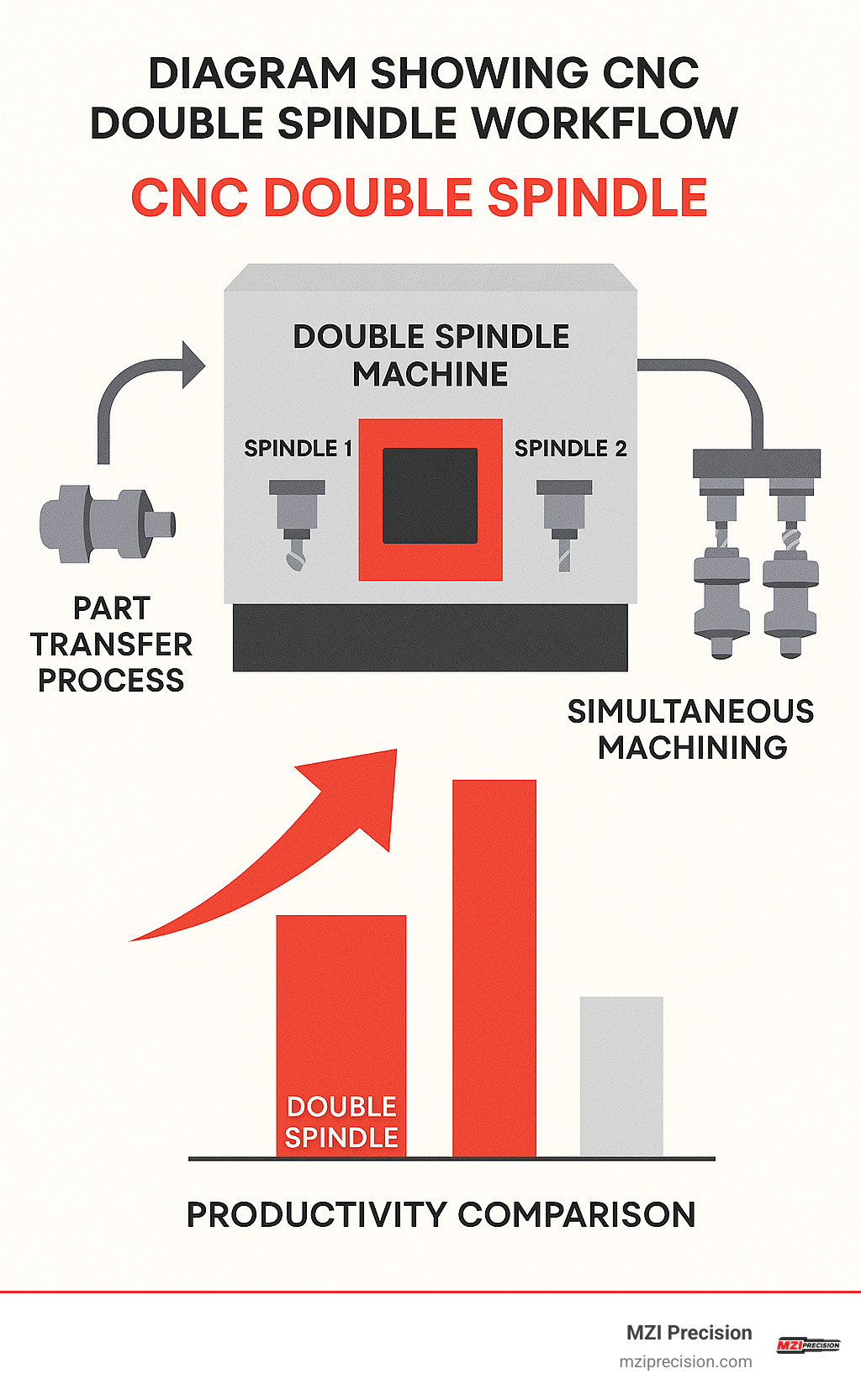
CNC double spindle machines are advanced manufacturing systems that use two spindles to perform simultaneous machining operations, dramatically increasing productivity while reducing floor space and energy consumption.
Key Features of CNC Double Spindle Machines:
– Cut cycle times by up to 60% compared to single-spindle setups
– Reduce floor space requirements by approximately 70%
– Lower energy consumption by up to 50%
– Enable continuous processing through automatic part transfer
– Allow simultaneous machining with multiple tools (up to 3 at once)
The manufacturing world is constantly seeking ways to boost output while maintaining precision and quality. Enter the CNC double spindle machine – a game-changing technology that’s reshaping production floors across industries.
These sophisticated machines feature two independently operating spindles that can work simultaneously or in sequence, effectively doubling production capacity without doubling your shop’s footprint. By enabling continuous machining processes, they eliminate the need for secondary operations and reduce part handling, improving both efficiency and part consistency.
“Four-spindle CNC machines can shorten cycle times by up to 60 percent compared to four single-spindle machines, while using 70 percent less floor space and only half the amount of energy,” notes a recent industry report. This remarkable efficiency gain explains why the global CNC machine market is projected to reach $140.78 billion by 2028, growing at 7.1% annually.
Whether configured as twin-spindle, dual-spindle, or sub-spindle systems, these machines shine in high-volume production environments where every second and square foot counts. Their ability to perform back-working operations, transfer parts automatically between spindles, and integrate with automation systems makes them ideal for manufacturers looking to maximize throughput and minimize operator intervention.
For precision-focused industries like aerospace, automotive, and medical manufacturing, double spindle machines represent not just an upgrade in capacity, but a strategic investment in production capability and competitive advantage.
Easy cnc double spindle machine glossary:
– CNC spindle bearing preload
– maximum spindle speed in cnc machine
– spindle for cnc router machine
What Is a CNC Double Spindle Machine?
A cnc double spindle machine is like having two manufacturing powerhouses in one compact package. These sophisticated systems feature two spindles that work together—either simultaneously or in sequence—to transform how parts are made. Think of it as having an extra set of hands that never gets tired, allowing your shop to keep machining without those productivity-killing pauses.
Let’s clear up some common terminology that often causes confusion:
- Twin spindle machines have two identical spindles working in parallel, often creating identical parts at the same time
- Dual spindle is the general term for any machine with two spindles
- Sub-spindle refers to a secondary spindle (typically smaller) that faces the main spindle, enabling smooth part transfers and back-side operations
The real magic happens in the workflow. While your main spindle is roughing out one part, the sub-spindle can be putting the finishing touches on another. This continuous operation eliminates those costly moments when machines sit idle waiting for the next step.
How a cnc double spindle machine Differs from Single Spindles
The leap from single to cnc double spindle machine technology delivers benefits that go far beyond just doubling your spindle count:
Cycle time reduction is perhaps the most immediate advantage—these machines slash production times by up to 60% compared to traditional single-spindle setups. Parts that once required multiple operations and setups now flow through a single machine.
Your shop floor becomes dramatically more efficient too. cnc double spindle machines require approximately 70% less floor space than equivalent single-spindle arrangements. This spatial efficiency transforms manufacturing facilities, allowing more production capacity in the same footprint.
The energy savings are equally impressive. These machines typically consume half the electricity of multiple single-spindle machines performing the same work—a benefit that shows up immediately in your utility bills and supports sustainability goals.
The continuous processing capability might be the most transformative advantage. With automatic part transfer between spindles, workpieces move seamlessly through operations without manual handling. This not only speeds production but significantly improves part consistency and quality.
Core Components of a cnc double spindle machine
Understanding what makes these machines tick helps appreciate their remarkable capabilities:
The main spindle serves as the primary workhorse, typically offering higher power and torque for demanding initial operations. Working in concert with it, the sub-spindle (or secondary spindle) often faces the main spindle, creating a perfect handoff zone for parts to transfer between operations.
High-speed servo turrets provide quick tool changes with 12 or more stations available for both internal and external operations. These precision-engineered components can swap tools in fractions of a second, keeping the machine cutting rather than waiting.
Many modern cnc double spindle machines incorporate gantry loaders that automate the loading and unloading process, enabling extended production runs with minimal operator intervention—perfect for those high-volume jobs or lights-out manufacturing.
The foundation of these machines is typically a one-piece Meehanite cast bed that provides exceptional rigidity and vibration dampening. This stability is crucial for maintaining tight tolerances across both spindles.
Adaptive servo systems ensure precise movements and positioning, while linear guide rails with automatic lubrication systems deliver smooth, accurate axis movement. Pre-tensioned ball screws anchored by precision bearings provide optimal motion control throughout the machine’s operating life.
Temperature management is critical in precision machining, which is why these machines incorporate sophisticated thermal management systems that maintain dimensional stability even during extended operations.
At MZI Precision, we understand that the spindles themselves are the heart of these remarkable machines. When these critical components need attention, our spindle repair and rebuilding services restore them to OEM specifications—or better—ensuring your cnc double spindle machine continues delivering the productivity advantages that make it such a valuable asset to your manufacturing operation.
Top Configurations & Machine Types
The world of CNC double spindle machines comes in various flavors, each designed with specific manufacturing challenges in mind. Understanding these different configurations helps you match the right machine to your production requirements—whether you’re making identical parts in high volume or complex components that need multiple operations.
Twin-Spindle Lathes for Symmetrical Parts
Twin-spindle lathes are the productivity champions when it comes to symmetrical parts. Imagine two identical spindles working side-by-side, creating the same part simultaneously—effectively doubling your output without adding an extra inch of floor space or another operator.
These machines shine with their simultaneous turning capabilities, where both spindles perform identical operations in perfect sync. Many models come bar-feeder ready, allowing for continuous operation that keeps your production flowing hour after hour. The beauty of parts-transfer automation means finished components move out while new blanks load in, creating a rhythm of productivity that never misses a beat.
Take the MW180G and MW180GL models, for example. The latter handles workpieces up to 200mm in diameter, 120mm in length, and 8.0kg per spindle—substantially more than its standard counterpart. These workhorses excel in high-volume production environments making automotive components, hydraulic fittings, and electrical connectors.
Combination Horizontal/Vertical Duals
When flexibility matters as much as productivity, combination horizontal/vertical dual spindle machines deliver both in a remarkably compact package. These versatile systems bring together horizontal and vertical machining capabilities in one machine envelope.
The magic of these machines lies in their five-side machining abilities—you can complete multiple operations without the time-consuming process of repositioning your workpiece. Their compact envelope (typically just 82″ × 114″) makes them space-saving champions in crowded shop environments. The flexible orientation allows you to switch between horizontal and vertical operations as your complex parts demand.
A perfect example is the KHV-400, featuring a robust 10 HP horizontal spindle alongside a powerful 15 HP vertical spindle. Both can hit speeds of 10,000 RPM (with 12,000 RPM optional), making them ideal for precision aerospace components, intricate medical devices, and other complex parts requiring multi-axis machining.
Sub-Spindle Mill-Turn Centers
Perhaps the most versatile members of the CNC double spindle machine family are sub-spindle mill-turn centers. These machines bring together the best of turning and milling in one integrated system, offering true “done-in-one” processing for complex parts.
Their live tooling capabilities transform them from simple turning centers into multi-function powerhouses capable of milling, drilling, and other operations beyond basic turning. Add Y-axis movement for machining off-center features, and you’ve got a machine that can handle almost any part geometry. The “done-in-one” approach means your parts go from raw material to finished product without changing machines—dramatically reducing handling, setup time, and opportunities for error.
The DS-30Y exemplifies this approach with its generous 13.75″ × 32.5″ work envelope, Y-axis capability, C-axis, and live tooling. The sub-spindles typically run at 6000 RPM for those critical finishing operations that demand perfection.
| Configuration | Cycle Time Reduction | Floor Space Savings | Energy Savings | Ideal Applications |
|---|---|---|---|---|
| Twin-Spindle | Up to 50% | 60% | 45% | High-volume identical parts |
| Horizontal/Vertical | Up to 40% | 50% | 40% | Complex 5-sided parts |
| Sub-Spindle Mill-Turn | Up to 60% | 70% | 50% | Complex parts with secondary ops |
| Multi-Spindle (4+) | Up to 75% | 80% | 60% | Ultra-high volume production |
These multi-talented machines thrive in high-mix, low-volume environments where setup time reduction is critical—perfect for aerospace, defense, and medical manufacturing where complexity and precision walk hand-in-hand.
Key Benefits & Productivity Gains
Adding a cnc double spindle machine to your shop floor isn’t just about having one more piece of equipment—it’s about changing how you manufacture parts from the ground up. The benefits reach far beyond simple output increases and touch every aspect of your production process.
Throughput Revolution
When you implement a cnc double spindle machine, you’ll notice immediate changes in your production capacity that might seem almost magical:
Your cycle times shrink dramatically—often by up to 60% compared to traditional setups. This happens because these machines can work on multiple operations without stopping, creating a continuous flow that eliminates dead time.
One shop manager told me, “It was like flipping a switch. Suddenly we were producing twice as many parts with the same number of people. I wish we’d made the move years earlier.”
The real game-changer is how these machines keep working without interruption. While one spindle is finishing a part, the other is already starting on the next one. Some advanced models even let you cut with up to three tools at once on the same workpiece—talk about multitasking!
According to recent market research, this efficiency is driving significant growth in the CNC machine sector, which is projected to reach $140.78 billion by 2028, growing at 7.1% annually.
Cost-Per-Part Reduction
The numbers tell a compelling story when it comes to cnc double spindle machines:
Your labor costs drop significantly as one operator can now manage what previously required multiple machines and people. Setup times shrink because you’re completing parts in one setup instead of moving them between different machines. Your tooling costs decrease since you need fewer specialized fixtures. And your energy bill gets a nice surprise too—these machines typically use about half the electricity of equivalent single-spindle setups.
Put it all together, and your cost per part takes a nosedive. For busy shops running high volumes, this often means the machine pays for itself within 12-18 months. Not a bad return on investment!
Quality & Consistency Improvements
Speed and cost savings are great, but what about quality? This is where cnc double spindle machines really shine:
Parts see fewer handoffs between machines, which means fewer chances for something to go wrong. Each batch of parts experiences identical machining conditions, improving consistency. Advanced thermal management systems keep everything dimensionally stable, even during long production runs. And precision part transfers between synchronized spindles ensure accurate positioning throughout the process.
For industries where precision is non-negotiable—like aerospace and medical manufacturing—these quality improvements can be even more valuable than the speed gains.
Automation Synergy
Cnc double spindle machines play exceptionally well with automation systems, creating a manufacturing ecosystem that practically runs itself:
Gantry robots can load and unload parts automatically, handling various sizes and weights without breaking a sweat. Bar loaders enable extended operation without anyone having to be there. Collaborative robots work alongside your team to handle repetitive tasks. And fully automated cells can keep running overnight and on weekends, making parts while everyone’s at home.
The really impressive machines can synchronize their spindles at speeds up to 4800 RPM for smooth part transfers—something that has to be seen to be appreciated.
Quality & Repeatability Advantages
The engineering that goes into these machines delivers rock-solid quality control:
Oil-cooled direct-drive motors and isolated components minimize thermal growth that could affect dimensions. Cast Meehanite beds and precision-ground rails absorb vibrations that might otherwise show up as surface finish issues. Many models now include built-in measurement systems for real-time quality checks. And precision ball screws paired with closed-loop servo systems maintain tight tolerances hour after hour.
At MZI Precision, we understand that the heart of these amazing machines is the spindle itself. That’s why our spindle repair and rebuilding services focus on bringing these critical components back to OEM specifications—or better. When your spindles perform at their peak, your cnc double spindle machine delivers the quality, consistency, and productivity that makes your shop competitive in today’s challenging manufacturing environment.
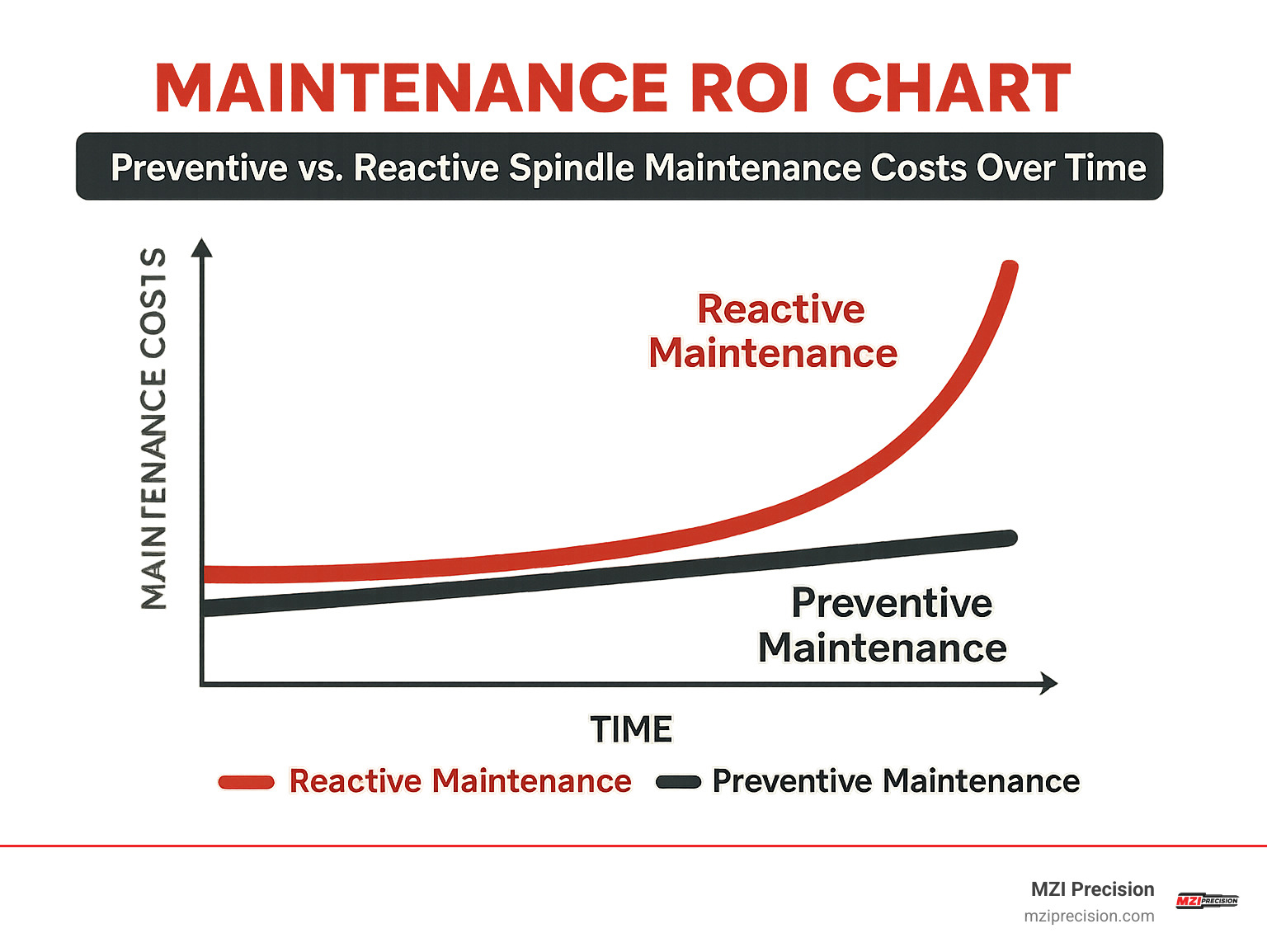
The science backs this up too, with research on spindle maintenance showing that preventive approaches dramatically extend spindle life and maintain precision over time.
Programming, Automation & Maintenance Essentials
Successfully operating a CNC double spindle machine requires specialized knowledge that goes beyond basic machining skills. Let’s explore the practical aspects that will help you get the most from your investment while keeping your machine running smoothly for years to come.
Programming Techniques for Double Spindle Efficiency
Programming a double spindle machine is a bit like conducting an orchestra – you need to coordinate multiple elements with perfect timing. Unlike single-spindle programming, you’ll need to master a few special techniques:
Code mirroring with G14 commands lets you essentially “flip” an entire program for the sub-spindle, saving hours of programming time. Think of it as a quick way to tell your second spindle, “Do exactly what the first one did, but in reverse.”
Spindle synchronization using G199 codes ensures your spindles move in perfect harmony during critical part transfers. Without proper sync, you might as well be trying to pass a baton while blindfolded!
Multi-channel control is where things get really interesting. Advanced machines offer 2-3 programming channels, allowing you to orchestrate different operations simultaneously. It’s like having multiple conductors leading different sections of your orchestra.
One machinist I know describes it this way: “When I first started programming double spindles, I tried to think of everything happening in sequence. The breakthrough came when I started thinking in parallel – what can be happening at the same time?”
Automation Integration Strategies
Your CNC double spindle machine really shines when paired with the right automation. It’s like having a talented assistant who never needs breaks or makes mistakes.
Gantry loading systems can transform your operation, handling diverse part sizes while maintaining precise positioning. One shop owner told me, “After adding a gantry loader to our twin-spindle setup, we went from running 8 hours a day to 22 hours with just the same staff.”
Bar feeding automation is perfect for turned parts, enabling those magical “lights-out” shifts where your machine keeps making money while everyone’s at home sleeping. Combined with automated part catchers, you’ll prevent damage to finished workpieces and maintain consistent quality.
In-process measurement systems act as your quality control department, constantly checking parts and making adjustments before problems multiply. This real-time feedback is especially valuable when machining expensive materials where scrap costs can quickly add up.
Preventive Maintenance Best Practices
Think of your CNC double spindle machine like a high-performance race car – regular maintenance isn’t just recommended, it’s essential for peak performance.
Preventive vibration checks can spot trouble before it becomes catastrophic. By using vibration analysis tools, you can detect the early warning signs of bearing failures, misalignment, and loose components. It’s like having a doctor’s stethoscope for your machine.
Ultrasonic monitoring takes this a step further by catching issues in the frequency ranges humans can’t hear. Many problems announce themselves at ultrasonic frequencies long before they become audible – or worse, visible through catastrophic failure.
Thermal imaging has become an invaluable tool in modern maintenance. Regular thermal scans can identify hotspots that indicate potential failures, allowing you to address issues during scheduled maintenance rather than emergency repairs. As one maintenance manager put it, “My thermal camera has paid for itself ten times over by catching spindle bearing issues before they caused a shutdown.”
For scientific backing on these approaches, check out this research on spindle maintenance that explores preventive, predictive, and reactive strategies.
Common Challenges & Fixes
Even the most sophisticated CNC double spindle machine will occasionally present challenges. Here’s how to address the most common issues:
Orientation swap errors often trip up even experienced programmers. When programming for sub-spindles, the Z-axis orientation typically reverses. Using proper G-codes to account for this change will save hours of troubleshooting and prevent scrapped parts.
Chuck clamping issues can cause heart-stopping moments during part transfers. Regular maintenance of hydraulic systems and consistent monitoring of chuck pressure will prevent the dreaded workpiece slippage that can damage both your part and your machine.
Coolant debris is the silent killer of spindle bearings. Implementing proper filtration systems and sticking to a regular coolant maintenance schedule will extend spindle life dramatically. Think of it as changing the oil in your car – skip it at your peril!
Overheating problems often creep up gradually. Monitor your environmental conditions and ensure adequate airflow around your machine. For high-duty-cycle applications, a dedicated spindle chiller is often the best insurance policy against thermal-related failures.
Best-Practice Maintenance Checklist
A structured maintenance routine will keep your CNC double spindle machine running at peak performance for years. Here’s a practical approach that balances thoroughness with efficiency:
Daily inspections should become as routine as your morning coffee. Take five minutes to check coolant levels and quality, inspect chuck jaws for damage, verify proper lubrication, and clear chips from the work area. These quick checks can prevent 80% of common problems.
Weekly maintenance should focus on alignment between spindles, inspecting tool holders for wear, cleaning filters and heat exchangers, and verifying spindle temperature during operation. One shop I worked with reduced their tool breakage by 40% just by implementing consistent weekly checks.
Monthly tasks include inspecting ball screws and way covers, checking hydraulic and pneumatic systems, verifying spindle runout, and inspecting electrical connections. These deeper checks help catch developing issues before they impact part quality.
Quarterly procedures should include comprehensive vibration analysis, checking bearing preload, inspecting spindle taper for wear, and analyzing oil samples for contamination. This is where professional assistance can be invaluable – at MZI Precision, we help many shops develop customized quarterly maintenance routines.
Annual maintenance might include preventive spindle rebuilding for critical machines, complete geometric accuracy verification, hydraulic system overhauls, and replacement of worn seals and bearings. Think of it as your machine’s yearly physical – an investment that pays dividends in reliability and precision.
The spindle is the heart of your machine. Just like you wouldn’t skip regular checkups with your doctor, don’t neglect the health of your spindles. Regular maintenance isn’t an expense – it’s an investment in your shop’s productivity and part quality.
Product Roundup: Best CNC Double Spindle Turning Machines of 2024
The market for CNC double spindle machines continues to evolve, with manufacturers introducing increasingly sophisticated models. Here’s our roundup of standout machines that demonstrate the best of current technology.
High-Volume Bar-Turning Duo
For manufacturers focused on high-volume, bar-fed turning operations, these machines offer exceptional productivity:
TTS Series Twin Spindle CNC Lathe
– Spindle Power: 13 kW with 27 Nm torque
– Maximum Speed: 12,000 RPM on both spindles
– Bar Capacity: Up to ø52mm
– Y-Axis Travel: ±31mm for complex milling operations
– Standout Feature: Superimposed machining capability allows cutting with three tools simultaneously
– Automation: Compatible with gantry robots and bar feeders
The TTS Series excels in applications requiring high-speed, precision turning with secondary operations. Its oil-cooled direct-drive synchronous motors halve acceleration time compared to belt-driven spindles, reaching 5,000 RPM in just 1.75 seconds.
One user reported: “The ability to run three tools simultaneously has reduced our cycle times by nearly 40% on complex parts, while the 12,000 RPM spindles provide exceptional surface finishes even at high feed rates.”
MW180GL Twin Spindle CNC
– Workpiece Capacity: 200mm diameter × 120mm length × 8.0kg per spindle
– Configuration: Twin identical spindles for simultaneous processing
– Automation: Single or dual gantry robot loader options
– Standout Feature: Versatile flexibility for handling diverse part sizes
The MW180GL’s expanded capacity (compared to the standard MW180G’s 180mm × 80mm × 3.0kg) makes it ideal for larger components while maintaining the productivity benefits of twin-spindle machining.
Compact Combo H/V Center
For shops requiring maximum flexibility in a minimal footprint:
KHV-400 Combination Horizontal/Vertical Machining Center
– Spindle Configuration: 10 HP horizontal spindle, 15 HP vertical spindle
– Speed Range: 10,000 RPM standard (12,000 RPM optional)
– Travel: 19.7″ X × 19.7″ Y × 17.8″ Z
– Tool Capacity: 24-tool automatic tool changer
– Footprint: Compact 82″ × 114″ installation space
– Standout Feature: Five-sided machining capability in one setup
The KHV-400 effectively combines two machines in one, allowing users to perform both horizontal and vertical machining operations without repositioning workpieces. Its Meehanite certified casting ensures stable, vibration-free machining even during heavy cutting operations.
This configuration is particularly valuable for complex aerospace and defense components that require machining from multiple angles with tight tolerances.
Heavy-Duty Mill-Turn Sub-Spindle
For manufacturers needing to combine turning and milling in one setup:
DS-30Y Dual-Spindle Turning Center
– Work Envelope: 13.75″ × 32.5″
– Main Spindle: A2-6 spindle nose with large through-bore
– Sub-Spindle: 6000 RPM capability for high-speed finishing
– Live Tooling: 12,000 RPM for milling and drilling operations
– Y-Axis: Full Y-axis capability for off-center features
– Automation: Auto-door and robot-ready interfaces
– Standout Feature: “Done-in-one” solution for multi-operation parts
The DS-30Y combines the productivity of a dual-spindle lathe with the versatility of a machining center. Its ability to perform turning, milling, drilling, and tapping operations in a single setup eliminates the need for secondary operations on separate machines.
Users particularly appreciate the G199 spindle synchronization feature, which enables smooth part transfers at speeds up to 4800 RPM, and the simplified programming enabled by G14 code mirroring.
When evaluating these machines, the spindles are the heart of their performance. At MZI Precision, we specialize in repairing and rebuilding industrial manufacturing spindles to ensure they maintain peak performance throughout their lifecycle. Our expertise across aerospace, automotive, and defense industries allows us to understand the specific demands placed on these critical components.
Frequently Asked Questions about CNC Double Spindle Machines
What industries gain most from twin-spindle technology?
The benefits of CNC double spindle machines aren’t equally valuable across all manufacturing sectors – certain industries see dramatically better returns than others.
Automotive manufacturers often lead the pack in adoption, using these machines to produce high-volume components like connecting rods, valve bodies, and transmission parts with remarkable efficiency. When every second counts in production, the simultaneous machining capabilities deliver game-changing throughput.
Aerospace companies accept these machines for different reasons – primarily the “done-in-one” processing that maintains exacting tolerances on complex titanium and aluminum components. As one aerospace manufacturer told us, “Completing our complex titanium components in one setup hasn’t just cut our cycle times – it’s dramatically improved consistency and slashed our scrap rates.”
Medical device manufacturers particularly value the reduced handling between operations. When you’re creating surgical implants or instruments, every transfer between machines introduces potential contamination and error. Double spindle setups minimize these risks while maintaining the exceptional quality standards required.
Defense and military suppliers appreciate similar benefits, especially when producing components with strict quality requirements and complex geometries that would typically require multiple setups.
Even electronics manufacturers find value in these systems when producing high-volume precision components like connectors and housings that benefit from consistent, efficient production.
How does programming differ between main and sub-spindles?
Programming a CNC double spindle machine requires understanding several key differences from traditional single-spindle programming – it’s not simply writing two separate programs.
The most fundamental challenge is axis orientation. The Z-axis is typically reversed on the sub-spindle, requiring programmers to mentally flip their approach. Fortunately, most modern controls offer G14 or similar mirroring codes that automatically handle this reversal, significantly simplifying programming.
Synchronization becomes critical during part transfers, with specific G-codes (like G199) ensuring perfect alignment between spindles. Without proper synchronization, part transfers can fail or damage workpieces.
Advanced machines offer multi-channel programming, allowing operators to simultaneously program different operations across both spindles. This capability enables true parallel processing but requires a more sophisticated programming approach.
Tool offset management presents another challenge, as offsets must be properly set for both spindles, often with different reference points. A consistent approach to tool setup and verification becomes essential.
Most experienced programmers develop a workflow that starts with main spindle operations, implements synchronization codes for part transfer, applies mirroring for sub-spindle work, and finally optimizes with simultaneous cutting operations where possible.
What ROI timeframe can shops expect after adoption?
The million-dollar question for any shop considering a CNC double spindle machine is simple: “When will this investment pay for itself?”
For high-volume production environments running multiple shifts with consistent part demand, the ROI typically materializes within 12-18 months. These operations see immediate benefits from the increased throughput and reduced labor requirements.
Shops handling medium-volume, complex parts generally see returns in 18-24 months. Here, the value comes less from raw throughput and more from setup reduction and the ability to complete parts in one operation instead of multiple setups across different machines.
Job shops face the longest ROI horizon at 24-36 months, with returns heavily dependent on their specific job mix and ability to leverage the machine’s versatility across diverse work.
Several factors drive these impressive returns. Labor savings are substantial, with one operator often managing what previously required two or more people. Floor space utilization improves by roughly 70% compared to equivalent single-spindle setups. Energy consumption drops by approximately half versus running multiple machines.
Quality improvements often surprise new users – with reduced handling and consistent machining environment, scrap and rework rates frequently decline by 15-30%. The cycle time reductions of up to 60% directly translate to increased capacity without expanding facilities.
One manufacturer’s experience captures the potential: “After implementing our twin-spindle CNC lathe with gantry automation, our cost per part dropped by 32% while daily output increased by 70%. We hit full ROI in just 14 months.”
At MZI Precision, we’ve seen how critical properly functioning spindles are to achieving these ROI targets. When both spindles aren’t performing at peak efficiency, the promised productivity gains can’t materialize – which is why our spindle repair and rebuilding services focus on restoring these vital components to OEM specifications or better.
Conclusion
The evolution of CNC double spindle machines represents one of the most significant advancements in modern manufacturing technology. These sophisticated systems have fundamentally transformed production capabilities across industries, delivering unprecedented efficiency, quality, and flexibility.
As we’ve seen throughout our exploration, the benefits of embracing double spindle technology go far beyond just making more parts faster. These machines are changing the game for manufacturers who need to stay competitive in increasingly demanding markets.
When you implement a CNC double spindle machine, you’re not just buying equipment—you’re investing in a manufacturing revolution. With cycle time reductions of up to 60%, you’ll see your productivity soar while watching your costs drop through reduced floor space requirements (about 70% less than traditional setups) and energy consumption cut in half. Your team will appreciate the streamlined workflow as “done-in-one” capabilities eliminate those frustrating secondary operations that eat into your margins.
Perhaps most importantly, your customers will notice the difference in part quality. With fewer handling operations and more consistent machining environments, you’ll see fewer rejects and more satisfied clients. Whether you choose twin-spindle lathes for high-volume production, combination horizontal/vertical centers for maximum flexibility, or sophisticated mill-turn machines with sub-spindles for complex parts, there’s a perfect configuration waiting to transform your shop floor.
Of course, getting the most from your investment takes more than just plugging in your new machine. Mastering specialized programming techniques, integrating smart automation solutions, and—most critically—implementing proper maintenance practices are essential steps on your journey to manufacturing excellence.
At MZI Precision, we understand that spindles are truly the beating heart of these sophisticated machines. When your spindles perform at their best, so does your entire operation. That’s why we’ve specialized in industrial manufacturing spindle repair and rebuilding—to ensure these vital components continue performing at OEM specifications (or better) throughout their entire lifecycle.
The manufacturing landscape continues evolving toward greater automation, efficiency, and precision. Forward-thinking shops that accept CNC double spindle machines are positioning themselves at the cutting edge of this evolution. By understanding both the capabilities and maintenance requirements of these remarkable machines, you’re taking an important step toward securing your competitive advantage in an increasingly demanding global marketplace.
For more information about industrial spindle services and how they can help maintain your CNC machine’s performance, visit MZI Precision’s spindle services page.