


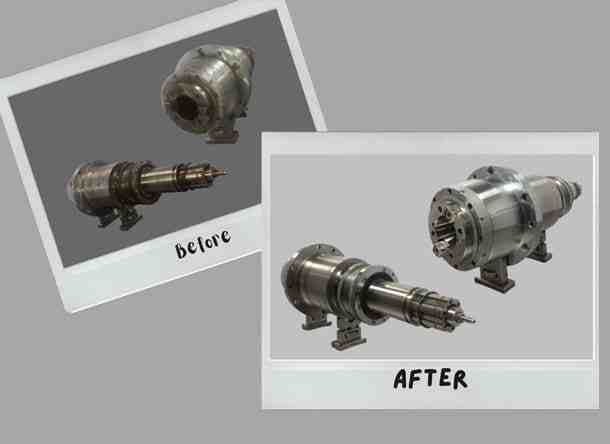
Spindle repair supplier: #1 Ultimate Service 2024
Why Reliable Spindle Repair Services Matter for Industrial Manufacturing
Spindle repair supplier services are critical for maintaining production uptime in industrial manufacturing. When a spindle fails, the entire production line can grind to a halt, costing thousands of dollars per hour in lost productivity. This guide compares the leading spindle repair and rebuild services to help you find a trusted partner that can minimize downtime and restore your equipment to peak performance.
Top Considerations When Choosing a Spindle Repair Supplier:
- Turnaround Time – Standard repairs range from 1-3 days to 4-5 weeks depending on complexity
- Warranty Coverage – Look for 12-24 month warranties on repaired spindles
- Technical Expertise – OEM-trained technicians with 15+ years of experience
- Quality Standards – Dynamic balancing to 0.3 G’s or better, ABEC 7+ bearings
- Service Scope – Repair, rebuild, and emergency services for multiple spindle types
- Cost Savings – Professional repair typically costs 25-75% less than new spindle replacement
Machine downtime is not an option for today’s industries. A single spindle failure can cascade through your entire production schedule, affecting delivery commitments and customer relationships. The right spindle repair supplier doesn’t just fix broken parts—they become a strategic partner in your uptime strategy.
Industrial manufacturing spindles require specialized expertise. Unlike consumer-grade equipment, these precision components operate at high speeds under demanding conditions in aerospace, medical device manufacturing, energy, and defense applications. They need repair services that understand micron-level tolerances and can restore performance to OEM specifications or better.
This comprehensive guide examines the core services, technologies, and differentiators among spindle repair suppliers. You’ll learn how to evaluate repair processes, understand warranty structures, and identify the expertise that separates exceptional service from basic repair work.

Spindle repair supplier vocab explained:
UNDERSTANDING CORE SPINDLE REPAIR SERVICES
When your industrial manufacturing spindle experiences issues, it’s crucial to understand the spectrum of services available from a professional spindle repair supplier. These services go beyond a simple fix, aiming to restore or even improve the performance and longevity of your critical equipment. We, at MZI Precision, offer comprehensive solutions custom to the demanding needs of modern industrial operations in locations like California.
REPAIR, REBUILD, AND REMANUFACTURE
The terms “repair,” “rebuild,” and “remanufacture” are often used interchangeably, but they represent different levels of service and restoration for industrial manufacturing spindles:
- Spindle Repair: This typically involves addressing a specific, localized issue. For example, if a sensor fails or a minor component needs replacement, a repair service will target that particular problem to get the spindle back in working order. This is generally the quickest and least extensive option.
- Spindle Rebuilding: A more thorough process, spindle rebuilding involves a complete disassembly of the spindle. All wear parts, such as bearings, seals, and O-rings, are replaced with new, high-quality components. The spindle is carefully cleaned, inspected, and then reassembled, balanced, and tested to restore it to original equipment manufacturer (OEM) specifications. Leading suppliers emphasize this return to OEM standards, ensuring the spindle performs as it was originally designed.
- Spindle Remanufacture: This takes rebuilding a step further. While a rebuild aims for OEM specifications, a remanufacture often seeks to achieve “better-than-new” performance. This might involve upgrading components, improving tolerances (e.g., within 2 microns), or incorporating design improvements to overcome known weaknesses in the original design. This can extend the spindle’s lifespan and improve its performance beyond its initial capabilities.
Our goal is always to restore or exceed OEM specifications, ensuring your industrial manufacturing spindles deliver optimal performance.
SPECIALIZED SERVICES AND CAPABILITIES
Beyond the core repair and rebuilding, leading spindle repair suppliers offer specialized services that are vital for precision and longevity:
- Taper Grinding: The spindle’s taper is where the tool holder connects, and any run-out or damage here can severely impact machining accuracy. Expert suppliers offer taper grinding to restore this critical interface to perfect concentricity. This is especially important for issues caused by incorrect tool holder usage.
- Dynamic Balancing: High-speed spindles demand exceptional balance to prevent vibration, heat, and premature wear. Professional suppliers dynamically balance spindles to incredibly tight tolerances, often 0.3 G’s or better at full speed, ensuring smooth operation and extending bearing life.
- Related Component Repair: While not strictly a spindle component, other parts like ball screws and gearboxes are integral to machine tool movement and precision. Some comprehensive suppliers offer repair services for these related systems to keep your entire machine functioning optimally.
- Spindle Component Manufacturing: The ability to machine or manufacture specific spindle components in-house is a significant advantage. This allows for custom solutions and quick replacement of obsolete or hard-to-find parts, reducing reliance on external suppliers and speeding up turnaround times.
For more information on our specific offerings, we invite you to explore More info about our repair services.
SUPPORT FOR DIVERSE SPINDLE TYPES AND BRANDS
A truly capable spindle repair supplier should possess extensive experience across a wide range of industrial manufacturing spindle types and brands. This breadth of knowledge ensures that no matter your equipment, you can find a solution. We pride ourselves on our ability to service a vast array of spindles, including:
- Milling Spindles: Crucial for CNC machining centers, these include vertical, horizontal, and multi-axis milling heads.
- Grinding Spindles: Found in surface, cylindrical, ID, and OD grinders, these require extreme precision.
- Lathe Spindles: Essential for turning centers and a common repair item.
- High-Speed Spindles: Operating at tens of thousands of RPMs, these demand specialized balancing and bearing knowledge.
- Air-Bearing Spindles: Requiring unique expertise due to their frictionless design, these are handled by specialized facilities.
- BT/ISO/CAT/HSK Types: These refer to the different tool-holding taper systems. A skilled spindle repair supplier will have expertise in all common types, including CAT, BT, HSK, and ISO.
- We also specialize in OEM repairs and rebuilds for a wide array of manufacturers, and we refurbish most other spindle brands with the same dedication, ensuring comprehensive coverage for your needs.
THE SPINDLE REPAIR PROCESS: FROM DIAGNOSIS TO DELIVERY
Understanding the meticulous process a professional spindle repair supplier follows can explain the service and build confidence in the quality of the outcome. A transparent, step-by-step approach with rigorous quality control checkpoints is the hallmark of excellence.
STEP 1: EVALUATION AND DIAGNOSIS
The journey of a failing spindle begins with a thorough evaluation. When you send your spindle to us or any reputable spindle repair supplier, the first step is a comprehensive intake and diagnosis:
- Initial Inspection: Upon arrival, the spindle undergoes a visual inspection and documentation of its condition. All top-tier suppliers emphasize this initial analysis.
- Failure Analysis: Our experts dig deeper to identify the root cause of the failure. This might involve vibration analysis, run-out readings, or even examining PLC error codes. Understanding why a spindle failed is crucial to preventing future occurrences, a practice emphasized by leading repair specialists.
- Free Estimates & Detailed Quote Generation: Many suppliers offer free estimates. After a detailed diagnosis, you’ll receive a comprehensive report outlining the identified problems, the proposed repair solutions, a firm price, and an estimated lead time. Diagnosis can often be completed within a few working days. Some suppliers even offer technical support for troubleshooting before you pull the spindle from your machine.
STEP 2: DISASSEMBLY, CLEANING, AND REPAIR
Once the diagnosis is complete and the repair is approved, the hands-on work begins:
- Climate-Controlled Environment: Precision spindle work requires a pristine environment. Quality facilities often boast climate-controlled, positive-pressure assembly rooms to prevent contamination.
- Meticulous Component Inspection: The spindle is carefully disassembled, and each component is cleaned and inspected for wear, damage, or contamination. This detailed examination is a standard practice for any professional repair service.
- Replacing Wear Parts: All wear components, including bearings, seals, and O-rings, are replaced. A key differentiator for quality spindle repair suppliers is their commitment to using OEM-quality parts or better.
- Using ABEC 7+ Bearings: For rolling element bearings, the use of ABEC 7 or better bearings is a mark of high quality. This ensures superior precision and longevity. For more insights into the critical role of bearings, you can refer to Machine Tool Maintenance Industry Bearings.
STEP 3: ASSEMBLY, TESTING, AND QUALITY CONTROL
The final stages are where precision and performance are proven:
- Precision Assembly: The spindle is carefully reassembled by highly skilled technicians, often OEM-trained. Every component is fitted with exacting tolerances.
- Dynamic Balancing: Post-assembly, the spindle undergoes dynamic balancing. This crucial step, performed at full speed, ensures minimal vibration, with targets often set at 0.3 G’s or better, or even 0.1-mil or less.
- Multi-Hour Run-in Testing: The repaired spindle is subjected to extensive run-in testing, often for several hours, under its own power and at maximum rated speed. This process allows bearings to seat properly and identifies any potential issues before the spindle leaves the facility.
- Temperature Monitoring & Vibration Signature Analysis: During testing, critical parameters like temperature, vibration, and axial displacement are continuously monitored and logged using advanced data loggers. This provides a detailed performance signature.
- Final Documentation: Before shipment, the repaired spindle undergoes a final quality control check, and its specifications are documented. This rigorous testing and quality control process is a hallmark of a reliable supplier.
HOW TO CHOOSE THE RIGHT SPINDLE REPAIR SUPPLIER
Selecting the ideal spindle repair supplier is a strategic decision that impacts your operational efficiency and bottom line. It’s not just about finding someone to fix a problem; it’s about partnering with experts who understand the demands of industrial manufacturing.
KEY DIFFERENTIATORS IN A SPINDLE REPAIR SUPPLIER
Not all spindle repair services are created equal. Here’s what sets the best apart:
- Technician Experience and OEM Training: Look for suppliers with a long track record and technicians boasting extensive experience, often with 15+ years in the field and OEM training. This ensures they understand the intricate designs and specific requirements of various industrial manufacturing spindles.
- Customer Service and Communication: A good supplier will keep you informed throughout the process, providing clear reports and prompt answers to your questions. Personalized service and clear communication are hallmarks of a quality partner.
- Technical Support Before Removal: An invaluable service offered by some suppliers is technical support for troubleshooting before you even remove the spindle. This can sometimes prevent unnecessary removal and repair costs.
- Specialization: Some suppliers specialize in particular types or brands of spindles. Such specialization can mean deeper expertise for your specific equipment.
TURNAROUND TIME AND EMERGENCY SERVICES
Downtime is costly, so turnaround time is a critical factor:
- Standard Turnaround Times: These can vary significantly, from just a few days for less complex rebuilds to several weeks for more involved repairs. It’s important to get a clear estimate upfront. Some critical repairs can be completed in as little as 3-5 days.
- Expedited Repair Options: When production is halted, every hour counts. Many suppliers offer expedited services for urgent needs to get you back up and running as quickly as possible.
- Spindle Exchange Programs: To minimize downtime, some suppliers offer spindle exchange or loaner programs. This can provide you with a replacement spindle, sometimes within 24 hours, while yours is being repaired. Some also offer storage and maintenance services for your spare spindles.
- Emergency Services: Reputable suppliers understand that sometimes things just can’t wait and offer emergency service capabilities to address critical failures promptly.
EVALUATING WARRANTIES AND COST
A strong warranty protects your investment, and understanding cost is key to smart budgeting:
- Warranty Length: Warranties on repaired spindles can range from 6 months to 24 months or more. Look for a supplier that offers a comprehensive warranty that meets or exceeds the original OEM warranty. Always scrutinize the terms, such as whether the warranty begins at the date of shipment or the date of installation—a crucial detail.
- Cost-Effectiveness vs. New Purchase: Repairing a spindle is almost always more cost-effective than buying a new one, with repairs often costing 25% to 75% less than a new replacement. This makes repair a financially sound decision for most industrial manufacturing operations. For a deeper dive into financial considerations, our guide on Spindle replacement cost info can be very helpful.
THE TECHNOLOGY BEHIND PRECISION SPINDLE REPAIR
The repair of industrial manufacturing spindles is a high-tech endeavor, demanding micron-level precision and advanced methodologies. A leading spindle repair supplier leverages state-of-the-art technology to ensure that every repair meets the most stringent quality standards.
ENSURING ACCURACY WITH ADVANCED METROLOGY
Achieving the precision required for modern industrial manufacturing spindles relies heavily on advanced metrology:
- Coordinate Measuring Machines (CMM): CMMs allow for extremely accurate three-dimensional measurements of spindle components. This ensures that every part conforms to original specifications or better.
- Calibrated Test Equipment: All measuring and testing equipment must be regularly calibrated and certified. This is a best practice that guarantees the reliability of all measurements taken during the repair process.
- Run-out Verification: Verifying run-out with calibrated test bars at various points (e.g., near the taper and further out) is essential to confirm the concentricity and accuracy of the spindle’s rotation.
- Grinding to Micron Precision: Many critical components, like shafts and tapers, require grinding to micron-level precision. Top-tier suppliers perform in-house grinding to restore surfaces to their exact original dimensions and finishes.
We also work with leading manufacturers of spindle technology, such as Hiteco spindles, to ensure we are always at the forefront of spindle advancements.
PERFORMANCE TESTING AND BALANCING
The ultimate test of a repaired spindle is its performance under simulated operating conditions:
- Dynamic Balancing at Full Speed: As mentioned earlier, dynamic balancing is crucial. The best suppliers perform this at the spindle’s full operating speed, not just static or low-speed balancing. This ensures the spindle operates smoothly across its entire RPM range.
- Vibration Analysis: During run-in and testing, vibration analysis is conducted to detect any anomalies. Data loggers are often used to monitor and record vibration signatures, providing objective proof of the spindle’s health.
- Data Logging During Test Runs: Comprehensive data logging of parameters like RPM, temperature, vibration, and axial displacement provides a detailed performance report. This ensures the spindle performs optimally under various conditions.
- Drawbar Force Testing: The drawbar system, which holds the tool in place, is critical. A thorough repair process includes drawbar force testing to ensure it meets retention force specifications, preventing tool pull-out and maintaining machining accuracy.
- Sensor Functionality Checks: Modern spindles are equipped with various sensors for speed, temperature, and position. A quality repair service will ensure all sensors are tested and documented, guaranteeing their proper function and integration with your machine’s control system.
FREQUENTLY ASKED QUESTIONS ABOUT CHOOSING A SPINDLE REPAIR SUPPLIER
We understand that choosing the right spindle repair supplier can bring up many questions. Let’s address some common concerns that arise in the industrial manufacturing sector.
WHAT ARE THE MOST COMMON CAUSES OF SPINDLE FAILURE?
Understanding the common culprits behind spindle failure can help you implement preventative measures:
- Bearing Contamination: This is perhaps the most frequent cause. Dust, coolant, or debris entering the bearings can quickly lead to wear and failure.
- Lack of Lubrication: Insufficient or degraded lubrication causes increased friction, heat, and premature bearing wear. A thorough repair process includes checking lubrication and cooling systems.
- Machine Crashes: Accidental impacts or collisions can cause sudden, catastrophic damage to spindle components, leading to misalignment or structural failure. Modern monitoring systems can even detect collision data to aid in diagnosis.
- Overloading: Operating the spindle beyond its specified load or speed limits can overstress bearings and other components, leading to rapid degradation.
- How Failure Analysis Prevents Recurrence: A good spindle repair supplier doesn’t just fix the problem; they analyze the cause. Analyzing the root cause of failures helps prevent future issues and can even improve spindle performance. This diagnostic step is crucial for long-term reliability. Signs of failure, such as changes in sound, increased heat, vibration, or PLC error codes, are clear indicators that analysis is needed.
IS IT BETTER TO REPAIR A SPINDLE OR BUY A NEW ONE?
This is a perennial question for manufacturers. For industrial manufacturing spindles, repair often presents significant advantages:
- Cost Savings: Repairing a spindle is almost always more economical. Spindle repair is generally more cost-effective than buying a new spindle, with replacement spindles often costing significantly less than new ones. This can translate to substantial savings for your budget.
- Faster Turnaround: While lead times vary, repairs are generally quicker than procuring a new spindle, which can take weeks or months for delivery. Some critical repairs can be done in just a few days, and exchange programs can provide a replacement within 24 hours, minimizing costly downtime.
- Potential for “Better-Than-New” Performance: As mentioned, some rebuilds can incorporate upgrades or improvements that make the spindle perform better than its original specifications, achieving micron-level precision that exceeds OEM standards.
- Sustainability: Repairing and rebuilding contributes to a more sustainable manufacturing cycle by extending the life of existing equipment and reducing waste.
WHAT INDUSTRIES RELY ON INDUSTRIAL MANUFACTURING SPINDLE REPAIR?
The need for precision spindle repair spans a vast array of industrial manufacturing sectors. At MZI Precision, we are proud to serve diverse industries that demand the highest levels of accuracy and uptime. These include:
- Aerospace: For machining intricate components with stringent tolerances.
- Defense: Ensuring the reliability of equipment used in critical applications.
- Medical Device Manufacturing: Producing precision instruments where accuracy is paramount.
- Energy: Supporting the creation of components for power generation and other energy infrastructure.
- Solar Energy: Assisting in the manufacturing processes for solar panels and related equipment.
- Metal Industry: Machining, milling, and grinding various metals for different applications.
- Glass Industry: Precision cutting and shaping of glass.
- Plastic Industry: Manufacturing complex plastic parts with high accuracy.
- Granite Industry: Shaping and finishing granite and other hard materials.
- Graphite Industry: Precision machining of graphite components.
- Robotics: Supporting the spindles integrated into advanced robotic manufacturing systems.
These industries, among others, cannot afford prolonged downtime. They rely on expert spindle repair suppliers to keep their production lines running smoothly.
CONCLUSION: PARTNERING FOR MAXIMUM UPTIME
In the demanding world of industrial manufacturing, the performance of your spindles is non-negotiable. A failing spindle can mean lost production, missed deadlines, and significant financial setbacks. Choosing the right spindle repair supplier is not merely a transaction; it’s a strategic partnership that ensures your operations remain efficient, precise, and profitable.
We’ve explored the critical aspects of selecting a spindle repair supplier: from the core services of repair, rebuild, and remanufacture to specialized capabilities like taper grinding and dynamic balancing. We’ve digd into the meticulous, multi-step repair process—from initial diagnosis and failure analysis to precision assembly, rigorous testing, and comprehensive quality control. Key differentiators like technician expertise, OEM training, and robust warranties are vital considerations, as are turnaround times and emergency service options. The advanced metrology and performance testing technologies employed by leading suppliers ensure micron-level accuracy and proven reliability.
The value of a quality repair comes down to minimizing your downtime and maximizing your production. At MZI Precision, we bring our expertise in OEM rebuilt spindles and commitment to exceptional service to the industrial manufacturing sectors in California, including Huntington Beach and Los Angeles. We understand the critical role your spindles play, and we are dedicated to restoring them to peak performance, or even better.
Don’t let spindle failure slow you down. Partner with us for reliable, high-quality industrial manufacturing spindle repair and rebuilding services.