

DC motor repair shop: Comprehensive 2025
When DC Motors Drive Your Production: Understanding Your Repair Options
A DC motor repair shop specializes in diagnosing, rebuilding, and restoring direct current motors to OEM specifications. These facilities offer services like armature rewinding, bearing replacement, and commutator machining, often at a fraction of the replacement cost. When choosing a shop, look for technical certifications (EASA, ISO 9001), broad experience, in-house capabilities, and a solid warranty.
In manufacturing, DC motors power critical equipment like CNC spindles. When they fail, production stops. With an average failure rate of 3.4% per year, breakdowns are inevitable. The cost of downtime makes motor failure a production crisis, where a fast repair can save thousands.
Choosing between repair and replacement isn’t always obvious. Professional repair can be 20-70% cheaper and faster than ordering new equipment. However, the right choice depends on the severity of the failure, parts availability, and long-term reliability needs.
This guide walks you through identifying motor problems, understanding the repair process, selecting a qualified provider, and making informed repair-versus-replace decisions for your industrial DC motors.
Identifying the Need for Repair: Common DC Motor Failure Signs
Industrial DC motors power demanding equipment, especially precision systems like CNC spindles. When they show signs of trouble, you’re racing to prevent a shutdown. With an average failure rate of 3.4% per unit per year, it’s not a question of if a motor will fail, but when.
Understanding the causes helps you catch problems early. Overheating from overloads or poor ventilation breaks down insulation and accelerates wear. Contamination from dirt, moisture, or chemicals can degrade insulation and cause short circuits. Electrical issues like voltage spikes can fry windings, while bearing wear from corrosion, heavy loads, or poor lubrication is nearly inevitable and can cause cascading damage.
Warning Signs of a Failing DC Motor:
The key to minimizing downtime is acting on early warning signs.
- Unusual noises: Grinding, squealing, or clicking sounds often point to bearing problems or worn brushes.
- Excessive vibration: Signals rotor imbalance, bearing wear, or misalignment, creating stress on all components.
- Loss of power or torque: A motor struggling to maintain speed may have worn brushes or internal winding issues.
- Inconsistent speed: Suggests problems with the commutator, brushes, or control circuitry.
- Visible damage or smoke: Burning, charring, or smoke indicates severe electrical or thermal overload and demands immediate shutdown.
- Increased operating temperature: A motor that feels excessively hot signals electrical faults, friction, or poor cooling.
- Frequently tripping circuit breakers: Indicates the motor is drawing too much current, likely from a short circuit or ground fault.
Regular Electric Motor Inspection helps catch these issues before they escalate. A qualified DC motor repair shop can trace symptoms to their root cause. Ignoring warning signs is a costly mistake, as minor issues can quickly spiral into catastrophic failures.
The Comprehensive Process at a DC Motor Repair Shop
When your industrial DC motor fails, a professional repair shop follows a methodical process to restore it. This journey ensures your critical equipment is returned to service reliably.
The process begins with an initial evaluation and data recording, where technicians document nameplate data and perform a visual inspection for obvious damage. Disassembly follows, with each component carefully inspected and documented. Winding tests (megohm, surge, resistance) reveal the health of the electrical circuits, while mechanical fits and dimensions are measured to identify wear and corrosion. For precision industrial manufacturing spindles, this level of detail is essential.
What to Expect from a Professional DC Motor Repair Shop
A professional shop uses specialized expertise to restore motor performance. Key services include:
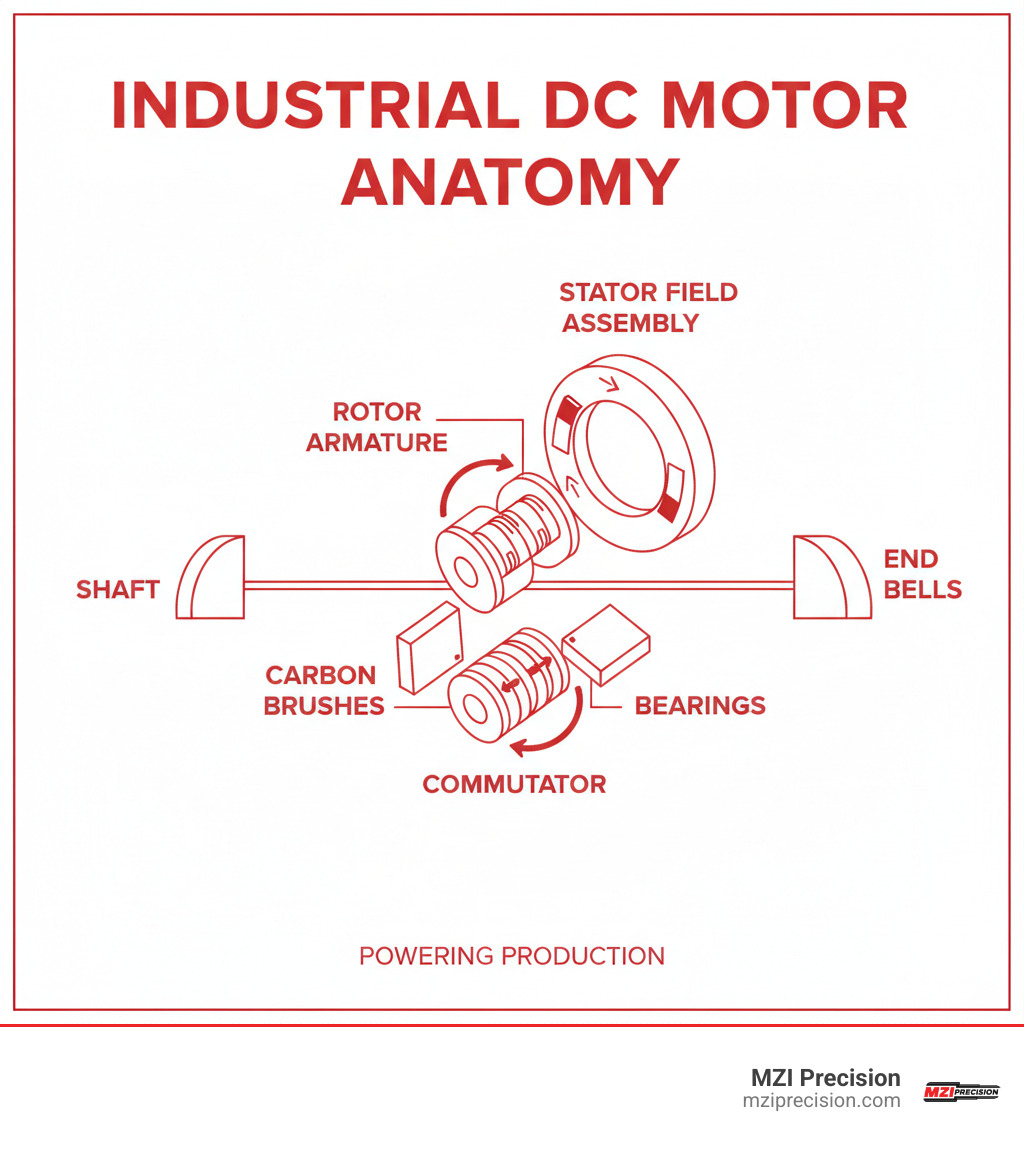
- Armature rewinding: When windings fail, Motor Rewind Specialists strip the old coils and install new ones with proper tension and insulation.
- Commutator work: Technicians use precision machining to restore a smooth surface and undercut the mica insulation between bars to prevent short circuits.
- Brush and brush holder replacement: Worn brushes are replaced, and holders are repaired or replaced to ensure proper spring tension and alignment.
- Bearing installation: Old bearings are removed and new ones are installed using specialized heating or pressing techniques to prevent damage.
- In-house machine shop: This capability allows for the quick fabrication or repair of custom parts like shafts and end bells, reducing turnaround time. This is especially valuable for Remanufactured Electric Motors where original parts may be unavailable.
Post-Repair Testing and Diagnostics
Once repairs are complete, rigorous testing validates the work.

After assembly with new components, dynamic balancing is performed. The rotor is spun at high speed while sensors measure imbalances, which are then corrected to a tolerance of .1-mil or less. This step is critical for reducing vibration and extending motor life, especially for high-speed spindles.
Vibration analysis confirms the balancing work and overall mechanical integrity. Finally, load testing and dyno testing simulate real-world conditions, using a dynamometer to measure torque and horsepower across the motor’s operating range. This ensures the motor meets all performance specifications before it’s returned to you with a final service report detailing all work performed and test results.
For a deeper look at the technical aspects, especially for precision applications, review this Mastering CNC Spindle Motor Repair: A Step-by-Step Guide.
Repair vs. Replacement: A Cost-Benefit Analysis
When an industrial DC motor fails, you face a critical decision: repair or replace? For industrial manufacturing spindles and other precision equipment, the right choice impacts budgets and production schedules.
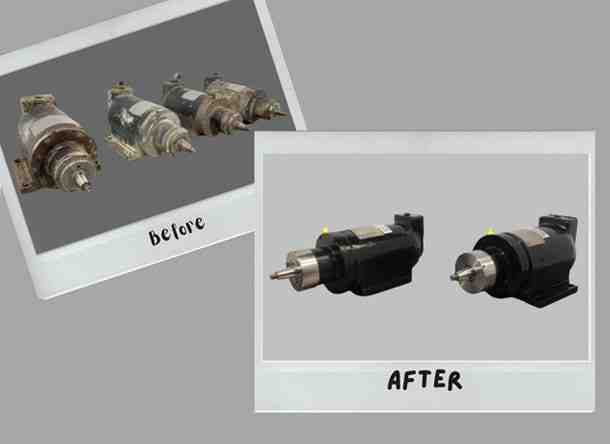
The financial argument for repair is compelling. A professional DC motor repair shop can typically restore a motor for 20% to 70% less than buying new. Lead time is another key factor. Ordering a new specialized motor can take weeks or months, while a skilled shop can often complete repairs much faster, with rush services available for urgent needs. A quality repair also restores the motor to OEM specifications, ensuring seamless integration with your existing machinery. Furthermore, choosing to create Remanufactured Electric Motors is an environmentally responsible choice that reduces waste.
| Factor | Repair | Replacement |
|---|---|---|
| Cost | 20-70% less than new | 100% of new unit cost |
| Turnaround Time | Often faster, especially with rush options | Can have long lead times for specialized units |
| Performance | Restored to OEM specs, potentially improved | New unit, guaranteed to meet original specs |
| Environmental | Reduces waste, sustainable | Higher resource consumption, more waste |
| Longevity | Extended lifespan, often with warranty | Full expected lifespan of a new unit |
| Technology | Retains existing tech, can be upgraded | Opportunity for technology upgrade |
When is Spindle Motor Replacement the Better Option?
Repair isn’t always the best path. Replacement is the clear choice in certain situations:
- Catastrophic failure: If the motor has suffered severe structural damage, such as a fractured housing or extensive fire damage, repair may not be feasible.
- Obsolete parts: For very old motors, finding replacement components can be impossible or prohibitively expensive, though some shops can fabricate parts.
- Cost of repair exceeds replacement value: For smaller or less complex motors, if the repair quote approaches the price of a new unit, replacement is more economical.
- Technology upgrade: If your current motor is outdated or inefficient, replacement offers an opportunity to modernize for better performance and energy savings.
A trusted repair partner will provide a transparent quote and help you weigh the options, ensuring you make the best decision for your operation.
Selecting a Qualified Partner for Industrial Motor Services
When your industrial manufacturing spindles or DC motors need repair, choosing the right partner is critical. The quality of the DC motor repair shop determines whether your motor runs for another decade or fails again in six months.
What to Look for in a DC Motor Repair Shop
The best shops share key characteristics. Look for deep technician expertise and decades of experience. Certifications like EASA accreditation and ISO 9001:2015 demonstrate a commitment to industry best practices and quality management, ensuring repairs meet or exceed original specifications. Even details like using paints that meet ISO quality standards for corrosion protection show a focus on longevity.
An in-house machine shop and advanced diagnostic tools (dynamic balancers, dynamometers) are crucial for reducing turnaround times and ensuring accurate, verified repairs. A strong warranty, typically 12-18 months “in-service,” shows confidence in their work. Finally, prioritize shops that offer transparent communication, including detailed quotes and honest advice, even if it means recommending replacement.
Finding a Specialized DC Motor Repair Shop for Servo Motor Repair
Industrial manufacturing spindles often use DC servo motors, which demand specialized expertise due to their complexity.
A qualified shop for servo repair will have:
- Specialized equipment: Dedicated, climate-controlled labs with test fixtures for evaluating feedback devices like encoders and resolvers.
- Factory training: Technicians trained on various servo motor brands understand their unique designs and operational nuances.
- Feedback device expertise: The ability to diagnose and repair encoders and resolvers is critical for restoring the closed-loop control that defines a servo motor.
- CNC Spindle Motor Repair experience: Familiarity with the high-precision demands of CNC applications is essential.
- Broad parts inventory: Access to a wide range of components across multiple manufacturers reduces repair time.
Servo motors are challenging to repair, so choose a shop that specializes in them, rather than one that just dabbles. Your precision equipment deserves nothing less.
The Power of Proactive Care: Preventing DC Motor Failures
The best time to think about your DC motors is when they’re running perfectly. While having a trusted DC motor repair shop is essential, preventing failures in the first place is the real game-changer. Shifting from reactive repairs to proactive Electric Motor Maintenance can transform your facility’s reliability and efficiency.
Proactive maintenance extends motor life, improves energy efficiency, and allows you to schedule work during planned downtime, avoiding costly emergency shutdowns. It also improves safety by catching potential hazards before they become dangerous.
Key Electric Motor Predictive Maintenance Techniques
Modern predictive maintenance uses technology to monitor motor health while they operate:
- Vibration analysis: Detects changes in vibration patterns that signal developing issues like bearing wear or imbalance.
- Thermal imaging: Uses infrared cameras to spot hot spots caused by electrical faults or mechanical friction.
- Lubrication analysis: Tests grease or oil for contamination and degradation, indicating when lubrication is needed.
- Regular cleaning: Prevents dirt and debris from clogging vents and degrading insulation.
- Brush and commutator inspections: Catches wear on these critical components before it causes cascading damage.
- Insulation resistance testing: Reveals deteriorating winding insulation before it fails and causes a short circuit.
These techniques allow you to gather intelligence while production continues, giving you control over your maintenance schedule.
Frequently Asked Questions about DC Motor Repair
When your industrial manufacturing spindle motor or other critical DC equipment needs attention, you’ll have questions. Here are answers to the most common concerns.
What types of DC motors can be repaired?
A capable DC motor repair shop can service virtually any industrial DC motor. This includes:
- Brushed DC motors: The common workhorses of manufacturing.
- Brushless DC motors (BLDC): Sophisticated motors used in precision applications.
- Permanent magnet, shunt wound, series wound, and compound wound motors: Various designs with different performance characteristics.
- Servo motors: The most complex type, used in applications like Servo Motor in CNC machines, requiring specialized labs and technicians for their closed-loop control systems.
If it’s an industrial DC motor, a skilled shop should be able to restore it.
What is the typical turnaround time for DC motor repairs?
Turnaround time varies based on the job’s complexity. Standard repairs (e.g., bearing or brush replacement) typically take one to two weeks. For urgent needs, many shops offer rush services that can reduce the time to 2-3 business days or even 24 hours in emergencies. More extensive repairs, like a complete rewind or sourcing obsolete parts, can take longer. Factors like parts availability and the shop’s workload also influence the timeline. A good shop will provide a realistic estimate upfront.
What kind of warranty is offered on repairs?
A solid warranty reflects a shop’s confidence in its work. Look for an “in-service” warranty, which means the coverage period starts when you install the motor, not when it leaves the shop. The industry standard is typically 12 to 18 months on both parts and labor. This warranty covers defects in materials and workmanship from the repair itself. Be sure to understand what might void the warranty, such as improper installation or operating the motor outside its design specifications. A reputable DC motor repair shop will be transparent about its warranty terms.
Conclusion
Your industrial DC motors are the heartbeat of your production line, especially when they power precision systems like industrial manufacturing spindles. When a motor fails, making the right repair decision is critical for your bottom line and operational continuity.
As this guide has shown, professional repair from a qualified DC motor repair shop is a strategic business decision. It can save you 20-70% over replacement costs and significantly reduce downtime. The key is choosing the right partner—one with EASA and ISO certifications, in-house capabilities, and a strong in-service warranty.
The best repair is one you never have to make. A proactive maintenance program using techniques like vibration analysis and thermal imaging can prevent catastrophic failures and extend the life of your equipment.
At MZI Precision, we understand the critical role of industrial manufacturing spindles. Our expertise in OEM rebuilt spindles and comprehensive Electric Motor Service and Repair ensures we can handle everything from routine maintenance to complex rebuilds, minimizing your downtime and maximizing equipment value.
Whether you’re facing an immediate failure or planning a preventive maintenance strategy, our team has the technical expertise and customer-first approach your operation deserves. Contact us today or explore our services to learn how MZI Precision can keep your systems running at peak performance.