
 (714) 379-6505


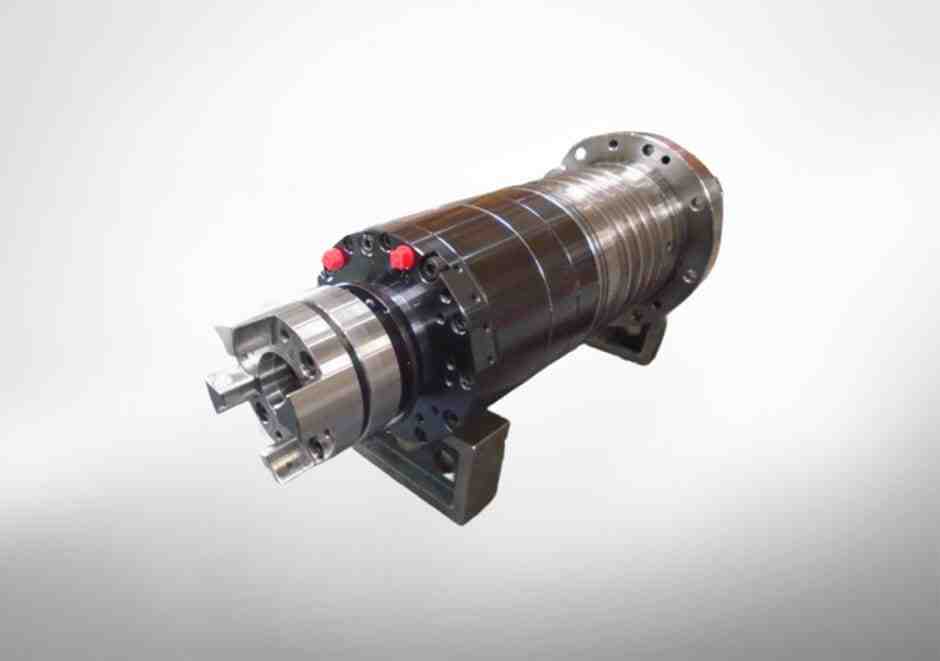
The Powerhouse Behind Precision Machining
CNC milling machine spindle motors are the critical component that determines the performance, precision, and productivity of your machining operations. If you’re looking to select the right spindle motor for your CNC mill, here’s what you need to know:
- Power Range: Industrial CNC spindle motors typically range from 0.2kW (hobbyist) to 20kW+ (industrial)
- Speed Range: 3,000-60,000 RPM depending on application
- Cooling Types: Air-cooled (simpler, lower power) or water-cooled (higher performance, better thermal stability)
- Motor Types: AC induction, synchronous, brushless DC
- Key Selection Factors: Material being cut, required finish quality, duty cycle, and budget
The spindle motor serves as the heart of your CNC milling machine, transferring rotational power to your cutting tools while maintaining the precision needed for complex parts. Unlike conventional motors, these specialized components are engineered to deliver consistent torque across varying speeds while minimizing vibration and heat.
As Titan Gilroy of Titans of CNC explains, “Your spindle is the most critical component of your CNC machine. When it’s running right, everything else falls into place.”
Whether you’re machining aluminum, hardened steel, or composites, selecting the appropriate spindle motor impacts everything from surface finish to tool life. Modern CNC spindle motors feature sophisticated bearing systems, cooling technologies, and speed control mechanisms that allow them to operate with micron-level precision even under heavy cutting loads.
With industrial spindle motors typically designed to last 15+ years with proper maintenance, making the right choice represents a significant long-term investment in your machining capabilities.
Key terms for cnc milling machine spindle motor:
– CNC spindle bearing preload
– maximum spindle speed in cnc machine
– grinding spindle
What a CNC Milling Machine Spindle Motor Really Does
The cnc milling machine spindle motor isn’t just another power source—it’s the beating heart that gives your machining operations life and precision. Think of it as the difference between a household blender and a finely-tuned sports car engine. Both spin, but one is engineered for an entirely different level of performance.
When you strip away all the complexity, this sophisticated system transforms electrical energy into the precise rotational movement that powers your cutting tools. But there’s real magic in how it accomplishes this seemingly simple task.
Today’s industrial spindle motors are engineering marvels, designed to deliver exceptional performance in ways that directly impact your bottom line. They generate consistent torque across diverse speed ranges while maintaining rotational accuracy often within the thickness of a human hair (about 2 microns). Even at speeds that would tear apart lesser motors, they minimize vibration and efficiently dissipate heat during those long production runs.
The quality of your finished parts tells the story of your spindle motor’s performance. That mirror-like surface finish, those tight tolerances, and the crisp, clean features—they all depend directly on how well your spindle motor performs its job. When you’ve got the right spindle that’s properly maintained, you’ll see faster machining cycles, superior part quality, and significantly extended tool life.
Heart of the Machine: cnc milling machine spindle motor
As the primary drive component in your CNC mill, the cnc milling machine spindle motor sets the fundamental boundaries of what your machine can achieve. It’s like having the right engine in your car—it determines how fast you can go and how efficiently you’ll get there.
Modern industrial spindle motors feature specialized torque-RPM curves that aren’t one-size-fits-all but are instead optimized for specific applications. Unlike the standard four-pole design in conventional motors, CNC spindle motors typically employ six or eight poles in their stator windings. This seemingly small design difference enables them to reach astonishing rotational speeds—up to 60,000 RPM in specialized applications—while maintaining the stability needed for precision work.
The relationship between torque and RPM is crucial when selecting your spindle. Most quality industrial motors deliver maximum torque at lower speeds (perfect for those tough roughing cuts), maintain constant power through the middle speed range, and provide reduced but consistent torque at high RPMs when you’re doing those delicate finishing passes. This versatile performance curve allows a single well-designed spindle motor to handle everything from hogging out material to applying those final finishing touches.
How It Works Inside
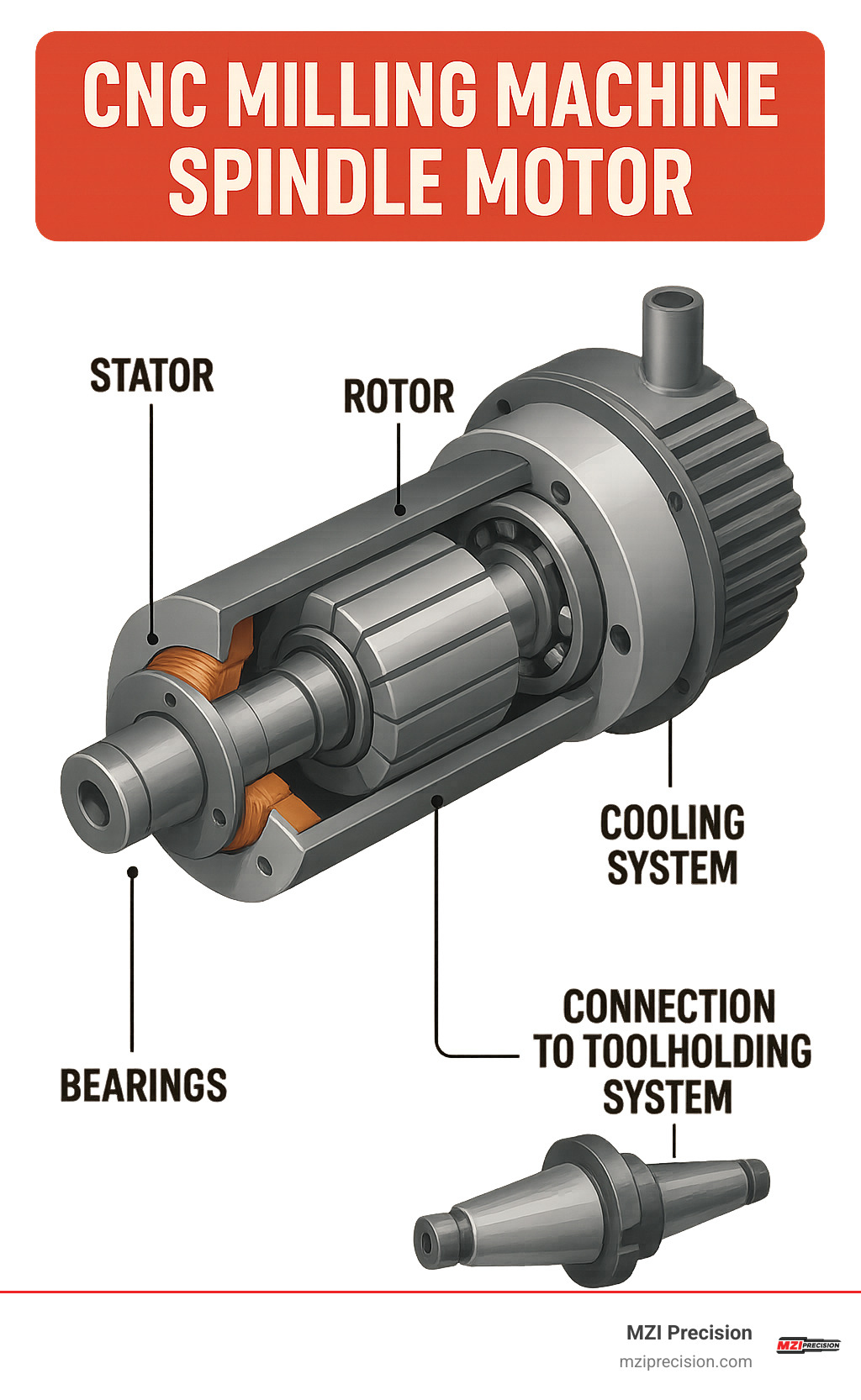
Peek inside a cnc milling machine spindle motor and you’ll find an neat system engineered for precision and longevity under demanding conditions.
At its core, the stator contains carefully wound copper coils that create a magnetic field when electricity flows through them. Responding to this field, the rotor (typically made from high-grade electrical steel laminations) spins with remarkable precision. In top-performing spindles, these components aren’t just manufactured—they’re carefully balanced to virtually eliminate vibration.
The spindle shaft rides on angular contact bearings that are engineering marvels in their own right. These precision bearings allow rotation with minimal friction while maintaining exact positioning. They’re typically arranged in carefully designed configurations to handle both pushing forces (axial) and side loads (radial). The bearing preload—essentially a calibrated tension—strikes the perfect balance between rigidity for accuracy and flexibility to prevent overheating.
Many CNC spindles incorporate a pneumatic or spring-loaded drawbar system that securely grips toolholders with unwavering force. This critical system must maintain consistent clamping pressure throughout operation to prevent dangerous tool pullout or chatter.
Modern spindle motors are increasingly “smart” components, with integrated sensors monitoring temperature, vibration, and position. These sensors feed real-time data to the control system, enabling automatic adjustments and alerting operators before small issues become expensive problems.
To manage the heat generated during operation, sophisticated cooling passages circulate air or liquid throughout the assembly. This thermal management isn’t just about preventing damage—it ensures dimensional stability and accuracy even during marathon machining sessions.
When all these precision-engineered components work together in perfect harmony, the result is a spindle motor capable of the exceptional performance that modern manufacturing demands. And when that spindle needs expert care, companies like MZI Precision provide the specialized rebuilding services that keep American manufacturing running at peak performance.
Choosing the Right CNC Milling Machine Spindle Motor
Let’s face it—picking the perfect cnc milling machine spindle motor feels a bit like choosing a heart for your machining operation. It’s a decision that will impact every part you make for years to come. After rebuilding thousands of spindles at MZI Precision, we’ve learned that matching the right spindle to your specific needs makes all the difference between frustration and flawless production.
When evaluating spindle options, here’s what you’ll want to consider:
Your spindle’s power rating (measured in kW or HP) determines how aggressively you can cut material. Think of this as your machine’s muscle—smaller shops might do fine with 1.5-2kW spindles, while production environments often need 10-20kW beasts that can hog through tough materials without breaking a sweat.
Maximum RPM is equally critical. Standard industrial spindles typically top out around 24,000 RPM, which handles most applications beautifully. But if you’re working with micro-tools or need mirror finishes, high-speed specialty spindles pushing 60,000 RPM might be necessary—though they come with their own maintenance considerations.
Don’t overlook continuous torque specifications. This tells you how much rotational force your spindle can sustain during long cuts. When machining titanium or hardened steel, this number matters more than peak power ratings.
The duty cycle rating might seem like fine print, but it can make or break production schedules. A 100% duty cycle means your spindle can run continuously at rated power—essential for shops running multiple shifts. Lesser ratings mean scheduled cooling periods, which impacts throughput.
| Feature | AC Induction Motors | Synchronous Motors |
|---|---|---|
| Torque Characteristics | High starting torque, decreases with speed | Consistent torque across speed range |
| Speed Control | Good, but less precise at low speeds | Excellent across entire speed range |
| Efficiency | 85-95% | 90-97% |
| Response Time | Moderate | Fast |
| Acceleration/Deceleration | Moderate | Rapid |
| Cost | Lower initial cost | Higher initial cost |
| Best For | Heavy cutting, varied loads | High-speed machining, frequent speed changes |
Matching Speed & Torque to Materials
The materials you machine should heavily influence your cnc milling machine spindle motor selection. It’s like pairing wine with food—the right combination makes everything better.
Aluminum and other non-ferrous materials generally love speed. They cut efficiently at 15,000-30,000 RPM with moderate torque requirements. If you’re primarily an aluminum shop, you’ll benefit from a spindle that excels at quick acceleration and deceleration for complex contours and pocket machining.
Steel, titanium, and other tough materials tell a different story. They typically need slower speeds (5,000-10,000 RPM) but much higher torque. The spindle must maintain consistent cutting force without overheating during those long, challenging cuts.
We’ve seen many shops at MZI Precision choose spindle motors with 30-50% more power than their current needs. This isn’t overbuying—it’s smart planning that accommodates future growth and maintains performance even as bearings naturally wear over time.
Cooling Showdown: Air-Cooled vs Water-Cooled
The cooling system debate for your cnc milling machine spindle motor is one we have almost daily with customers. Both options have their place, and choosing wisely can save headaches down the road.
Air-cooled spindles offer beautiful simplicity. There’s no plumbing to install, no chillers to maintain, and no risk of coolant leaks damaging electrical components. They’re typically more affordable upfront and require less specialized maintenance. For lighter-duty applications or shops without the infrastructure for water cooling, they’re often the perfect choice.
However, air cooling has its limitations. These spindles typically top out around 3-4kW of continuous power, run a bit louder, and may struggle with heat dissipation during marathon machining sessions. In dusty environments, they also require more frequent cleaning to maintain cooling efficiency.
Water-cooled spindles shine in production environments. The liquid cooling system provides superior thermal stability, which translates directly to better dimensional accuracy over long production runs. They can pack more power into a smaller package (typically 30-40% more output than a comparable-sized air-cooled unit), run quieter, and generally enjoy longer bearing life thanks to more consistent operating temperatures.
The tradeoff? Water-cooled systems require additional infrastructure—pumps, chillers, plumbing—and bring the potential for leaks or coolant issues. The initial investment is higher, but for high-production environments, the performance benefits often justify the cost.
Control & Integration Essentials
Even the finest cnc milling machine spindle motor won’t perform to its potential without proper control systems. This is where many spindle selections go wrong—focusing solely on the motor while overlooking how it integrates with the broader machine.
Variable Frequency Drives (VFDs) serve as the spindle’s brain, controlling speed, direction, and torque characteristics. When selecting a VFD, ensure it’s rated at least 20% above your spindle’s power requirements to provide headroom for acceleration and peak loads. Look for vector control capabilities that maintain precise torque management across the speed range, and verify it offers protective features for overload conditions.
Closed-loop feedback systems transform a good spindle into a great one. Temperature sensors, vibration monitors, and speed encoders provide real-time data that allows the control system to make micro-adjustments during operation. This feedback loop not only improves cutting performance but also provides early warning of potential issues before they cause catastrophic failures.
The interface between your spindle control and main CNC controller determines how seamlessly everything works together. Modern systems typically communicate through digital interfaces for speed and direction commands, with analog outputs for load monitoring and fault signals for safety interlocks.
At MZI Precision, we’ve rebuilt countless spindles that failed prematurely not because of motor issues, but due to control system mismatches. Taking the time to ensure proper integration pays dividends in performance, reliability, and spindle longevity.
Top Industrial Spindle Motor Categories for Milling
When shopping for a cnc milling machine spindle motor, you’ll find several distinct technologies on the market. Each type has its own personality and strengths—kind of like choosing between a reliable pickup truck, a precision sports car, or a nimble compact vehicle for your garage.
AC Induction High-Torque Series
Think of AC induction spindles as the trusty workhorses of the machining world. These motors aren’t trying to win any speed records, but they’ll pull their weight all day long without complaint.
These robust performers deliver excellent starting torque that makes them perfect for tackling tough materials. They typically run between 3,000-15,000 RPM—not the fastest kids on the block, but more than enough for most heavy-duty applications. Available from modest 1kW setups all the way up to muscular 30kW+ powerhouses, they won’t break the bank compared to fancier options.
What makes these motors shine is their straightforward nature. They work with standard VFDs, require minimal babysitting, and tend to keep running year after year with basic maintenance. If you’re doing production work with consistent material removal in steel or other challenging materials, these motors deliver reliability without the premium price tag.
Synchronous High-Speed Series – cnc milling machine spindle motor spotlight
If AC induction motors are reliable pickup trucks, synchronous cnc milling machine spindle motors are precision-engineered sports cars. These premium performers use permanent magnets in their rotor design to deliver exceptional control and efficiency.
The difference becomes immediately apparent when you need rapid acceleration, deceleration, or frequent speed changes. These motors maintain their composure (and torque) throughout their entire RPM range, typically running up to 30,000 RPM in standard configurations. Their superior efficiency—usually 90-97%—means less wasted energy and heat generation during operation.
The magic of synchronous motors appears in finish passes and complex contours. Their ability to maintain consistent torque and precise speed control even as cutting loads vary translates directly into superior surface finishes and tighter tolerances. Yes, they cost more upfront, but for shops doing precision work with frequent tool changes and variable cutting conditions, they quickly prove their worth.
Brushless DC Compact Options
Brushless DC motors (BLDC) offer the perfect middle ground for many applications—think of them as the nimble compact cars of the spindle world. With no brushes to wear out, they deliver excellent performance in a smaller package.
These motors punch above their weight class with an impressive power-to-weight ratio and efficiency across their operating range. Though typically available in more modest power ratings (0.5-5kW), their compact design makes them ideal when space is at a premium.
BLDC spindles have found their niche in smaller CNC mills and specialized applications where finesse matters more than raw power. Their reduced vibration and noise characteristics make them perfect for precision engraving and micro-machining operations. Many come with integrated drives that simplify installation and control—a welcome bonus for smaller shops.
Cooling Technologies Compared
The way your cnc milling machine spindle motor stays cool directly impacts its performance and lifespan. It’s like choosing between air conditioning and liquid cooling for a high-performance computer—both work, but with different tradeoffs.
Air cooling takes the simpler approach, using carefully designed airflow paths through the motor housing, often with internal fans mounted right on the motor shaft. This method requires clean, filtered air to prevent contamination and typically dissipates between 0.5-1.0 kW of heat per motor size unit. The simplicity means lower initial cost and easier maintenance, but cooling efficiency depends heavily on the ambient shop temperature and air quality.
Water cooling steps things up with precision water jackets surrounding critical components. This closed-loop system requires an external chiller or heat exchanger but maintains remarkably consistent internal temperatures—typically within ±2°C. The superior cooling allows for 30-40% more power in the same physical size and can dissipate more than 2.0 kW of heat per motor size unit.
Some cutting-edge designs even use hybrid cooling approaches, with liquid cooling for the stator and bearings while air-cooling the tool interface. This sophisticated approach combines benefits of both systems for specialized applications.
According to scientific research on high-speed CNC spindles, proper thermal management isn’t just about preventing overheating—it’s critical for maintaining geometric accuracy. Even small temperature variations of 5°C can cause dimensional changes that push parts out of tolerance in precision applications.
At MZI Precision, we’ve seen how cooling system selection affects long-term reliability, especially in production environments where spindles rarely get a chance to cool down between operations.
Performance, Maintenance & Troubleshooting
The performance and longevity of your cnc milling machine spindle motor are deeply connected to how well you maintain it and how quickly you address emerging issues. At MZI Precision, we’ve rebuilt thousands of industrial spindles over the years, giving us unique insights into what makes these critical components thrive—or fail.
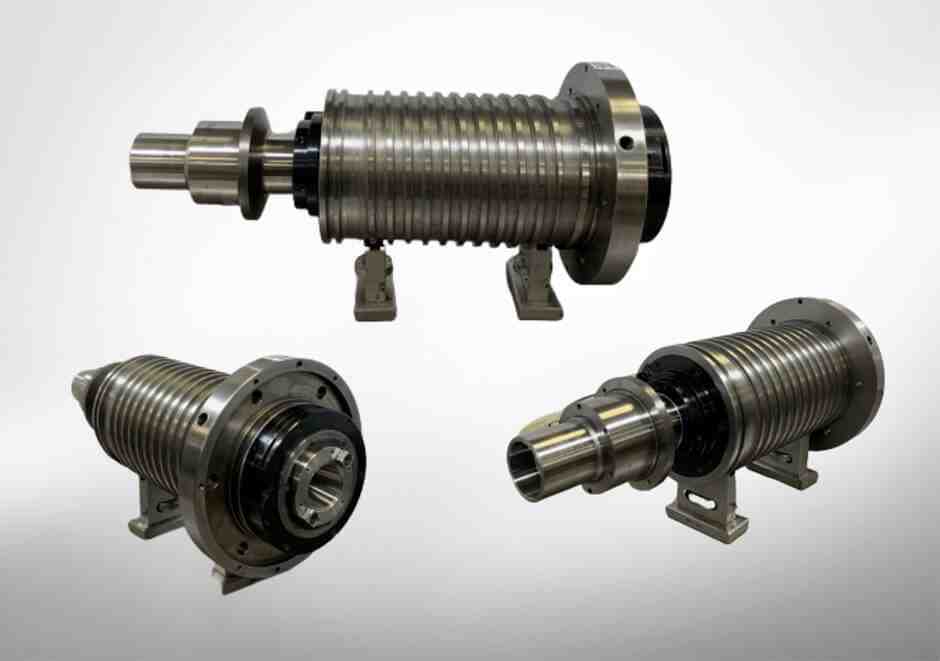
When your spindle is running at peak performance, you’ll notice the difference in your parts. Surface finishes come out smooth and consistent, without those telltale chatter marks that scream “spindle problems.” A healthy spindle can slash your cycle times by 15-30% compared to one that’s limping along at reduced parameters. And when it comes to dimensional accuracy, a precision spindle should maintain runout under 5 microns (0.0002″) even after hours of operation—critical for those tight-tolerance jobs.
Smart shop managers don’t wait for problems to appear. They implement predictive maintenance strategies like regular vibration analysis every 1,000-2,000 operating hours. Monitoring power consumption trends can reveal early bearing issues before they become catastrophic failures. Temperature patterns during similar operations should remain consistent—changes often signal developing problems. Periodic runout checks with calibrated indicators and oil sample analysis from lubrication systems can detect metal particles that indicate internal wear.
Speaking of lubrication, different cnc milling machine spindle motor designs have specific needs. Grease-packed bearings typically need fresh lubricant every 2,000-4,000 hours. If you’re running oil-mist systems, you’ll want to regularly verify flow rates and oil quality. For oil-air systems, keep a close eye on both air pressure and oil delivery to ensure proper lubrication.
Signs Your cnc milling machine spindle motor Needs Attention
Just like your car makes different noises when something’s wrong, your cnc milling machine spindle motor has ways of telling you it needs help. Recognizing these early warning signs can save you from expensive repairs and unplanned downtime.
Overheating is a common red flag. You might notice thermal sensors showing consistently higher operating temperatures, or increased coolant temperature in water-cooled systems. Sometimes you’ll even see heat discoloration near bearing locations. When thermal growth starts causing dimensional changes during operation, it’s definitely time for professional attention.
Unusual noises are perhaps the most obvious indicators. That high-pitched whining that increases with RPM? Not normal. Rhythmic clicking or knocking sounds? Also concerning. A grinding noise during acceleration or deceleration often indicates bearing problems. Even subtle changes in your spindle’s normal sound signature deserve investigation.
Pay attention to runout and accuracy issues too. If you measure an increase in tool runout (over 0.0002″/5μm), that’s a problem. Poor surface finishes despite using new cutting tools suggest spindle issues. When you start seeing dimensional inconsistency between identical parts, chatter marks appearing at specific speed ranges, or tools breaking more frequently, your spindle is crying for help.
Even electrical symptoms can point to mechanical problems. Increased power consumption for the same operations, motor drives showing higher load percentages, intermittent fault codes on the spindle drive, or difficulty maintaining programmed RPM under load—all these suggest your cnc milling machine spindle motor needs professional evaluation.
At MZI Precision, we always recommend documenting normal operating parameters when your spindle is performing optimally. These baseline measurements become invaluable reference points for detecting subtle changes before they develop into serious problems.
Extending Service Life
Want to get the maximum life from your cnc milling machine spindle motor? Based on our extensive experience rebuilding industrial spindles, we’ve identified several best practices that can extend service life by 30-50% compared to reactive maintenance approaches.
Balanced tooling makes a tremendous difference. Always balance toolholders and cutting tools for operations above 8,000 RPM. Use a balancing machine to achieve G2.5 or better for high-speed applications. Don’t forget to check pull studs and retention mechanisms for wear or damage, and always clean taper surfaces before each toolholder installation. These simple steps reduce stress on your spindle bearings significantly.
Your cnc milling machine spindle motor’s cooling system needs attention too. For air-cooled spindles, install proper filtration (1 micron or better) on compressed air supplies. Maintain consistent air pressure within manufacturer specifications and periodically check for filter saturation, replacing as needed. If you’re running water-cooled spindles, use distilled or properly treated water to prevent mineral buildup. Maintain water temperature within ±2°C of setpoint, check for algae growth and use appropriate inhibitors. We recommend flushing cooling systems annually or following manufacturer recommendations.
Implement a tiered inspection program to catch issues early. Daily visual inspections and basic operational checks take just minutes but can prevent major failures. Weekly cleaning of external surfaces and cooling vents prevents buildup that can reduce cooling efficiency. Monthly detailed vibration measurements and temperature profiling help identify developing issues. Quarterly runout verification and drive parameter validation ensure continued precision. And don’t skip that annual comprehensive professional assessment—it’s your best insurance against unexpected failures.
Following these practices consistently can help your industrial spindle motors exceed 20,000 operating hours before requiring major rebuilds. That’s the kind of longevity that contributes directly to your bottom line.
Latest Innovations & Buying Checklist
The world of cnc milling machine spindle motor technology keeps evolving, bringing exciting innovations that push the boundaries of what’s possible in precision machining. Whether you’re upgrading your current setup or investing in new equipment, staying informed about these advancements can help you make smarter long-term decisions.
Let’s explore the game-changing technologies reshaping the industrial spindle landscape:
Magnetic bearings represent perhaps the most development in high-speed spindle design. Unlike traditional mechanical bearings, these systems use electromagnetic forces to levitate the spindle shaft, eliminating physical contact between moving parts. This seemingly magical technology drastically reduces friction and heat generation while enabling active vibration control through real-time magnetic field adjustments. The result? Extended service life, virtually eliminated mechanical wear, and the ability to reach astonishing speeds up to 80,000 RPM in specialized applications.
Direct-drive frameless designs have also transformed spindle performance by removing transmission components like belts and gears that introduce vibration and inefficiency. These neat systems connect the motor directly to the spindle shaft, delivering more precise speed control, improved thermal stability during marathon machining sessions, and allowing machine builders to create more compact designs. The efficiency gains alone can justify the investment for high-production environments.
The integration of IoT monitoring capabilities has brought cnc milling machine spindle motors firmly into the digital age. Today’s smart spindles feature embedded sensors tracking everything from vibration patterns to bearing temperatures, with real-time data transmission that enables truly predictive maintenance. Rather than guessing when service might be needed, AI-powered analytics can identify potential failures before they occur, helping you schedule maintenance during planned downtime instead of suffering unexpected breakdowns.
For specialized applications requiring extreme speeds, high-speed turbine add-ons offer a practical solution. These air-powered attachments can achieve mind-boggling speeds exceeding 90,000 RPM, making them ideal for micro-machining and ultra-fine finishing operations. The beauty of these systems is their modularity—you can add them to conventional machines as needed without investing in a dedicated ultra-high-speed machine.
When purchasing a new cnc milling machine spindle motor, our experts at MZI Precision recommend using this comprehensive buying checklist:
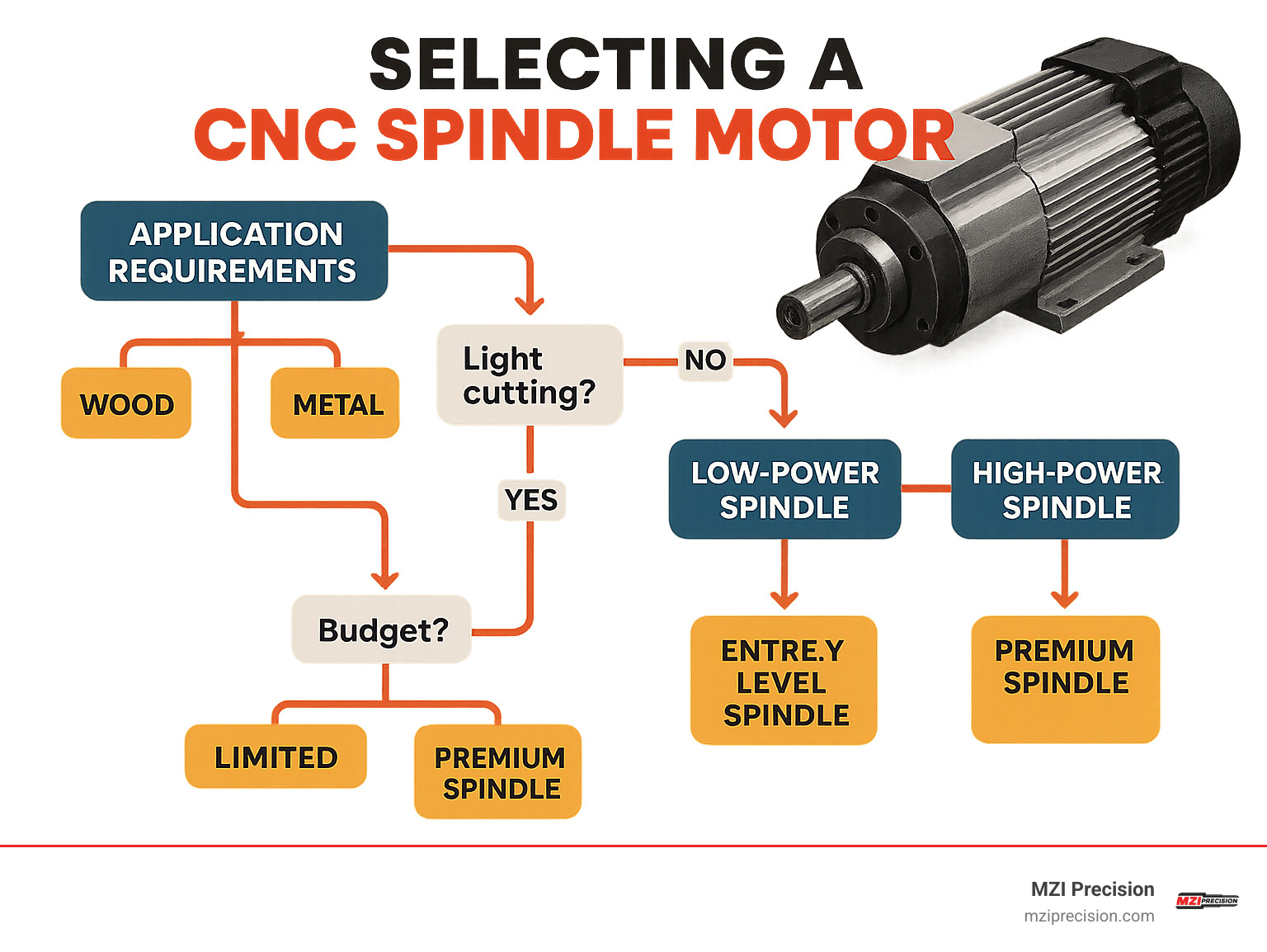
First, clearly define your application requirements. What materials will you typically machine? What are your surface finish specifications? What tool diameters will you use most frequently? Understanding these fundamentals helps narrow your options to spindles truly suited for your work.
Next, carefully review technical specifications, paying particular attention to power ratings (both continuous and peak), speed range and torque curve characteristics, tooling interface compatibility, and cooling requirements. The control interface and feedback systems should also align with your existing equipment for seamless integration.
Budget considerations extend beyond just the initial purchase price. Factor in installation costs, estimated operating expenses for energy and maintenance, expected service life, and the availability and cost of replacement parts. The total cost of ownership often tells a different story than the purchase price alone.
Support and service availability can make or break your spindle experience. Evaluate the manufacturer’s technical support resources, local service options, warranty terms, and available training resources. A responsive support team can mean the difference between a quick resolution and prolonged downtime.
Finally, be realistic about lead times. Standard delivery timeframes, expedited options, spare parts availability, and emergency service response times should all factor into your planning—especially if you’re replacing a failed spindle in a production environment.
At MZI Precision, we understand that selecting the right spindle represents a significant business decision with long-term implications. Our team in Huntington Beach and Los Angeles, California, provides friendly, expert guidance on spindle selection, installation, and maintenance to ensure your investment delivers optimal performance throughout its service life. We’ve helped hundreds of manufacturers find the perfect spindle solution for their unique needs, and we’d love to do the same for you.
Frequently Asked Questions about CNC Milling Machine Spindle Motors
What power and RPM range should I look for?
When shopping for a cnc milling machine spindle motor, finding the right power and speed range can feel overwhelming. The good news is that your material choices often point the way to the right specifications.
For aluminum and other non-ferrous materials, you’ll typically do well with 5-15 kW (7-20 HP) spindles running at higher speeds between 15,000-30,000 RPM. These setups shine when using smaller tools and achieving excellent surface finishes on these softer materials.
Steel and harder materials demand more muscle. Look for spindles in the 15-30 kW (20-40 HP) range, with speeds around 8,000-15,000 RPM being the sweet spot. With these materials, torque becomes more important than maximum speed for effective cutting.
Working with titanium or super alloys? You’ll want to step up to 20+ kW (27+ HP) spindles that operate in the 6,000-12,000 RPM range. These tough materials require spindles specifically engineered for heavy cutting with substantial low-end torque.
Here’s a tip we’ve learned from years of spindle rebuilds: choose a spindle with about 30% more power than your calculations suggest you need. This provides valuable headroom as your applications evolve and helps maintain performance as the spindle ages. Think of it as future-proofing your investment.
How do VFD settings affect cutting performance?
Your Variable Frequency Drive (VFD) settings might not get as much attention as the cnc milling machine spindle motor itself, but they dramatically impact your machining results. Think of your VFD as the conductor of the orchestra – when properly tuned, everything works in harmony.
Acceleration and deceleration ramps deserve careful attention. Set them too aggressive (under 2 seconds), and you’ll stress bearings and cause current spikes. Too gradual (over 5 seconds), and you’ll waste production time and potentially cause tool rubbing. For most industrial spindles, a 2-5 second ramp strikes the right balance.
Current limiting protects your investment. Setting it too low (under 100% of rated current) might cause stalling during demanding cuts, while setting it too high removes an important safety net. We typically recommend 100-110% of rated current for continuous operation – just enough headroom without sacrificing protection.
The carrier frequency setting affects both how your spindle sounds and performs. Lower settings (below 8 kHz) often create that characteristic “whine” and may cause resonance issues. Higher settings (above 12 kHz) can overheat your drive and create electromagnetic interference. The 8-12 kHz range works best for most industrial applications.
Vector control parameters require special attention, often benefiting from professional setup. When properly tuned, these parameters ensure your spindle delivers consistent torque as cutting conditions change – critical for maintaining surface finish quality.
In our rebuilding work at MZI Precision, we’ve found that many “spindle problems” actually trace back to improper VFD settings. A professional configuration when installing a new or rebuilt spindle can save significant headaches down the road.
What daily checks keep my spindle running longer?
A few minutes of daily attention can add years to your cnc milling machine spindle motor‘s service life. The best maintenance routines become second nature – quick, simple checks that catch small issues before they become expensive problems.
Start each day with a quick visual inspection. Look for any fluid leaks around seals or fittings, check that all coolant and lubrication lines are properly connected, and scan for any unusual discoloration that might indicate overheating. For air-cooled spindles, verify that cooling fans are running properly.
Use your ears during the warmup cycle. Experienced machinists develop an almost intuitive sense for how their spindle should sound. Any changes in the normal sound signature – especially noises that change with speed – deserve immediate attention. Trust your instincts here.
Verify proper operation once the spindle is running. Monitor temperature readings during initial operation, confirm the spindle reaches maximum RPM without triggering alarms, and check that coolant flow indicators show proper circulation for water-cooled models. Make sure the drawbar operates smoothly when changing tools.
Pay special attention to the tooling interface. Before your first tool change of the day, clean the taper using appropriate methods, check for chips or debris in the spindle nose, inspect pull studs for damage, and verify that the tool clamping system engages properly. This critical connection between spindle and cutting tool deserves special care.
Finally, document what you observe. Keep a simple spindle log to record operating hours, unusual observations, parameter changes, or alarms. These notes become invaluable for planning maintenance and troubleshooting issues.
These daily checks typically take less than five minutes but can identify developing issues before they cause significant damage. At MZI Precision, we provide our customers with customized maintenance checklists custom to their specific spindle designs and applications – just one way we help extend the life of your critical equipment.
Conclusion
Choosing the right cnc milling machine spindle motor isn’t just a technical decision—it’s an investment in your shop’s future. After exploring all the options and considerations, you’re now equipped to make a choice that will impact your part quality, productivity, and bottom line for years to come.
Think of your spindle motor as the heart of your machining operation. Just like you wouldn’t put a compact car engine in a heavy-duty truck, matching your spindle specifications to your actual machining needs is crucial for success. The perfect balance of power, speed, and torque for your specific applications will pay dividends in both performance and longevity.
One decision you’ll face early on is cooling technology. While air-cooled systems offer simplicity and lower upfront costs, water-cooled options deliver superior thermal stability and performance under demanding conditions. This choice significantly affects not just performance but your maintenance routine for years to come.
Even the most advanced spindle in the world can’t perform to its potential without proper integration with your control system. The relationship between your spindle and its drive system is like a dance partnership—when perfectly synchronized, the results are beautiful, but any missteps lead to disappointing outcomes.
At MZI Precision, we’ve seen how a proactive approach to spindle maintenance can extend service life by 30-50% compared to waiting for problems to develop. Those few minutes spent on daily checks and scheduled maintenance translate directly into more profitable machining hours and fewer costly breakdowns.
The spindle market continues to evolve with exciting innovations like magnetic bearings, integrated IoT monitoring, and advanced materials. Staying informed about these developments ensures you’re making forward-looking decisions that won’t leave your shop at a competitive disadvantage.
The true ROI of a quality cnc milling machine spindle motor goes far beyond the price tag. The right spindle delivers tangible benefits across your entire operation:
- Your parts come off the machine with superior surface finishes
- Your cycle times shrink through optimized cutting parameters
- Your tooling budget stretches further as tools last longer
- Your energy and maintenance costs decrease
- Your manufacturing capabilities expand to include more complex, profitable work
Our team at MZI Precision specializes in rebuilding and repairing industrial spindles for demanding industries including aerospace, automotive, defense, and precision manufacturing. From our facilities in Huntington Beach and Los Angeles, California, we combine cutting-edge technology with decades of hands-on experience to deliver spindle solutions that often exceed original specifications.
Whether you’re selecting a new spindle motor or breathing new life into your existing equipment through professional rebuilding, we’re here to provide the expertise and support you need. The right spindle decision today sets the foundation for years of successful machining tomorrow.
For more information about our industrial spindle rebuilding services, visit our CNC spindle services page or reach out to our technical team for personalized guidance with your specific application needs.