

The Ultimate Guide to Zero Turn Spindles: Finding the Perfect OEM Fit
Why Industrial Manufacturing Spindles Are the Heart of Precision Machining
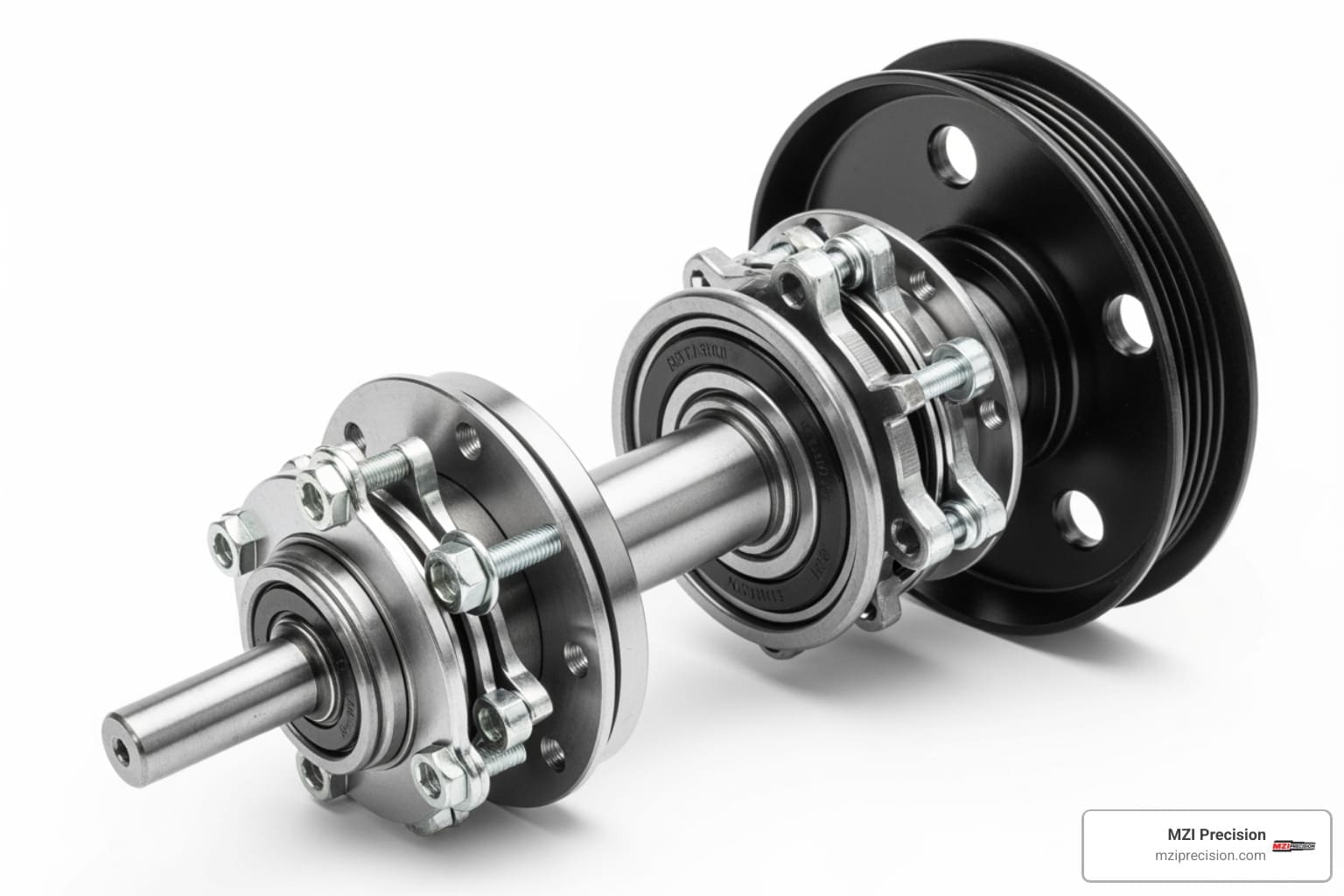
Industrial manufacturing spindles are the core rotating components in CNC machines that hold and drive cutting tools at high speeds — and when they fail, your entire production line stops.
If you need a quick reference, here are the most important things to know:
Quick Reference: Industrial Manufacturing Spindles
| Topic | Key Facts |
|---|---|
| What they do | Hold cutting tools and rotate at high speed for precise material removal |
| Common failure signs | Vibration, heat buildup, audible noise, runout errors |
| OEM rebuild vs. replacement | OEM rebuilds restore original specs at lower cost than full replacement |
| Key specs to verify | Bearing configuration, shaft pattern, dynamic balance rating |
| Who needs this | Aerospace, medical, oil & gas, and defense manufacturers |
For any precision manufacturer, a spindle isn’t just a part — it’s the difference between a perfect component and a costly scrap pile.
These assemblies operate under extreme conditions: tight tolerances, high rotational speeds, and constant load cycles. Even minor wear in a bearing or shaft can cascade into dimensional errors, ruined tooling, and unplanned downtime.
The good news? With the right OEM rebuilding partner and a clear understanding of your spindle specifications, you can restore full performance — often for a fraction of new-unit cost.
Understanding Industrial Manufacturing Spindles in Precision Manufacturing
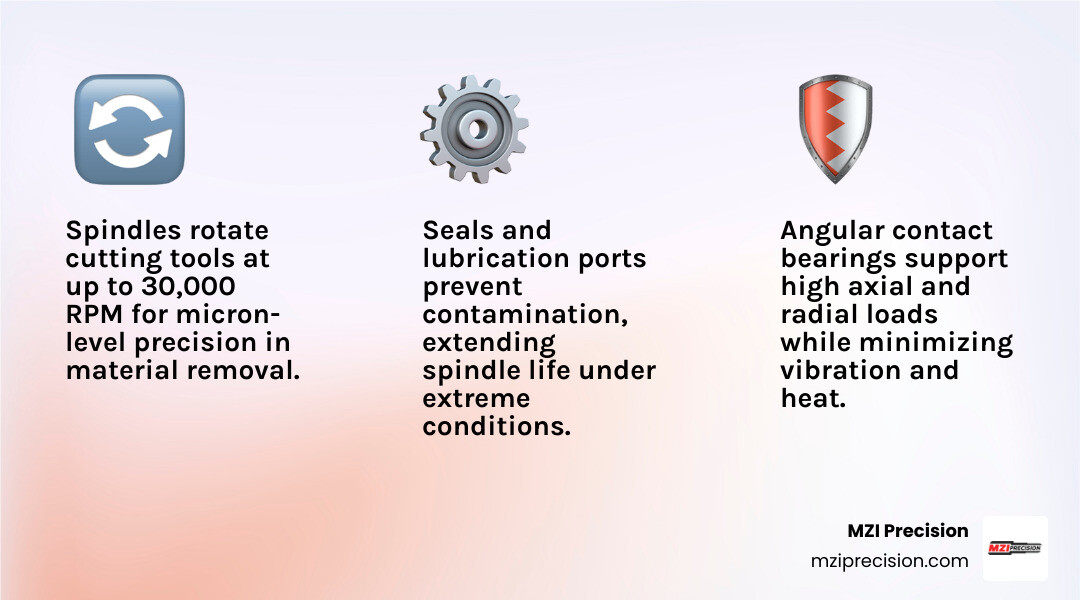
In high-stakes fabrication, industrial manufacturing spindles are the workhorses that bridge the gap between digital design and physical reality. Whether you are operating in Los Angeles or Huntington Beach, the demand for extreme rotational accuracy is the same. These units are engineered to handle significant load capacities while maintaining a centered axis of rotation that doesn’t deviate by more than a few microns.
When we talk about “OEM standards,” we aren’t just using a buzzword. For an industrial spindle, adhering to the Original Equipment Manufacturer’s specifications means the unit can handle the specific torque and RPM requirements it was designed for. At MZI Precision, we see how maintaining these standards directly correlates to the lifespan of the machine tool and the quality of the finished product.
The Role of Industrial Manufacturing Spindles in High-Speed Machining
The primary role of the spindle is to provide the interface between the machine’s drive system and the cutting tool. In high-speed machining, operational efficiency depends on the spindle’s ability to maintain precision tolerances under thermal stress. As the spindle rotates at tens of thousands of RPMs, the tooling interface (such as BT, ISO, CAT, or HSK) must remain perfectly seated. Any loss in cutting accuracy usually points back to a spindle that is beginning to lose its structural or rotational integrity.
Technical Standards for Industrial Manufacturing Spindles
To achieve world-class results, spindles must meet rigorous technical benchmarks. One of the most critical is dynamic balancing. We typically aim for a balance of 0.3 G’s or better at full operational speed. This minimizes centrifugal forces that cause “chatter” or surface finish issues.
Furthermore, the use of high-precision bearings—often angular contact bearings—is non-negotiable. These components are designed to handle both radial and axial loads simultaneously. When these technical standards are met, vibration limits are kept to an absolute minimum, ensuring that the spindle remains a silent, steady partner in your manufacturing process.
Signs Your Industrial Spindle Needs Professional Rebuilding
Waiting for a spindle to “seize” is a recipe for a manufacturing nightmare. In our experience serving industries from aerospace to defense in California, proactive identification is key. If you notice a sudden drop in surface finish quality or dimensional accuracy, it’s time to look closer.
One of the most effective ways to diagnose health is through vibration analysis. Excessive vibration is the “check engine light” of the machining world. Similarly, keep an eye on thermal expansion. While all spindles generate some heat, an industrial spindle that becomes too hot to touch or shows a rapid spike in temperature usually has a bearing issue.
If you suspect your equipment is failing, Industrial Spindle Repair and Rebuilding services can intervene before the damage becomes catastrophic. Audible noise—such as grinding, whistling, or humming—and measurable runout errors are final warnings that the internal components are reaching their limit.
Identifying Component Wear in Industrial Manufacturing Spindles
- Bearing Failure: This is the most common culprit. Over time, the balls or races within the bearing develop pits or “spalls,” leading to heat and noise.
- Shaft Misalignment: A spindle shaft that has been “bumped” or crashed can develop a slight bend, leading to massive runout at the tool tip.
- Seal Degradation: Once the seals fail, contaminants like coolant and metal fines enter the bearing chamber, acting like sandpaper on precision surfaces.
- Performance Drops: If your machine is struggling to maintain the same feed rates or depths of cut it once handled with ease, the spindle’s internal torque delivery may be compromised.
Key Specifications for High-Precision Spindle Components
When you are looking for a replacement or a rebuild, the details matter. You cannot simply swap one spindle for another without verifying the shaft pattern and pulley diameter. In the industrial sector, mounting patterns must be exact to ensure the spindle housing seats correctly within the machine casting.
We often get asked about the difference between various equipment types. A spindle designed for high-speed aluminum milling in the aerospace sector has vastly different bearing configurations than a spindle meant for heavy-duty steel hogging in the energy production sector.
Comparing OEM and Aftermarket Industrial Solutions
There is a constant debate regarding OEM vs. aftermarket parts. While aftermarket options might offer a lower initial price range, they often fall short in performance durability.
Aftermarket Industrial Spindle Repair can be a viable path if the service provider uses premium components, such as GMN bearings, that meet or exceed the original specs. At MZI Precision, our goal is always to provide a rebuild that carries a warranty and performance profile identical to a brand-new unit, but with a significantly faster turnaround time.
Maintenance Strategies for Industrial Spindle Longevity
You wouldn’t drive a high-performance car for 100,000 miles without an oil change, and you shouldn’t treat your industrial spindles any differently. A robust preventive maintenance program is the best way to protect your investment.
- Lubrication Cycles: Whether your spindle uses grease or an oil-air mist system, following the manufacturer’s lubrication schedule is vital. Too little lubrication causes friction; too much causes “churning” and excessive heat.
- Contamination Prevention: Ensure your air purge systems are functioning correctly to keep coolant out of the spindle internals.
- Seal Integrity: Regularly inspect seals for wear or brittleness.
- Performance Monitoring: Keep a log of spindle temperature and vibration levels. A baseline helps you spot trends before they become failures.
Installation Best Practices for Industrial Assemblies
Installing a rebuilt spindle is a precision task in itself. We recommend a “cleanroom” approach—ensure the machine taper and housing are free of any debris.
- Torque Specifications: Always use a calibrated torque wrench to tighten mounting bolts. Uneven pressure can actually distort the spindle housing.
- Precision Alignment: Use a dial indicator to verify that the spindle is “trammed” or aligned perfectly with the machine’s axes.
- Tooling Calibration: Check your tool holders for wear before inserting them into a freshly rebuilt spindle. A bad tool holder can ruin a new spindle in minutes.
- Verification Testing: Run the spindle through a “warm-up” cycle, gradually increasing RPMs while monitoring for heat and vibration.
Frequently Asked Questions About Industrial Spindles
What are the primary causes of industrial spindle failure?
The “Big Three” are contamination (coolant/dust), improper lubrication, and machine crashes. However, simple fatigue from high-cycle operations eventually wears down even the best-maintained bearings.
How do OEM rebuilds impact manufacturing durability?
An OEM-quality rebuild restores the spindle to its original “zero-hour” condition. This ensures that the machine can maintain the same tolerances and speeds it was originally rated for, extending the overall life of the entire CNC machine.
What specifications matter most for high-speed spindle selection?
Focus on the RPM rating, the cooling method (liquid vs. air), the bearing type (ceramic vs. steel), and the tool retention force. For high-speed applications, ceramic bearings are often preferred for their ability to handle heat and reduce centrifugal mass.
Conclusion
At MZI Precision, we understand that an industrial manufacturing spindle is more than just a metal shaft—it is the heartbeat of your production facility. From our locations in California, we provide the expert precision rebuilding and Expert Spindle Bearing Assembly Services required to keep your operations running smoothly.
Don’t let a failing spindle compromise your quality or your deadlines. By understanding the signs of wear, adhering to strict maintenance protocols, and choosing high-quality rebuilding services, you can ensure your facility remains at the cutting edge of industrial manufacturing. If you’re noticing vibration or heat in your current setup, reach out to us—we’re here to help you find the perfect OEM fit.