


Spindle Assembly Repair: Save 50% Now!
Why Spindle Assembly Repair Matters for Your Manufacturing Operations
Spindle Assembly Repair is essential when your industrial manufacturing spindle shows signs of failure like excessive vibration, unusual noise, overheating, or declining accuracy. This comprehensive guide walks you through diagnosing spindle problems, the complete repair process from disassembly to reassembly, and preventative maintenance strategies to extend spindle life and minimize costly downtime.
Quick Guide to Spindle Assembly Repair:
- Diagnose the problem – Listen for grinding, rattling, or squeaking sounds; check for vibration, overheating, or poor surface finish
- Gather essential tools – Bearing pullers, press tools, precision measurement instruments, cleaning solvents, OEM-spec bearings
- Disassemble carefully – Power down the machine, document component orientation, perform ultrasonic cleaning
- Inspect all components – Examine bearings, spindle shaft, housings, seals, and spacers for wear or damage
- Replace worn parts – Fit new bearings using proper press tools, apply correct lubricant, reassemble per OEM specifications
- Test thoroughly – Perform dynamic balancing, vibration analysis, and runout testing before returning to service
The spindle is the heart of your CNC machine. Without a properly functioning spindle assembly, your entire manufacturing operation grinds to a halt. In the aerospace and precision manufacturing industries, where tolerances are measured in microns, even minor spindle degradation can compromise part quality and scrapping expensive workpieces.
According to industry data, the global CNC spindle market is projected to reach USD 3.1 billion by 2030, reflecting the critical importance of these components. Yet spindle repair can be up to 50% less expensive than replacement, making proper repair techniques essential knowledge for manufacturing facilities.
This guide will help you understand when your spindle needs repair, what the professional repair process entails, and how proactive maintenance can reduce downtime by up to 30%. Whether you’re evaluating a DIY approach or seeking professional services, understanding the complete repair process ensures you make informed decisions that protect your production schedule and bottom line.
Diagnosing the Need for Spindle Repair
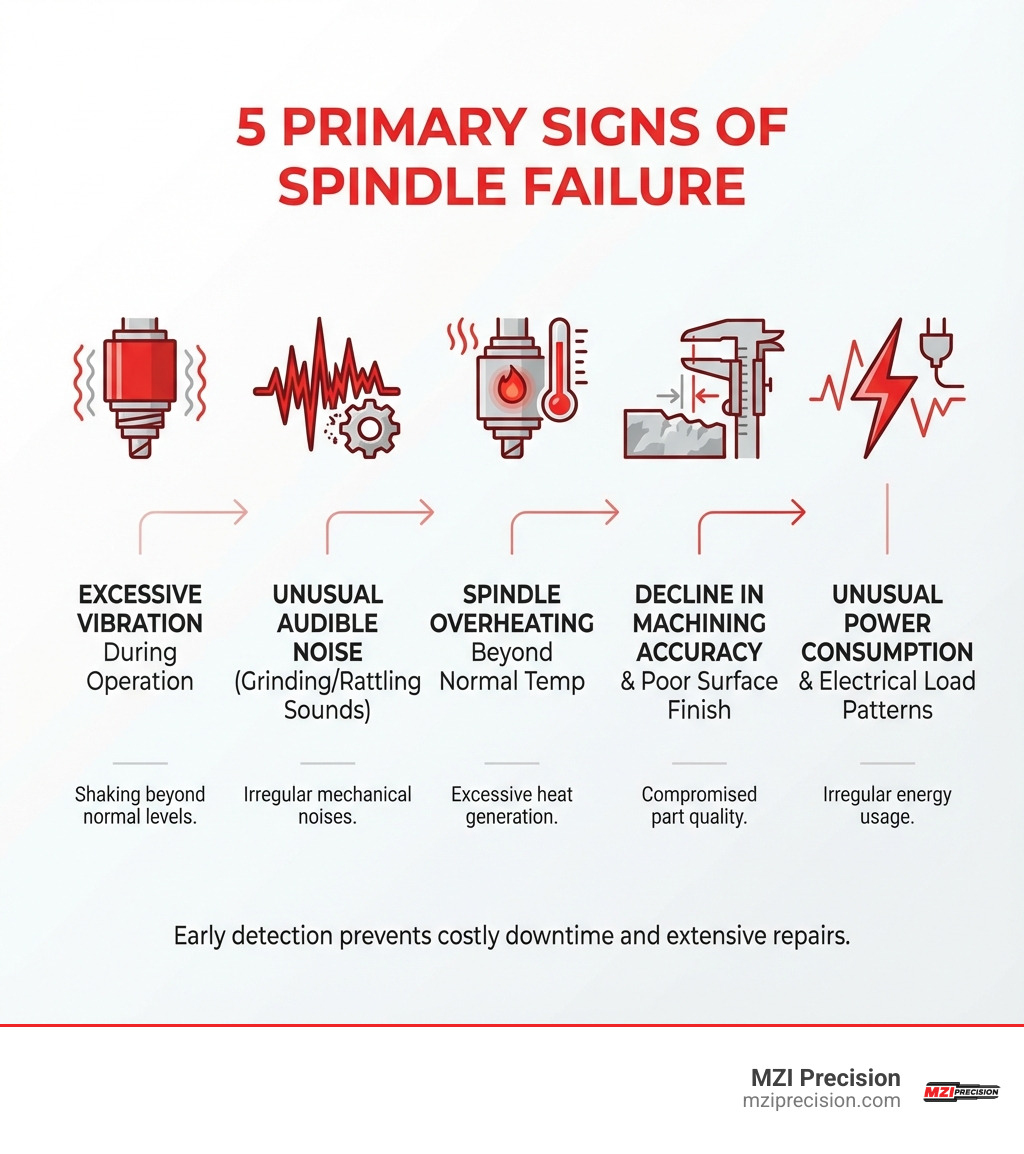
Catching the early signs of a failing spindle is like catching a cold before it turns into pneumonia for your industrial machinery. Early detection can save you significant time, money, and headaches. We look for several primary indicators that signal your Spindle Assembly Repair needs attention.
One of the most noticeable signs is excessive vibration. While some vibration is normal in any operating machine, a significant increase or an unusual pattern of vibration often points to internal issues, particularly with bearings or balance. This can also manifest as poor surface finish on your machined parts, as the instability affects cutting tool performance.
Overheating is another critical alarm. If your spindle is running hotter than usual, it could indicate increased friction from worn bearings, inadequate lubrication, or cooling system issues. Just like us, our machines don’t like running a fever!
A clear sign that precision is compromised is a noticeable loss of accuracy. If your machine is no longer holding the tight tolerances it once did, or you’re seeing inconsistent measurements, the spindle is a prime suspect.
Finally, keep an eye on unusual power consumption. If your machine is suddenly drawing more power than typical for a given operation, it might be working harder to compensate for internal friction or damaged components within the spindle.
For a more direct indicator, listen for unusual audible noise. This is often one of the earliest and most straightforward warnings.
Key Indicators of a Bad Spindle Bearing
When it comes to the heart of the spindle – its bearings – specific indicators scream for attention:
- Audible Noise: As mentioned, any grinding, rattling, or squeaking sounds are red flags.
- Taper Temperature: Monitoring the temperature of the spindle taper can reveal overheating issues, often linked to bearing friction.
- Spindle Vibration: Increased vibration directly signals that the bearings are no longer providing stable support.
- Accuracy Decline: Worn bearings lead to misalignment, directly impacting machining accuracy.
- Tooling System Wear: Spindle bearing issues can cause premature wear on your tooling system due to instability or runout.
What Does a Bad Spindle Bearing Sound Like?
If your industrial machinery starts making noises that sound more like a horror movie soundtrack than a well-oiled machine, it’s time to investigate your spindle bearings.
- Grinding Sounds: This is often the sound of deteriorating or damaged internal components within the bearing. It suggests metal-on-metal contact where there shouldn’t be any, or contamination causing abrasive wear.
- Rattling Noises: A rattling sound typically indicates loose or misaligned parts within the spindle assembly, often a direct result of worn bearings allowing excessive play.
- Squeaking or Whining: These high-pitched sounds can point to a lack of proper lubrication, or again, misalignment causing components to rub incorrectly.
Differentiating normal operational sounds from abnormal ones comes with experience. Trust your ears; if it sounds “off,” it probably is. Ignoring these sounds is like ignoring a check engine light – it rarely ends well.
Common Causes of Spindle Bearing Failure
Spindle bearings are tough, but they’re not invincible. Several factors contribute to their eventual demise:
- Contamination: This is perhaps the biggest culprit. Dust, dirt, metal chips, grinding swarf, and even moisture or corrosive liquids can get past seals and wreak havoc on bearing surfaces. Think of it like sand in your gears – highly destructive.
- Improper Lubrication: Too little, too much, or the wrong type of lubricant can all lead to failure. Without the correct lubrication film, bearings experience excessive friction and heat, leading to rapid wear.
- Wear and Tear: Even with perfect conditions, bearings have a lifespan. Over time, constant load and high-speed rotation will naturally cause fatigue and wear.
- Machine Crashes: Even a seemingly minor crash can transmit shock loads through the spindle, damaging bearings, causing misalignment, or dislodging components.
- Misalignment: If the spindle components are not perfectly aligned, it puts uneven stress on the bearings, accelerating wear and leading to vibration.
- Overloading: Operating the spindle beyond its designed load capacity or speed limits puts undue stress on the bearings, dramatically shortening their life.
The Step-by-Step Spindle Assembly Repair Process
When it’s time for a full Spindle Assembly Repair, a systematic approach is crucial. Before we even touch a tool, safety is paramount.
First and foremost, ensure all safety precautions are observed. This means powering down the machine completely and isolating the machine from all power sources. We tag it out, lock it out, and double-check to ensure there’s no accidental startup. Safety isn’t just a buzzword; it’s the foundation of a successful repair.
Essential Tools and Materials for Spindle Assembly Repair
Having the right tools for the job makes all the difference between a smooth repair and a frustrating ordeal. Here’s a list of what you’ll typically need:
- Bearing Pullers: Essential for safely extracting old bearings without damaging the spindle shaft.
- Bearing Press Tools: Crucial for fitting new bearings with the correct force and alignment, preventing damage during installation.
- Precision Measurement Tools: Micrometers, dial indicators, and air gauges are vital for measuring tolerances, runout, and ensuring components meet OEM specifications.
- Cleaning Solvents: Degreasers and isopropyl alcohol are used for thorough cleaning of all components.
- High-Quality Lubricants: Only manufacturer-specified lubricants should be used for optimal performance and longevity.
- OEM-Spec Replacement Bearings: Using anything less than OEM-grade bearings is a false economy.
- Cleanroom Environment: While not a “tool,” performing repairs in a HEPA cleanroom is a best practice to prevent contamination.
- Documentation Tools: Camera, notepad, and even production tracking software are invaluable for documenting every step.
Disassembly and Component Inspection
This is where the detective work begins. After safely removing the spindle assembly from your machine, we begin a meticulous disassembly and component inspection.
We start by documenting orientation with photos and notes at every stage. This ensures that when we reassemble, everything goes back exactly as it should. The disassembly itself is a step-by-step, level-by-level procedure.
Once components are separated, they undergo rigorous ultrasonic cleaning. This process removes all contaminants, grease, and debris, ensuring we can clearly inspect every surface.
Each part is then thoroughly inspected:
- Inspecting the spindle shaft: We check for wear, scoring, runout, and especially the condition of the taper and bearing journals. Geometric tolerances are carefully checked.
- Checking housings: Bearing housings (front and rear) are inspected for wear, ovality, or damage that could affect bearing fit. If necessary, these can be reground to restore original dimensions.
- Evaluating seals and spacers: Seals are critical for preventing contamination and are almost always replaced. Spacers are checked for damage and proper dimensions.
- Motor components, clamping systems, and sensor systems: These are all carefully evaluated for wear, damage, or malfunction.
Our goal during this phase is not just to find what broke, but to identify the root cause of the failure and recommend preventative measures for the future.
Fitting and Assembling New Bearings
With all components inspected, cleaned, and any worn parts replaced or reconditioned (like tool cones to ISO, BT, HSK, or CAPTO standards), it’s time for the crucial step of fitting and assembling new bearings.
First, we ensure the spindle shaft and housing are thoroughly cleaned again, often with isopropyl alcohol, to remove any last traces of contaminants. Even a tiny speck can drastically shorten bearing life.
Next, we fit new bearings using a specialized bearing press tool. This ensures that the bearings are pressed into place with even force, preventing damage to the delicate bearing races. Proper alignment is critical, and shims or spacers are used to achieve perfect fit and preload.
Applying the correct type and amount of lubricant is non-negotiable. We use only the manufacturer-specified grease or oil, carefully applying it to the bearings as per OEM guidelines. Too little lubricant leads to friction and heat; too much can cause overheating and drag.
Finally, we reassemble the spindle in reverse order, carefully following our detailed notes and photos from the disassembly phase. Every component is placed with precision, ensuring that the repaired spindle will perform as good as, if not better than, new.
Proactive Maintenance to Extend Spindle Life
We all know the saying, “An ounce of prevention is worth a pound of cure.” This couldn’t be truer for industrial spindles. Regular maintenance isn’t just a suggestion; it’s a critical strategy that can significantly reduce downtime by up to 30% and extend the service life of your valuable equipment. Investing in proactive care for your spindles means ensuring reliable production processes and consistent high quality in your output. For more details on how we can help you with your maintenance needs, explore our services.
The Critical Role of Lubrication
Just like the oil in your car’s engine, the right lubricant is the lifeblood of your spindle bearings.
- Using manufacturer-specified lubricant: This is paramount. Spindle manufacturers specify precise lubricants based on bearing type, speed, load, and operating temperature. Deviating from these specifications is a recipe for disaster.
- Grease vs. oil-air systems: Some spindles use grease, while high-speed spindles often employ oil-air lubrication systems that deliver a precise, continuous mist of oil. Understanding which system your spindle uses and its specific requirements is vital.
- Regular lubrication schedules: Lubricants degrade over time, losing their effectiveness. Adhering to regular lubrication schedules, whether it’s regreasing or replenishing oil-air systems, is crucial to maintaining the protective film that prevents metal-on-metal contact.
- Consequences of using the wrong lubricant: Using the wrong type, viscosity, or even too much or too little lubricant can lead to overheating, increased friction, premature wear, and catastrophic bearing failure.
Preventing Contamination and Unclean Coolant Issues
Contamination is a silent killer of spindle bearings. It’s like trying to run a marathon with sand in your shoes – not efficient, and eventually, very painful.
- HEPA cleanroom environment for repairs: During professional repairs, working in a HEPA cleanroom environment is a best practice. This minimizes the risk of airborne contaminants entering the carefully clean bearing surfaces during assembly.
- Sealing systems: The spindle’s sealing system is its first line of defense. Regular inspection and replacement of worn seals are essential to keep out harmful particulates and liquids.
- Regular coolant filtering: Coolant, while necessary, can become a source of contamination if not properly maintained. Grinding swarf, metal chips, and other particulates can circulate and find their way into the spindle. Regular filtering removes these abrasive elements.
- Coolant replacement schedules: Coolant also degrades, loses its protective properties, and can become a breeding ground for bacteria or develop corrosive properties. Adhering to recommended replacement schedules is crucial.
- Impact of grinding swarf and particulates: These tiny, abrasive particles can score bearing races, leading to increased friction, vibration, and ultimately, premature failure.
The Consequences of Neglecting Spindle Damage
Ignoring the early warning signs of spindle damage is a gamble that rarely pays off. The consequences can be far-reaching and costly:
- Decline in machining accuracy: A compromised spindle cannot hold tight tolerances, leading to scrap parts, rework, and a loss of production quality.
- Increased wear on other machine parts: A vibrating or misaligned spindle can transmit stress to other machine components, accelerating wear and tear on tool holders, machine axes, and even the machine frame itself. It’s a domino effect of destruction.
- Catastrophic machine failure: Left unchecked, a failing spindle can seize, leading to a complete breakdown of the machine, potentially damaging other expensive components in the process.
- Costly unplanned downtime: This is perhaps the most immediate and painful consequence. Production grinds to a halt, orders are delayed, and your bottom line takes a hit. An industrial manufacturing spindle out of commission means lost revenue for hours, days, or even weeks.
Professional Repair: Quality, Cost, and Warranty
When your spindle needs more than just a tweak, professional Spindle Assembly Repair becomes not just an option, but often the most intelligent choice. We understand the need to get your industrial manufacturing operations back up and running quickly and efficiently.
It’s a well-known fact that spindle repair can be up to 50% less expensive than replacement. This significant cost saving, coupled with faster turnaround times, often makes repair the more economical option. For more insights into the repair process, you can refer to A Simple Guide to Spindle Repair.
Quality Control in Professional Spindle Assembly Repair
When we talk about professional spindle repair, we’re talking about restoring your spindle to “like new” condition, or even better. This requires stringent quality control measures:
- Dynamic balancing: This is crucial for high-speed spindles. We dynamically balance the entire rotating assembly, often to an accuracy of 0.3 G’s or better, ensuring vibration-free operation at full speed.
- Vibration analysis: Post-repair, spindles undergo comprehensive vibration analysis to confirm smooth operation and detect any residual issues.
- Runout testing: Precision is our middle name. We carefully test for runout, guaranteeing that the repaired spindle leaves our facility with less than two microns of runout.
- Thermal testing: Spindles are run through thermal tests to ensure they operate within specified temperature ranges, indicating proper lubrication and bearing health.
- Clamping force measurement: For tool-change spindles, we verify the drawbar’s clamping force, ensuring secure tool retention.
- Final inspection reports: Every repair is carefully documented, complete with photos, component analysis, and a detailed final inspection report certifying performance standards. This documentation often includes recommendations for installation, settings, or manufacturing process improvements.
What Types of Spindles Can Be Repaired?
Our expertise spans a wide range of industrial manufacturing spindles. If it spins in a factory, chances are we can fix it. This includes:
- Milling spindles
- Turning spindles
- Grinding spindles
- High-speed spindles (HSC/HPC)
- Motorized and belt-driven spindles
We are also adept at working with various tooling standards, ensuring precise reconditioning of tool cones to specifications such as ISO, BT, HSK, and CAPTO. Our goal is to return your spindle ready for any demanding task.
Understanding Warranties on Spindle Repairs
A professional repair isn’t complete without a solid warranty. We stand by our work.
- Typical warranty period: Generally, you can expect a warranty period of six months to one year on our spindle repairs. This warranty typically begins from the date the repaired spindle is shipped from our facility.
- What the warranty covers: Our warranty covers defective parts and improper workmanship under normal use. It’s our promise that the repair was performed to the highest standards.
- Common exclusions: It’s important to note what isn’t typically covered. This usually includes damage from new machine crashes, improper installation, or issues like winding failures that can occur suddenly and are often beyond the scope of the original repair.
Frequently Asked Questions about Spindle Repair
We get a lot of questions about Spindle Assembly Repair, and we’re always happy to provide clear answers. Here are some of the most common inquiries we receive:
What critical components are inspected and tested during a professional repair?
During a professional repair, we perform a comprehensive inspection and testing process that covers virtually every aspect of your spindle assembly to ensure its integrity and performance. This includes:
- Bearings: These are the most common failure points. We inspect them for wear, contamination, and proper preload. Often, they are replaced with new, high-quality OEM-spec bearings.
- Spindle shaft (taper, journals): We check for runout, scoring, fretting, and dimensional accuracy, especially on the critical taper and bearing journals.
- Housing: The spindle housing is inspected for wear, cracks, or distortion that could affect bearing fit or overall stability.
- Drawbar system: For tool-change spindles, the drawbar, springs, and collets are inspected for wear, fatigue, and proper functionality.
- Clamping mechanism: We verify that the tool clamping mechanism is engaging and releasing correctly and that it can apply the specified clamping force.
- Motor components (stator, rotor): These are inspected for electrical integrity, winding damage, and any signs of overheating.
- Sensors and encoders: Position, speed, and temperature sensors are tested for accuracy and functionality.
- Sealing and cooling systems: Seals are crucial for contamination prevention and are often replaced. Cooling channels (air or liquid) are checked for blockages or leaks.
- Unclamping Unit and Rear Cover: These components are also part of our thorough inspection to ensure full functionality.
What is the typical turnaround time for a spindle repair?
We know that every moment your spindle is down is costing you money. That’s why we strive for efficiency without compromising quality.
- Standard turnaround: Our average turnaround time for Spindle Assembly Repair is typically between 5-10 business days. This timeframe allows for thorough diagnosis, part sourcing, precise repair, and rigorous testing.
- Factors affecting time: The actual duration can vary depending on several factors, including the severity of the damage, the availability of specific replacement parts (especially for older or specialized spindles), and the complexity of the spindle design.
- Expedited service options: For critical emergencies, we do offer expedited service options. If your situation demands it, we can often complete repairs in less than 5 days, getting your operations back online as quickly as possible.
When is spindle repair a more economical option than replacement?
Deciding between repair and replacement is a common dilemma. We generally find that Spindle Assembly Repair is a more economical option when:
- The basic spindle structure is intact: If the core components like the main housing and shaft are undamaged and can be reconditioned, repair is usually feasible.
- Damage is limited to wearable components: Issues primarily involving bearings, seals, sensors, or minor electrical components are excellent candidates for repair. These are typically replaced with new, high-quality parts.
- Cost savings up to 50%: As highlighted by industry statistics, repairing a spindle can be up to 50% less expensive than purchasing a brand-new replacement, making it a highly attractive financial choice.
- Faster turnaround than sourcing a new spindle: Obtaining a new spindle, especially for older or custom machines, can involve long lead times. Repair often provides a much quicker path to resuming production.
We perform a thorough analysis to help you make this decision, providing transparent insights into the projected costs and benefits of both options.
Conclusion
We’ve journeyed through the intricate world of Spindle Assembly Repair, from the earliest signs of trouble to the meticulous process of bringing a damaged spindle back to life. The key takeaways are clear: diligent diagnosis, adherence to proper repair procedures, and consistent preventative maintenance are crucial for the longevity and precision of your industrial manufacturing operations.
The spindle is indeed the heart of your machine, and its health directly impacts your productivity and product quality. Neglecting spindle damage can lead to a cascade of problems, from declining accuracy to catastrophic machine failure and costly downtime.
At MZI Precision, we pride ourselves on our expertise in OEM-rebuilt spindles and our unwavering commitment to quality. Our team in California is dedicated to ensuring your industrial manufacturing spindles perform with the precision and reliability you expect. We understand the demands of your industry and offer comprehensive repair services designed to minimize downtime and maximize your investment.
Don’t let a failing spindle derail your production. Trust the experts to provide the high-quality Spindle Assembly Repair services you need.