


The Rise and Fall of CNC Motors: A Cautionary Tale
CNC Motors was a high-end car dealership based in Upland, California that specialized in exotic and luxury vehicles. For those searching for information about this notorious dealership, here’s what you need to know:
- Business Type: Luxury car dealership specializing in exotic vehicles
- Owner: Clayton Thom
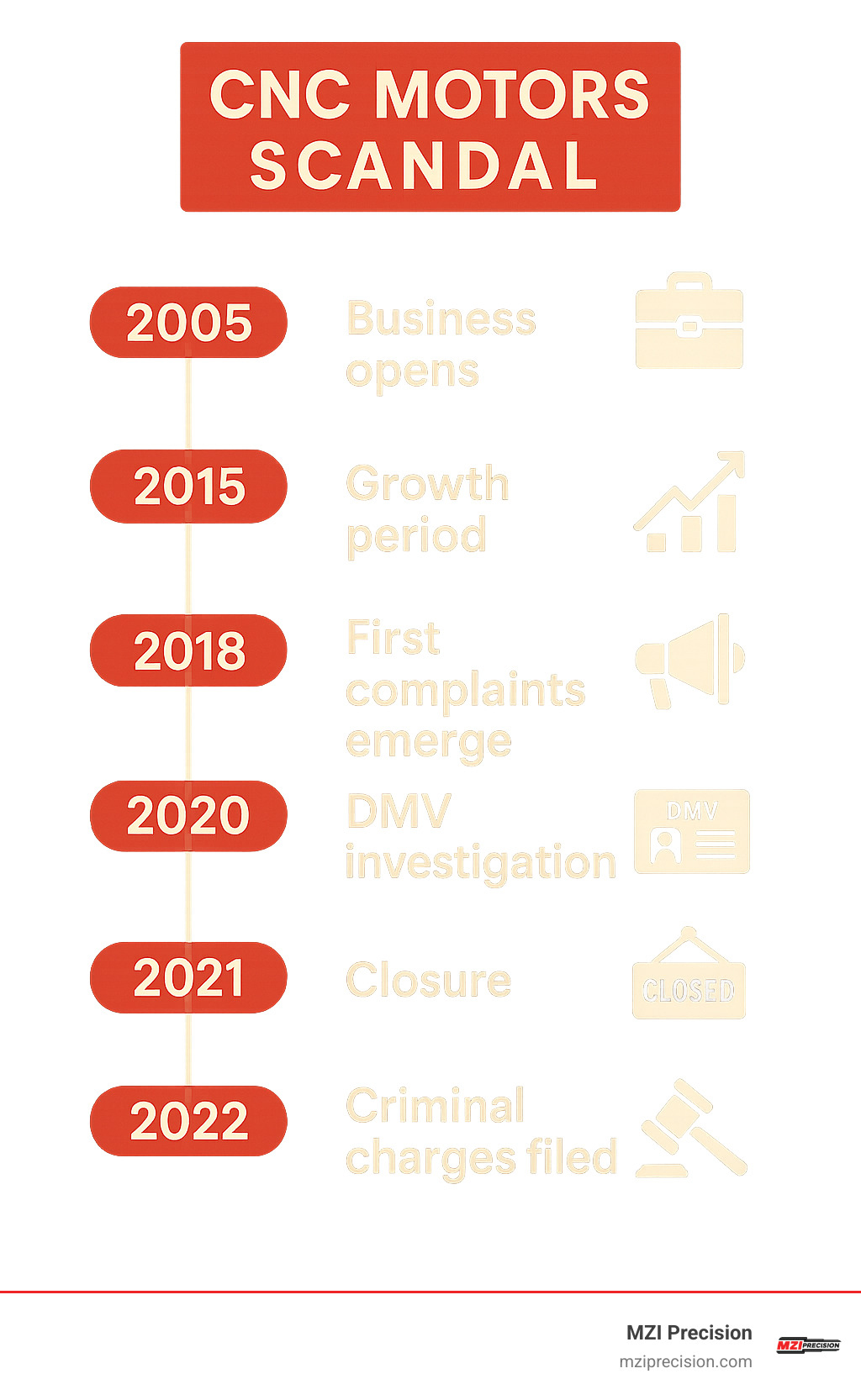
- Years Active: Approximately 2005-2021
- Legal Status: Closed; owner facing 37 felony counts including grand theft
- Alleged Fraud: Selling consigned vehicles without paying owners
- Estimated Damages: Over $4 million from 35+ victims (officially charged)
- Current Status: Showroom closed and boarded up; DMV investigation ongoing
What began as a respected exotic car dealership eventually collapsed into one of the most notorious scandals in the luxury automobile market. The CNC Motors case shocked the automotive community when allegations emerged that the dealership had been selling consigned vehicles without paying the original owners, potentially running what some victims described as a “Ponzi scheme.”
“I really think it was a Ponzi scheme,” said one victim who never received hundreds of thousands of dollars owed to him despite repeated promises from the dealership owner.
The dealership’s showroom, once filled with gleaming Ferraris and Lamborghinis, now stands empty – a stark reminder of how quickly trust can evaporate in high-value transactions. The Department of Motor Vehicles investigation uncovered what they believe was a systematic fraud operation that left dozens of car owners without either their vehicles or the money from their sales.
For luxury car enthusiasts and potential consignors, the CNC Motors saga serves as a powerful warning about the importance of due diligence and proper safeguards when dealing with high-value vehicle transactions.
Cnc motors vocabulary:
– ac servo motors
– servo motor in cnc
Inside the CNC Motors Saga
Located in Upland, California, CNC Motors wasn’t just another car dealership—it was a destination that captured the imagination of exotic car enthusiasts across the West Coast. Founded and operated by Clayton Thom, the business built its reputation on a seemingly solid foundation of direct sales and consignment of high-end luxury vehicles. The showroom itself was a masterpiece of automotive display, creating an atmosphere of legitimacy and success that convinced wealthy owners to entrust their prized possessions to Thom’s care.
“He had a great reputation and a large building, so he looked like he was stable,” explained one victim who later found the troubling reality hiding behind the gleaming façade.
Birth of “CNC Motors”
The story of CNC Motors began around 2005 as a modest family-run operation. Clayton Thom presented himself not just as a dealer but as a fellow enthusiast who understood both the technical intricacies of luxury vehicles and the emotional connection owners had with their cars.
What began as a small venture quickly found its footing in the competitive Southern California luxury car scene. Thom’s genius was in recognizing the potential of the consignment model—a win-win arrangement where vehicle owners could sell through the dealership rather than navigating private sales, while CNC Motors earned commissions without the heavy financial burden of purchasing inventory outright.
As word spread about the dealership’s professional approach and impressive connections, inventory grew from a handful of premium vehicles to dozens of exotic cars that would make any collector’s heart race.
Rise to a West-Coast Super-Showroom
The true golden era for CNC Motors coincided with the explosion of social media. Thom proved remarkably savvy at leveraging platforms like Instagram and YouTube, where stunning photographs and videos of their inventory—featuring multiple Ferraris, Lamborghinis, and McLarens parked side by side—created an aura of extraordinary success.
The showroom evolved from a mere business into something of a cultural landmark for car enthusiasts. Many visitors would stop by simply to admire the collection, with no intention to buy—just to experience being surrounded by millions of dollars worth of automotive art. Thom nurtured this community feeling by hosting events and building relationships with influencers in the automotive world.
“The showroom was always filled with millions of dollars worth of exotic cars. It looked like the epitome of success,” recalled one former customer who later became suspicious of the operation.
This carefully crafted image served a crucial purpose beyond marketing. The impressive inventory and professional atmosphere generated a deep sense of trust—trust that made wealthy car owners comfortable leaving vehicles worth hundreds of thousands of dollars in Thom’s care for consignment sales. This trust would later prove to be tragically misplaced as investigators began solving what they alleged was an elaborate scheme that left dozens of victims in its wake.
How the Alleged CNC Motors Scam Worked
Behind the gleaming showroom and impressive inventory lay what investigators would later describe as a sophisticated scheme. The alleged CNC Motors scam operated by manipulating something seemingly straightforward: the consignment sales process. In legitimate consignment deals, a car owner trusts their vehicle to a dealer who sells it for a commission, then promptly pays the owner their share. Simple enough—until it wasn’t.
What made this operation particularly troubling was how it allegedly transformed a standard business arrangement into something that resembled a financial house of cards.
| Legitimate Consignment Process | Alleged CNC Motors Process |
|---|---|
| Owner signs consignment agreement | Owner signs consignment agreement |
| Dealer markets and sells vehicle | Dealer markets and sells vehicle |
| Buyer pays dealer for vehicle | Buyer pays dealer for vehicle |
| Dealer transfers title to buyer | Dealer may provide counterfeit title or delay transfer |
| Dealer pays consignor within contractual timeframe (typically 20 days) | Dealer keeps proceeds, makes excuses for delayed payment |
| Transaction complete with all parties satisfied | Original owner left unpaid; buyer may have title issues |
The “Float” and Missing Millions at cnc motors
At the heart of the alleged fraud was what industry insiders call “the float”—that gap between when a car changes hands and when all the paperwork and money transfers finish processing. This period typically lasts 30-60 days in the car business, thanks to temporary tags and payment processing times.
According to victims and investigators, CNC Motors allegedly exploited this float period masterfully. They created a complex web where proceeds from new sales were used to pay (sometimes) for previous consignments—creating an illusion of normal business while actually operating deeper and deeper in the red.
“It was like a house of cards,” one victim explained with a sigh. “As long as new exotic cars kept coming in and selling, he could keep juggling by paying some consignors while stalling others.”
The scheme allegedly worked through a deceptively simple pattern:
First, CNC Motors would accept a luxury vehicle on consignment. Then, they’d sell it and collect payment from the excited new owner. But instead of paying the original owner their due, Thom allegedly diverted those funds to pay older, more pressing consignment debts, cover dealership operations, or possibly fund personal expenses.
When consignors called asking about their money, they’d hear about “banking delays” or “transfer issues”—excuses that bought precious time. Eventually, some owners would receive payment (likely from newer sales), while others were left with nothing but broken promises.
This created a widening financial gap that, like all such schemes, eventually collapsed under its own weight. By some estimates, the missing funds reached “many tens of millions of dollars.”
Victim Pathways: Sellers, Buyers & Lenders
The alleged fraud created a trail of victims across the luxury car ecosystem:
Consignors felt the most direct impact. These trusting owners handed over vehicles worth hundreds of thousands of dollars, only to find their cars had been sold with no payment forthcoming. One victim, John (name changed), described the maddening cycle of waiting for payment after his exotic car sold.
“Clayton would tell me the check was in the mail, or blame some banking delay,” John recalled, frustration evident in his voice. “This went on for months until I finally realized the truth—I wasn’t getting paid.”
Buyers also found themselves caught in the web when they purchased vehicles but encountered title and registration nightmares. In some cases, CNC Motors allegedly provided counterfeit documents or simply failed to process proper transfers. Greg Dexter’s experience with his 2017 Mercedes C63 AMG exemplifies this problem—he bought the car but was left in legal limbo without proper title transfer.
Lenders who had financed inventory or provided floor-plan financing became entangled in the growing mess as well. Particularly troubling was one count of elder theft among the charges, suggesting that Thom allegedly targeted at least one elderly victim—a vulnerable demographic in financial fraud cases.
The Fallout: Numbers, Lawsuits, and Criminal Charges
The collapse of CNC Motors triggered a cascade of legal actions. Clayton Thom now faces 37 felony counts of grand theft and one count of elder theft. The charges formally account for over $4 million allegedly stolen from 35 luxury car owners between 2018 and 2021, though many suspect the actual figures are significantly higher.
The California Department of Motor Vehicles led the initial investigation after receiving dozens of complaints from consignors who hadn’t been paid. The DMV has the authority to investigate dealerships for licensing irregularities and consumer protection violations, and their findings were eventually turned over to the Riverside County District Attorney’s office.
“Many tens of millions of dollars that are gone,” according to statements made in news reports about the case, suggesting the scope of the alleged fraud extends far beyond the officially charged amounts.
The investigation revealed that between 2018 and 2021, CNC Motors allegedly engaged in a pattern of:
- Accepting vehicles on consignment
- Selling those vehicles without authorization in some cases
- Collecting payment from buyers
- Failing to pay the original owners
- Providing excuses and delays when confronted
- In some cases, delivering counterfeit title documents
When questioned about the missing funds, Thom reportedly claimed he had made bad business decisions during the pandemic, fallen behind on payments, and intended to make things right. However, investigators allege the pattern of behavior suggests a more systematic fraud rather than merely poor business management during difficult times.
Current Legal Status of Clayton Thom & Associates
Clayton Thom was arraigned in Riverside County Superior Court on the 38 felony counts. If convicted on all counts, he potentially faces a significant prison sentence, though the exact potential term has not been widely reported.
In addition to the criminal charges, multiple civil lawsuits have been filed by former consignors seeking to recover their losses. These civil proceedings are proceeding on a separate track from the criminal case.
Some victims have expressed frustration with the pace of the legal proceedings, noting that while the criminal case moves forward, their financial losses remain unaddressed. The complexity of the case, with dozens of victims and transactions spanning several years, has contributed to the lengthy legal process.
Where Is CNC Motors Today?
The physical CNC Motors dealership in Upland has been closed and boarded up since early 2021. The California DMV revoked the dealership’s license to operate, effectively ending its ability to conduct business legally in the state.
Despite the closure, some online listings and references to CNC Motors may still appear on various automotive websites and forums. These are typically outdated listings that have not been removed from databases and should not be interpreted as indicating the business is still operational.
For consumers who may have unresolved disputes with CNC Motors, the California DMV recommends:
- Filing a formal complaint with the DMV Investigations Division
- Consulting with an attorney about potential civil remedies
- Checking if your situation is already part of the existing criminal case
- Maintaining all documentation related to your transaction
The physical location that once housed the gleaming showroom now stands as a stark reminder of how quickly trust can evaporate in high-value transactions.
Lessons Learned & How to Protect Yourself
The CNC Motors scandal serves as a powerful wake-up call for anyone thinking about consigning a luxury vehicle or making a high-dollar automotive purchase. (If you are unfamiliar with how consignments typically work, you can read more in this overview of consignment.) While most dealerships operate with integrity, this cautionary tale reminds us that the financial stakes in these transactions demand careful attention.
I’ve spoken with several industry experts who shared insights on protecting yourself from similar situations. Their advice boils down to a handful of crucial protective measures that could save you from heartache—and financial ruin.
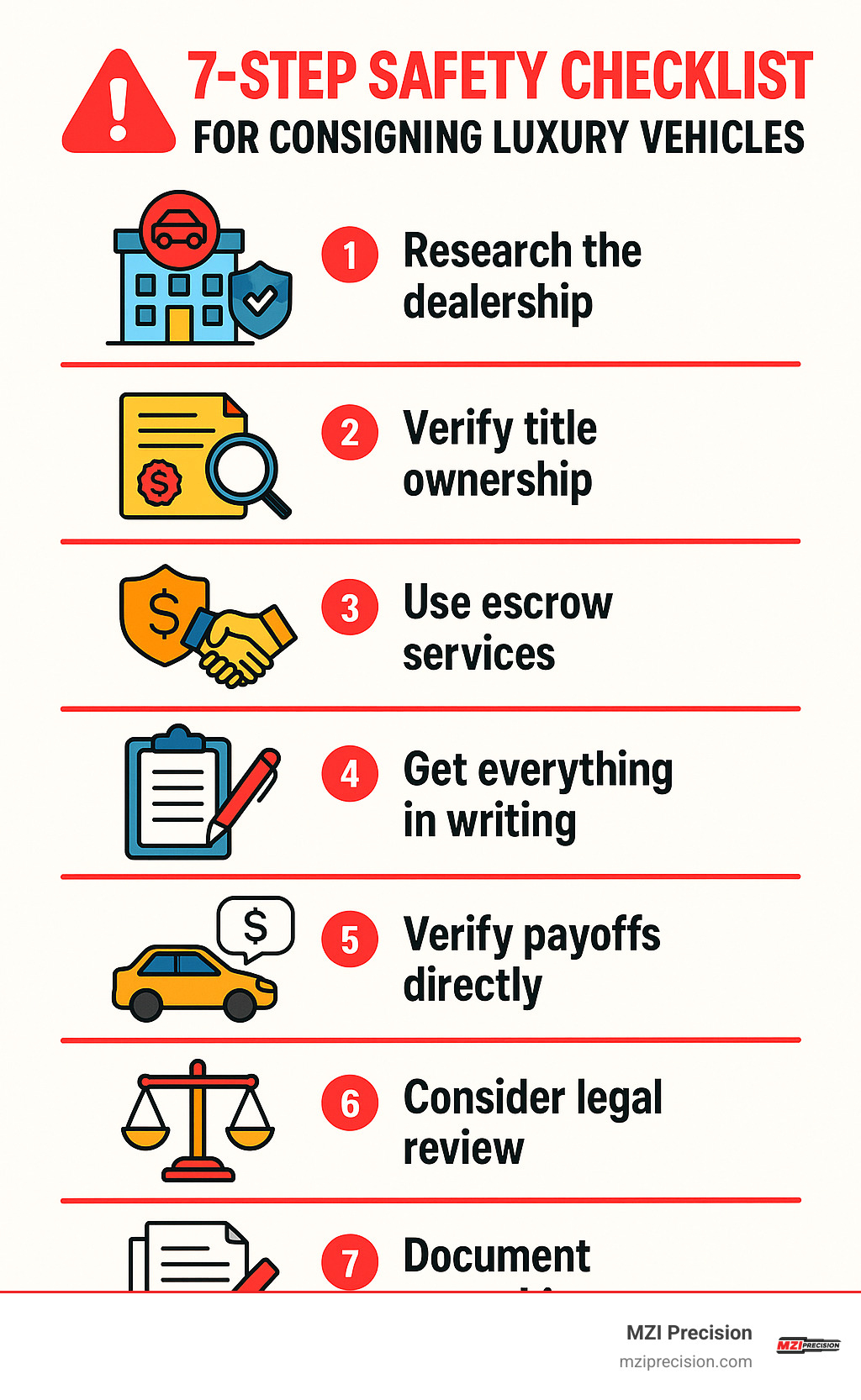
First and foremost, do your homework on any dealership you’re considering. This means going beyond glossy websites and impressive showrooms. Check Better Business Bureau ratings, look for DMV complaints, and pay special attention to online reviews that specifically mention title transfers and payment timeliness. As one victim noted, “I wish I’d dug deeper than the fancy Instagram posts and YouTube videos.”
When it comes to titles, always verify ownership directly. Request a physical photocopy of the title before any purchase to confirm it’s not already assigned to a floor plan lender. This simple step could have saved many CNC Motors victims considerable trouble.
For transactions involving significant sums, consider using a third-party escrow service. These services hold funds until all aspects of the transaction are complete—ensuring sellers get paid and buyers receive proper title. The small fee is insignificant compared to the protection it provides.
The importance of getting everything in writing cannot be overstated. Your consignment agreement should clearly specify payment timeframes (20 days is standard in the industry) and outline penalties for delays. One victim told me, “Clayton was all handshakes and promises—I should have demanded more concrete terms in writing.”
If you’re buying a vehicle with an existing loan, take the extra step to verify payoffs directly with the lender rather than trusting the dealer’s word. This verification can prevent you from becoming an unwitting participant in a title scheme.
For truly high-value transactions, having an attorney review your paperwork before signing might seem excessive, but it’s a small price for peace of mind. And regardless of the transaction size, document everything—keep copies of all communications, agreements, and payment records.
Red Flags When Dealing with cnc motors-type Dealers
Looking back at what happened with CNC Motors, certain warning signs emerge that should trigger immediate caution when dealing with any luxury car dealer.
Be wary of excessive reliance on temporary tags. If you notice a dealer has issued multiple temporary registration tags beyond the standard two 30-day periods, this often indicates underlying title problems. This was a recurring pattern at CNC Motors that many missed until it was too late.
Pay close attention if you encounter delayed funds with repeated excuses. While occasional banking delays happen in any business, a pattern of creative explanations about payment transfers should set off alarm bells. As one victim poignantly shared, “In hindsight, the red flags were there. Clayton always had an excuse about why payment was delayed, but the excuses seemed plausible at the time.”
A dealer’s reluctance to provide title copies should never be tolerated. Legitimate dealers understand the importance of transparency in high-value transactions and should readily provide title documentation when requested.
Be skeptical of pressure to close quickly without proper documentation. This rush tactic often serves to prevent buyers and sellers from conducting proper due diligence. Similarly, resistance to using escrow services can indicate a dealer has something to hide.
Finally, approach unusually generous consignment terms with healthy skepticism. Terms that seem too good to be true—particularly regarding commission rates or guaranteed sale prices—often mask underlying issues.
Expert Recommendations for Safe Consignment
Beyond recognizing warning signs, industry experts suggest additional safeguards when consigning luxury vehicles.
Consider using wire transfers instead of checks for payment. Wire transfers provide immediate verification of fund movement and eliminate the all-too-common “check is in the mail” excuse that plagued many CNC Motors victims.
Work with dealers who maintain substantial surety bonds, which can provide some recourse if problems arise. While not a complete safety net, these bonds demonstrate a dealer’s financial responsibility and offer some protection.
Take time to verify the dealer’s floorplan status. Ask about and verify their financing arrangements to ensure they’re in good standing with their lenders—a dealer with financial problems may be more tempted to engage in questionable practices.
When possible, maintain physical possession of your vehicle until payment is confirmed. This simple boundary can prevent the most common consignment problems before they start.
Regularly monitor online listings to see if your consigned vehicle is being advertised and at what price. This vigilance helps ensure transparency throughout the process. Similarly, request information about potential buyers once a sale is pending.
Finally, take time to understand your state’s specific laws regarding vehicle consignment. These regulations vary significantly, and knowing your legal protections before entering an agreement is invaluable.
At MZI Precision, while our expertise lies in industrial manufacturing spindles rather than automotive transactions, we understand the fundamental importance of trust and transparency in high-value business relationships. The principles of verification, documentation, and thorough due diligence apply across all industries where significant investments are at stake.
Frequently Asked Questions about CNC Motors
What happened to CNC Motors?
The story of CNC Motors is a cautionary tale that sent shockwaves through the luxury car community. This once-thriving exotic car dealership in Upland, California shuttered its doors in early 2021 amid a storm of fraud allegations. Clayton Thom, the owner who had built a reputation as a trusted exotic car dealer, now faces 37 felony counts of grand theft plus one count of elder theft.
The allegations paint a troubling picture: CNC Motors reportedly sold consigned vehicles—cars that owners had entrusted to the dealership to sell on their behalf—but then failed to pay those owners after collecting money from buyers. The California DMV stepped in after receiving a flood of complaints, eventually investigating the operation and boarding up the once-gleaming showroom. Today, the case continues to work its way through the Riverside County court system, leaving many former clients wondering if they’ll ever see their money again.
“It was devastating to learn that my car had been sold months earlier and I might never see that money,” one victim shared. “The trust was completely broken.”
How many victims and how much money were involved?
The official charges identify at least 35 victims with documented losses exceeding $4 million between 2018 and 2021. However, this may represent just the tip of the iceberg. Industry insiders and investigators have suggested the actual scope of the alleged fraud could be dramatically larger, with some reports indicating “many tens of millions of dollars” potentially missing.
The full extent of the damage may never be completely known. Some affected car owners likely settled matters privately or chose not to file formal complaints. Others might have given up hope of recovery after initial roadblocks. The ripple effects extend beyond just the consignors too—buyers who received problematic titles and lenders who financed inventory also found themselves caught in the fallout.
What makes the CNC Motors case particularly troubling is how it targeted a community built on passion and trust. The exotic car world often operates on relationships and reputation, making the betrayal feel all the more personal to those involved.
What legal recourse do affected owners have?
If you’re among those caught in the CNC Motors situation, you do have potential paths forward, though none offer guaranteed recovery:
Criminal case participation offers one avenue—victims identified in the criminal proceedings may qualify for restitution if the prosecution succeeds and if recoverable assets can be located. The criminal justice system prioritizes making victims whole when possible, though this depends on what assets remain available.
Many victims have pursued civil litigation against Thom and related business entities. These lawsuits operate independently from the criminal case and provide another potential recovery path, though collecting on judgments ultimately depends on what assets remain accessible.
California maintains a DMV Consumer Recovery Fund specifically designed to help victims of dealer fraud, though there are caps on compensation amounts that may fall short of high-value exotic car losses. For some, insurance claims might provide partial coverage, depending on your specific policy provisions.
If bankruptcy proceedings occur, victims should file as creditors, though secured creditors typically receive priority in asset distribution. The complexity of these cases means that consulting with an attorney who specializes in automotive fraud is likely your best first step.
“Document everything,” advises one attorney familiar with similar cases. “The more evidence you have of your transaction history, the stronger your position will be in any recovery effort.”
For those rebuilding after such an experience, working with reputable, established businesses becomes even more important—whether you’re dealing with luxury cars or industrial equipment like the precision spindles we service at MZI Precision.
Conclusion
The CNC Motors saga serves as a powerful reminder that even in luxury markets with seemingly reputable businesses, consumer vigilance remains essential. What began as a respected exotic car dealership eventually crumbled into a cautionary tale that left dozens of victims facing significant financial losses and a legal maze that continues to this day.
For anyone considering consigning a luxury vehicle or making a high-value purchase, the lessons couldn’t be clearer: verify everything thoroughly, document all transactions, use secure payment methods, and perhaps most importantly, trust your instincts when something feels off. That extra afternoon spent on due diligence might feel tedious, but it’s nothing compared to the potential heartache of losing hundreds of thousands of dollars.
While most businesses operate with integrity, the CNC Motors case reveals how a glossy showroom and social media presence can sometimes mask serious problems beneath the surface. The exotic cars and professional appearance created a façade of legitimacy that made it easy to trust – until that trust was allegedly betrayed.
“I never thought this could happen to me,” shared one victim. “I’d been in the car business for years. But this experience taught me that no matter how prestigious the dealership looks, you have to protect yourself.”
At MZI Precision, we understand the critical importance of trust in business relationships. Though our world of industrial manufacturing spindles operates quite differently from luxury car sales, we recognize that transparency, meticulous documentation, and thorough verification are universal principles in any high-value business interaction.
For those interested in learning more about precision industrial solutions and the importance of reliability in manufacturing equipment, visit our website for more information.
Remember – whether you’re dealing with a luxury car or precision manufacturing equipment, doing your homework upfront can save you from becoming the subject of the next cautionary business tale.